



Why this matters now
AI development stacks are unusually noisy. Teams constantly pull dependencies, run generated code, execute automated tests, trigger builds, and connect services through tokens, secrets, and APIs.
That creates ideal cover for supply chain malware. If malicious behavior resembles routine assistant-driven automation, defenders have a harder time separating suspicious activity from the thousands of legitimate actions happening every day.
The broader warning is clear: as AI tooling becomes more embedded in software delivery, the attack surface expands across the same convenience layers teams depend on for speed.
What makes Sandworm_Mode different enough to matter
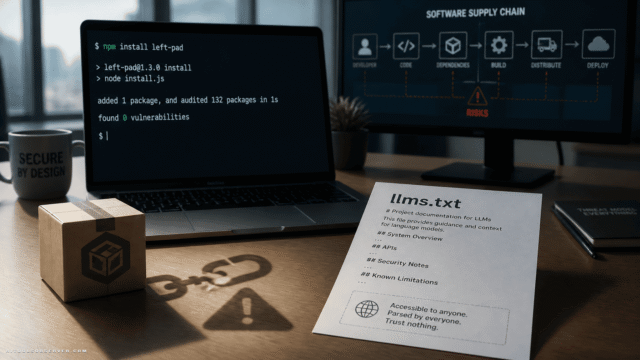
The description suggests Sandworm_Mode is not notable because it invented a brand-new category. Supply-chain worms already exist, including malware families that have targeted developer workflows and open-source ecosystems.
What raises concern is how well this one appears adapted to AI-linked environments.
It reportedly focuses on:
- AI coding assistants
- Code repositories
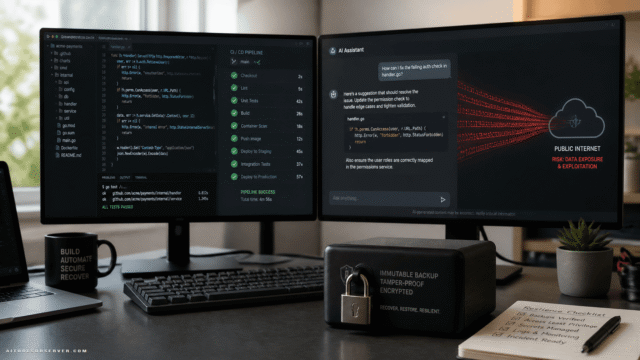
- CI/CD pipelines
- Cloud-linked development services
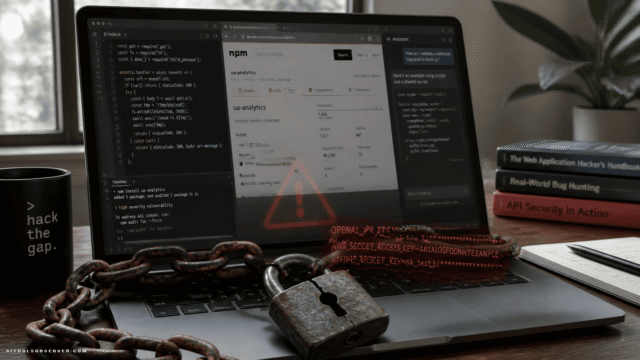
- API keys and secrets connected to major LLM providers
- Automated systems that build, test, and publish software
In other words, it targets the connective tissue of AI-enabled development. If those credentials and systems are exposed, an attacker may gain more than access to one machine or one repo. They may gain paths into the wider delivery chain.
The defender’s disadvantage
One of the hardest parts of this threat model is visibility.
Security teams already struggle to monitor dependency downloads, package execution, build activity, and credential usage across distributed engineering environments. Add AI agents and coding assistants that continuously fetch, generate, and execute components, and the telemetry becomes even harder to interpret.
That changes the shape of detection in three ways:
1. Normal behavior starts to resemble attack behavior
Automated workflows routinely download packages, unpack code, run scripts, and call external services. Those are exactly the kinds of actions defenders often monitor for compromise.
If malware hides inside those expected patterns, alerts become less reliable and triage gets slower.
2. Delayed execution breaks simple correlation
Sandworm_Mode reportedly uses multi-day delays between initial access and follow-on activity. That matters because many organizations rely on relatively short telemetry windows for practical investigation.
If the triggering event and the harmful action are separated by days, attribution becomes harder and evidence may be incomplete.
3. Destructive behavior raises the stakes
The malware is also described as capable of destroying compromised environments if it cannot spread or complete its objectives. For defenders, that means a missed infection may not only lead to persistence or theft, but also operational disruption.
Why AI coding assistants are an attractive target
AI coding assistants sit close to source code, developer prompts, local environments, and project context. In many teams, they also influence dependency choices, code generation, testing patterns, and access to connected services.
That makes them attractive not because they are inherently insecure, but because they increasingly sit in the path of trusted actions.
A compromised assistant-linked workflow could potentially expose:
- Repository access
- Internal package references
- Environment secrets
- Cloud credentials
- CI/CD tokens
- LLM API keys
- Sensitive implementation details in prompts or generated code context
For attackers, these systems can offer lateral movement without requiring loud or unusual behavior.
What this means for AI tool evaluation
For readers tracking AI tools, this is not just a cybersecurity story. It is also a procurement and architecture story.
When teams compare AI coding tools, dev agents, or workflow automation products, feature speed is only part of the decision. The more relevant question is how much new trust each tool introduces into the software supply chain.
That means looking harder at:
- How credentials are stored and scoped
- Whether tools require broad repo or cloud permissions
- How dependency use is monitored
- What audit trails exist for automated actions
- Whether generated or fetched code is isolated before execution
- How secrets are rotated after exposure
- What controls exist around CI/CD and package publishing
The market has often treated AI development tooling as a productivity layer. Incidents like this suggest it should also be treated as a supply-chain control point.
Practical steps teams should revisit
Organizations do not need to stop using AI development tools. They do need to assume these tools now sit inside a higher-risk environment.
Useful near-term actions include:
- Reduce token and API key scope wherever possible
- Separate assistant access from production publishing privileges
- Tighten controls around package ingestion and dependency execution
- Extend logging and retention for developer, build, and credential events
- Review CI/CD trust boundaries, especially around secret injection
- Monitor unusual use of LLM provider keys and cloud-linked credentials
- Require stronger review for automated changes touching build or deployment logic
The key tradeoff is speed versus verification. Teams that adopted AI tooling to remove friction may now need to reintroduce some friction in the highest-risk paths.
A market signal, not an isolated oddity
Even if Sandworm_Mode itself remains only partly understood, the pattern matters. Attackers appear to be following where engineering workflows have moved: toward automation, dependency sprawl, assistant-driven coding, and service-to-service credentials.
That shift should influence how buyers evaluate developer tools across the AI stack. A tool that accelerates code output but weakens visibility, expands credential exposure, or blurs ownership of automated actions may create hidden costs later.
The useful takeaway is simple: treat AI development tools as part of your security perimeter, not just your productivity stack. The teams that choose with that assumption now will be better positioned when the next supply-chain worm arrives disguised as normal work.










Comments (0) No comments yet
Want to join this discussion? Login or Register.
No comments yet. Be the first to share your thoughts!