



One Control Plane to Rule Them All
Unity AI Gateway is now generally available, and the pitch is straightforward: a single layer that handles cost visibility, security enforcement, and model access across your entire AI stack—coding agents, MCPs, external agents, skills, models, all of it.
The problem it’s solving isn’t abstract. As AI adoption scales inside organizations, token-based pricing compounds quickly, agents get trusted with sensitive data they probably shouldn’t have unsupervised, and developers end up locked into whatever vendor they started with. That’s three separate headaches, and most enterprises are managing them with three separate tools—or none at all. In many cases, costs balloon faster than teams expect.
The Three Levers
Databricks frames Unity AI Gateway around cost, control, and choice. It’s a clean frame because each one maps to a real organizational pain point.
Cost gets addressed through centralized observability and hard spend caps. Usage data flows into Unity Catalog, where out-of-the-box dashboards and a Genie-powered analysis layer give teams actual visibility into where AI budget is going. A Smart Routing feature—currently in beta—dynamically routes requests to the right model based on quality, cost, and availability, reserving expensive frontier models for tasks that actually need them.
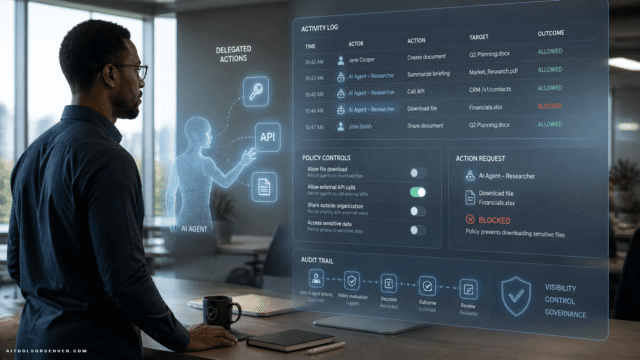
Control comes from pairing Unity Catalog’s identity, permissions, and audit trail with Unity AI Gateway’s runtime guardrails. The idea is that data governance and AI governance stop being separate problems. Agent traces, which often contain PII or confidential context, get governed through the same system that governs data access.
Choice means developers aren’t forced into a single model provider. The gateway offers native access to Anthropic, OpenAI, Gemini, and others through a single API, and organizations can register both Databricks-hosted and external models in one catalog.
What Real Usage Looks Like
The context data includes several customer quotes worth noting. Zepto reports handling over 100 billion tokens per month through the gateway with no availability issues. Rivian describes it as “watching one door, not a dozen”—a useful mental model for what centralized governance actually buys you operationally. Edmunds and Magnite both highlight the ability to stay coding-agent agnostic while maintaining cost attribution at the individual engineer level.
These aren’t edge cases. They’re the kinds of scale and complexity that make ad hoc governance genuinely unworkable.
Who This Is Actually For
Unity AI Gateway is squarely aimed at enterprises that have already crossed the threshold from AI experimentation into AI operations. If you’re managing a handful of API calls, this is probably more infrastructure than you need. If you’re managing thousands of agents across multiple teams and providers, the value proposition gets sharper fast.
It also assumes you’re already in the Databricks ecosystem, or willing to be. The governance story depends heavily on Unity Catalog as the underlying foundation—which is either a strength or a constraint depending on your current stack.
The Useful Takeaway
The GA announcement signals that Databricks sees AI governance as a platform-level problem, not a feature. The bet is that enterprises will want their data governance and AI governance to converge in one place rather than bolt together separate tools. Whether that plays out depends on how sticky Unity Catalog already is inside a given organization—but for teams already running on Databricks, the case for consolidating here just got a lot more concrete.










Comments (0) No comments yet
Want to join this discussion? Login or Register.
No comments yet. Be the first to share your thoughts!