


The ROI Reckoning Has Arrived
IBM CEO Arvind Krishna put it plainly during a recent earnings call: enterprises are becoming “a lot more cognizant” of what their AI spend is actually returning — and worried that some of it is “completely out of control with no real return.”
That’s a significant signal. IBM sells to large enterprises. When its CEO describes customers getting nervous about runaway AI budgets, that’s not pessimism — it’s a market reading.
The pattern is familiar. A new technology category attracts aggressive early investment, then a correction phase arrives where buyers demand proof before the next round of spending. AI is entering that phase now, with ROI becoming the key test.
Open-Weight Models Are Quietly Winning the Cost Argument
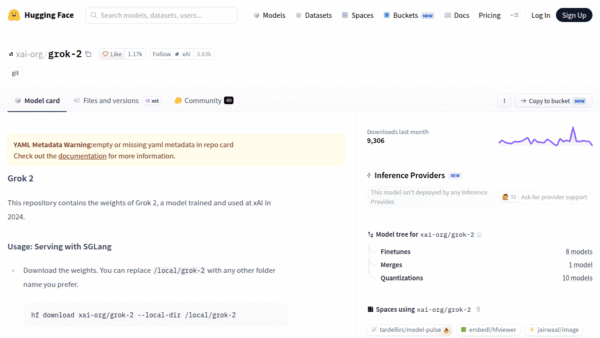
One concrete shift is already underway: enterprises are moving toward open-weight models as a more cost-effective alternative to frontier models from the big labs.
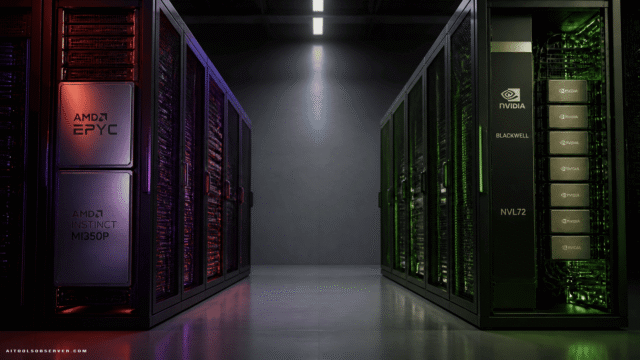
Krishna’s framing is useful here. A large enterprise can get started with two or three racks of on-premises infrastructure and run open-weight models at somewhere between 10% and 25% of the token cost of frontier models. That’s not a marginal difference — it’s a structural one.
For companies that need to process large volumes of data internally, protect intellectual property, or simply reduce their per-query costs, the math increasingly favors private infrastructure over API calls to frontier providers.
This also explains why on-premises and private cloud AI deployments are gaining traction. It’s not just about cost. It’s about control.
The Hyperscaler Bet Is Under Scrutiny
While enterprises are tightening their belts, hyperscalers have been doing the opposite — accelerating capital expenditure on AI infrastructure and data centers at a pace that assumes continued, aggressive demand growth.
Apollo’s chief economist Torsten Sløk has framed the core tension well: the defining metric of the AI build-out isn’t physical capacity or power consumption. It’s the price customers are actually willing to pay for compute. And that willingness depends entirely on whether AI delivers measurable business value — higher revenue, better margins, lower costs.
Those benefits haven’t materialized at meaningful scale yet. That gap between infrastructure investment and proven enterprise returns is where the current anxiety lives.
Anthropic and OpenAI Are Feeling the Pressure Too
The frontier labs aren’t immune. Both Anthropic and OpenAI are responding to enterprise demand for more affordable models — a clear signal that even the most capable AI providers can’t ignore price sensitivity forever.
Anthropic’s situation illustrates the financial stakes. The company reportedly faces infrastructure commitments that could reach into the hundreds of billions of dollars over coming years, while also disclosing significant net losses — much of it tied to accounting charges from fundraising activity. Revenue growth has been remarkable by any standard, but the gap between what’s being built and what’s being earned is wide enough to matter.
The company is expected to pursue a public listing soon, partly because private markets are becoming harder and more expensive to tap. Yields on private debt deals are rising, suggesting investors are demanding more compensation for AI-related risk. Public markets offer deeper liquidity — but also more scrutiny.
OpenAI faces similar dynamics. A recent revenue figure that came in below earlier leaks — later attributed to accounting methodology differences — was enough to rattle AI-adjacent stocks, particularly in semiconductors.
What This Means for the Tools Ecosystem
For the AI tools market specifically, this reset has a few practical implications worth tracking.
Pricing pressure will intensify. Tools that can’t demonstrate clear, measurable ROI will face harder renewal conversations. Vague productivity claims won’t hold up when finance teams are involved.
Open-weight and self-hosted options will gain ground. As token costs from frontier providers remain high relative to alternatives, tools built on open-weight models — or those that support private deployment — become more attractive to cost-conscious buyers.
Workflow specificity matters more than breadth. Enterprises aren’t looking for general-purpose AI anymore. They want tools that solve a defined problem in a defined workflow with a trackable outcome.
The mid-market may move faster than enterprise. Smaller organizations with less bureaucracy and lower switching costs can act on the open-weight opportunity more quickly. Expect tool adoption patterns to diverge by company size.
The Useful Takeaway
The AI build-out isn’t collapsing — but it is recalibrating. The companies and tools that survive this phase will be the ones that can answer a simple question with a specific number: what does this actually return?
If you’re evaluating AI tools right now, that’s the right question to bring to every demo. Not “what can it do?” but “what did it measurably improve, and for whom?”
The market is asking it. You should too.












Comments (0) No comments yet
Want to join this discussion? Login or Register.
No comments yet. Be the first to share your thoughts!