


What the FBI Actually Said
The alert states that since at least August 2026, a broad range of malicious actors have used ARTEX across multiple sectors. The list is not narrow: financial services, government, technology, defense, semiconductors, energy, healthcare, manufacturing, telecommunications, and legal industries are all named.
That breadth matters. This is not a targeted campaign against a single vertical. It appears to be opportunistic and systematic — the kind of pattern that AI-assisted automation makes possible at a scale manual attacks cannot match.
Why ARTEX Changes the Threat Calculus
Penetration-testing frameworks are legitimate tools. Security teams use them to find vulnerabilities before attackers do. The problem is that the same capabilities — automated reconnaissance, credential testing, environment mapping — become dangerous when pointed in the wrong direction.
ARTEX, as described in the FBI’s alert, appears to lower the technical barrier for executing complex, multi-step attacks against cloud environments. What previously required significant expertise and time can now be partially automated. The ConnectWise breach illustrates the downstream risk: one compromised point in a supply chain can expose thousands of tenants.
This shift aligns with broader concerns around AI-assisted automation accelerating cyberattack workflows.
The Supply-Chain Dimension
The ConnectWise connection is the detail that deserves the most attention. Supply-chain compromises are particularly difficult to defend against because the initial breach often occurs in a trusted third-party environment, not within the target organization itself.
When ARTEX is used in that context, the attack surface expands dramatically. A single successful compromise can propagate authentication attempts across thousands of connected tenants — which is precisely what the FBI’s figure of 2,250-plus downstream targets reflects.
What Organizations Should Do Now
The FBI’s guidance is direct: strengthen access controls, monitor for suspicious automated activity, and report potential compromises to ic3.gov.
In practical terms, that means:
- Review conditional access policies in Microsoft 365, particularly for third-party integrations and managed service providers.
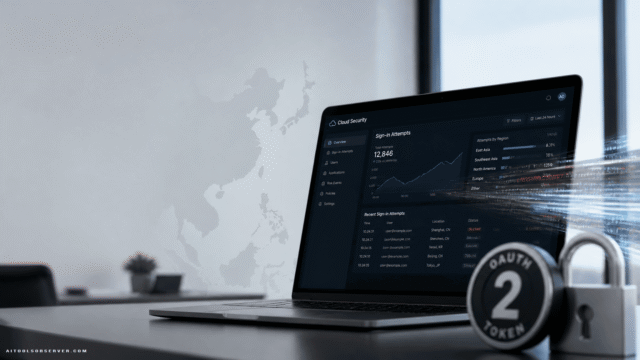
- Enable anomaly detection for authentication events, especially bulk or rapid login attempts from unfamiliar locations or service accounts.
- Audit supply-chain access — identify which third-party tools and vendors have delegated access to your M365 environment and whether that access is still necessary.
- Apply MFA consistently, including for service accounts and API connections that are sometimes overlooked.
- Report suspicious activity to ic3.gov, even if a compromise is not confirmed. The FBI’s ability to track campaigns like this depends on incident reporting.
The Broader Signal for AI Tool Adopters
This alert is a useful reminder that AI capabilities are not inherently defensive or offensive — they are directional. The same automation that makes AI tools valuable for productivity and security testing also makes them effective for attack.
For organizations evaluating AI tools that touch sensitive infrastructure, the question is not only what the tool can do, but what happens when access to it — or to systems it connects with — falls into the wrong hands. Supply-chain exposure is now part of that risk model.
The FBI’s warning is not a reason to avoid AI-powered security tools. It is a reason to treat them with the same access discipline and monitoring rigor applied to any privileged system.



Comments (0) No comments yet
Want to join this discussion? Login or Register.
No comments yet. Be the first to share your thoughts!