



What TumorSight Risk Actually Does
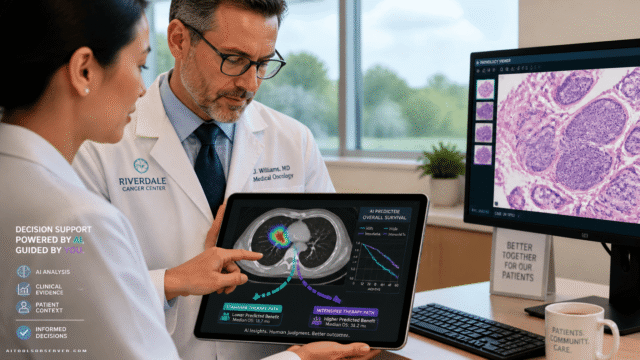
TumorSight Risk uses breast MRI images a patient already has from their initial diagnosis — no extra scans required. The AI analyzes the tumor and surrounding tissue, then combines those findings with pathology results and clinical data to generate a recurrence risk score from 0 to 100.
That score places patients into low, intermediate, or high risk categories, and it’s available before surgery — giving doctors and patients more to work with when weighing treatment options.
The tool is powered by NVIDIA’s GPU infrastructure, which allows it to process the kind of complex, multi-layered imaging data that’s difficult to synthesize manually.
The Numbers Behind the Score
The research behind TumorSight Risk analyzed data from 2,129 women with early-stage, hormone receptor-positive, HER2-negative breast cancer — a subtype that accounts for roughly three-quarters of all U.S. breast cancer diagnoses.
A few findings worth noting:
- 95.5% of women classified as low-risk remained cancer-free after five years
- 89.6% of high-risk women remained cancer-free — still high, but the gap matters clinically
- Women classified as high-risk had more than three times the recurrence risk compared to low-risk patients
- Each 10-point increase in the AI score correlated with a 22% increase in relative recurrence risk
These aren’t abstract model metrics. They translate directly into conversations about whether to pursue chemotherapy, extend hormone therapy, or adjust a treatment plan.
Why Timing Matters Here
Most recurrence risk tools currently in use deliver results after surgery. Getting that information beforehand changes the dynamic of the treatment conversation — patients and oncologists can discuss options with more complete data before making irreversible decisions.
That’s not a small shift. Treatments like chemotherapy and long-term hormone therapy carry real side effects. A clearer picture of who actually needs aggressive intervention — and who might not — has direct quality-of-life implications.
Where It Fits in the Clinical Picture
TumorSight Risk isn’t positioned as a replacement for existing tests or clinical judgment. Oncologists are expected to weigh it alongside established findings and individual patient priorities.
SimBioSys is also working with Medicare, Medicaid, and private insurers on coverage — which will determine how broadly accessible the tool becomes in practice.
The company previously released TumorSight Viz, which converts breast MRI data into 3D tumor models for surgical planning. TumorSight Risk appears to be the next layer in that ecosystem: moving from visualization to prediction.
The Practical Takeaway
If you’re tracking clinical AI tools, TumorSight Risk is worth watching — not because it replaces the oncologist, but because it shifts when useful information enters the room. Earlier risk stratification means earlier, more tailored conversations.
For patients, the most actionable step right now is straightforward: ask your cancer care team whether TumorSight Risk is available at your treatment center and whether it’s appropriate for your case.













Comments (0) No comments yet
Want to join this discussion? Login or Register.
No comments yet. Be the first to share your thoughts!