


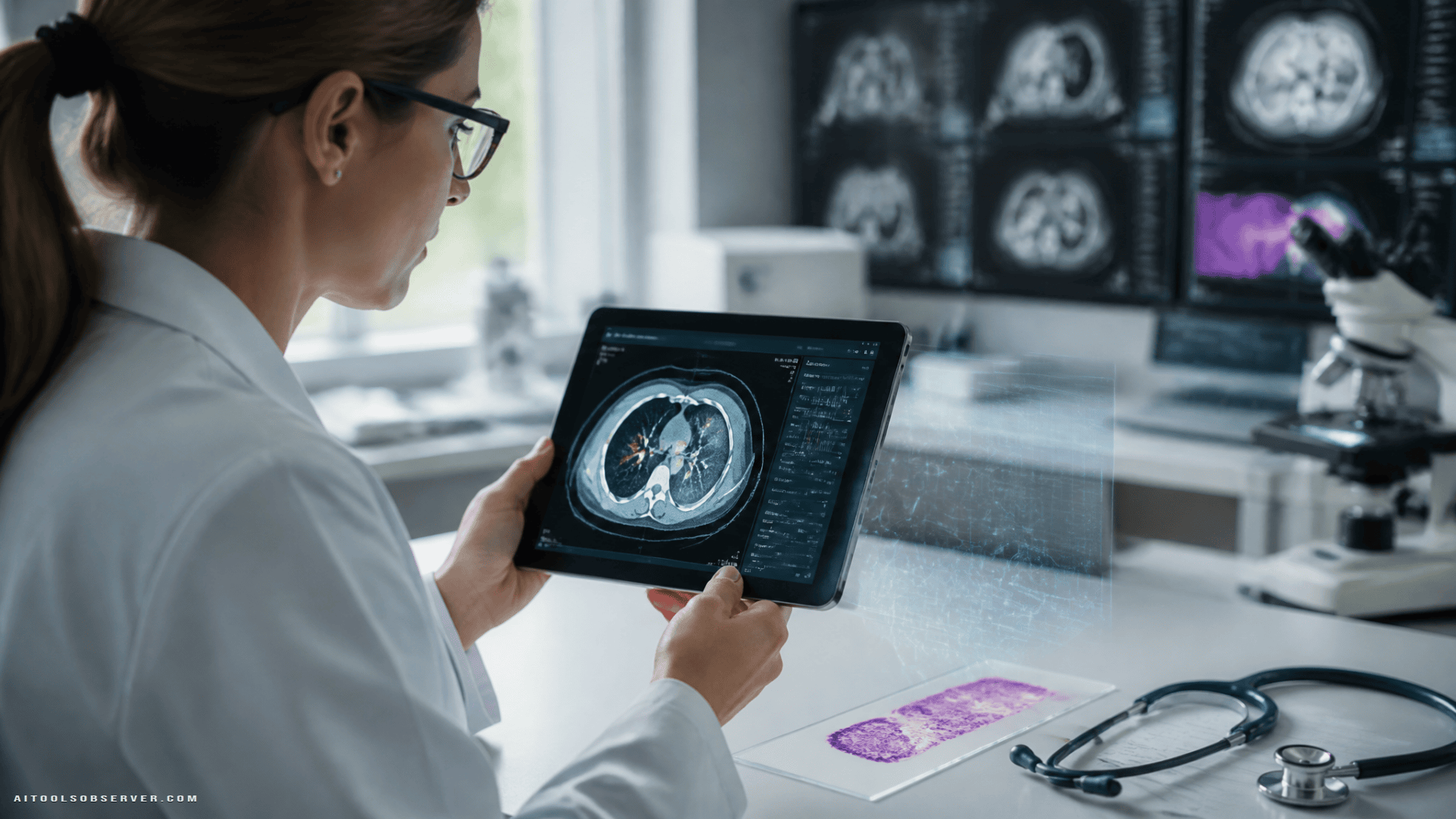
What This Means If You’re Working in This Space
If you’re a researcher, clinician, or healthcare operator evaluating AI tools for oncology workflows, a few practical takeaways:
Focus on augmentation, not automation. The strongest AI applications in cancer care are the ones that make experts faster and more accurate—not the ones trying to remove experts from the loop.
Imaging and pathology are the lowest-risk entry points. The regulatory infrastructure exists, the evidence base is growing, and the workflow integration is relatively well-defined.
Be skeptical of prediction claims in complex biology. If a tool promises to predict patient outcomes with high confidence across dynamic biological systems, ask hard questions about validation methodology and edge case performance.
Clinical trials are an underrated opportunity. The administrative burden in trial management is real and well-documented. AI tools that reduce friction here have a clear, measurable value proposition.
The honest picture of AI in cancer research is neither dystopian nor utopian. It’s a set of tools that are genuinely useful in specific contexts, with real limits that matter. Understanding both sides of that equation is what lets you choose smarter.












Comments (0) No comments yet
Want to join this discussion? Login or Register.
No comments yet. Be the first to share your thoughts!