


What changed
A National Institutes of Health grant will support acquisition and implementation of the new system at the University of Miami Miller School of Medicine. The platform will be led by Yan Guo, Ph.D., and made available to researchers across the university.
Based on the available description, the goal is straightforward: give investigators enough computing power to run larger AI and machine learning workloads for cancer research and precision medicine.
Why this matters
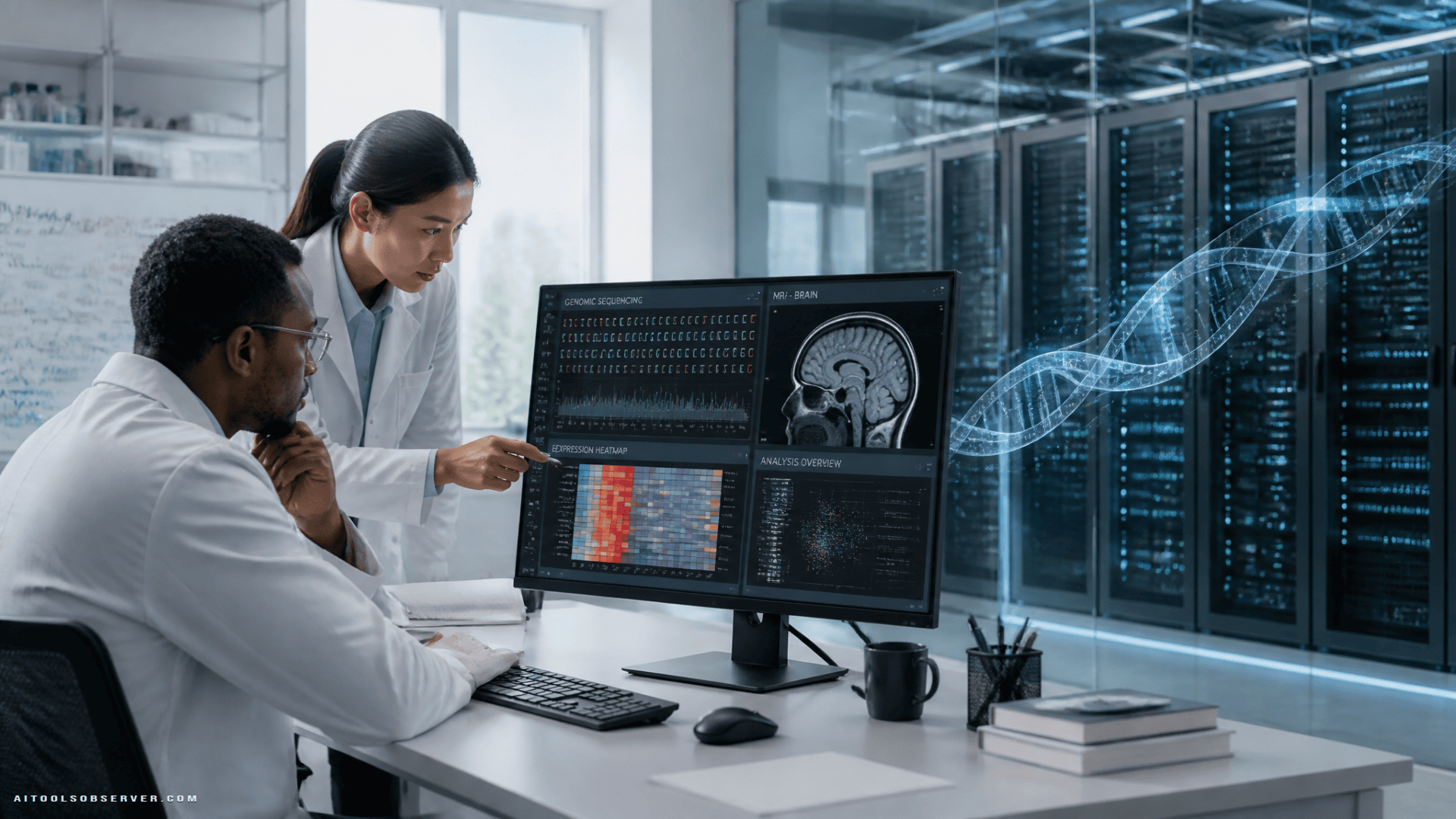
In biomedical research, “more data” is only good news if you can actually process it. Modern studies routinely pull from:
- Genomic sequencing
- Spatial transcriptomics
- Medical imaging
- Electronic health records
- Other molecular and clinical datasets
That mix is useful, but messy. Different formats, different scales, different signal-to-noise problems. Conventional computing can turn promising research questions into long waits and trimmed-down experiments.
An H200-powered platform changes the bottleneck from “Can we run this?” to “What should we test next?” That’s a much better problem.
What researchers can do with it
The description points to several likely use cases:
- Discovering biomarkers
- Studying gene regulation
- Predicting disease behavior
- Identifying therapeutic opportunities
- Expanding multiomics analysis
- Building more sophisticated AI models
None of these tasks are new in concept. What changes is the scale and speed. Better infrastructure can let researchers test more complex hypotheses, integrate more data sources, and iterate without hitting compute limits quite so quickly.
That may sound unglamorous. It is also how a lot of useful science actually gets done.
Why NVIDIA H200 shows up in this story
The hardware detail matters because this is not just “AI” as a vague label. The H200 is part of a class of accelerated computing systems built for large, memory-intensive workloads, the kind common in advanced model training and scientific data analysis.
For cancer research, that can be especially relevant when teams are working across high-dimensional datasets like genomics, transcriptomics, and imaging. More capable infrastructure does not guarantee better discoveries, but it gives researchers a better shot at finding patterns that smaller systems might struggle to surface.
A broader shift in AI tooling
This funding move also says something bigger about the AI market: infrastructure is becoming the tool.
For a lot of organizations, the important question is no longer just which model or app to adopt. It’s whether they have the underlying system to support serious AI work at all. In research settings, advanced compute is starting to look less like optional IT spend and more like core lab equipment.
That has consequences beyond academia:
- Shared AI systems can raise the quality of work across multiple teams
- Infrastructure decisions shape which use cases are actually feasible
- Data-rich fields are increasingly limited by compute, not curiosity
If you track AI tools, this is a useful reminder that the most important “product update” is sometimes a machine room upgrade.
What this means for precision medicine
Precision medicine depends on connecting signals across many layers of biology and patient care. That means combining genomic, molecular, and clinical information in ways that are statistically sound and computationally possible.
The University of Miami’s new platform is positioned to support exactly that kind of work. Researchers already using AI-driven methods for methylation, spatial transcriptomics, and gene expression analysis should have more room to expand those efforts.
The likely benefit is not instant cures or headline-friendly magic. It is better analysis, faster iteration, and a stronger path from raw data to testable insight.
Why this is a smart funding pattern
Unlike grants tied to one narrow study, instrumentation funding creates capacity that multiple investigators can use. That makes it one of the more practical ways to strengthen an institution’s research output over time.
It also reflects a reality many industries are learning the hard way: AI progress often depends less on having one brilliant idea and more on having the infrastructure to run dozens of them.
Takeaway
The NIH-funded H200 platform at the University of Miami is less about AI theater and more about AI plumbing. That may be the most useful kind of AI investment.
For anyone evaluating the AI landscape, the lesson is simple: when data-heavy work matters, infrastructure is strategy. The tools get attention. The compute decides what’s possible.










Comments (0) No comments yet
Want to join this discussion? Login or Register.
No comments yet. Be the first to share your thoughts!