


What Got Cleared

Cardiosense’s PCWP Analysis Software received FDA clearance via the De Novo pathway, which is reserved for genuinely novel technologies that don’t fit neatly into existing categories. That’s not a technicality — it’s a signal that this is legitimately new territory.
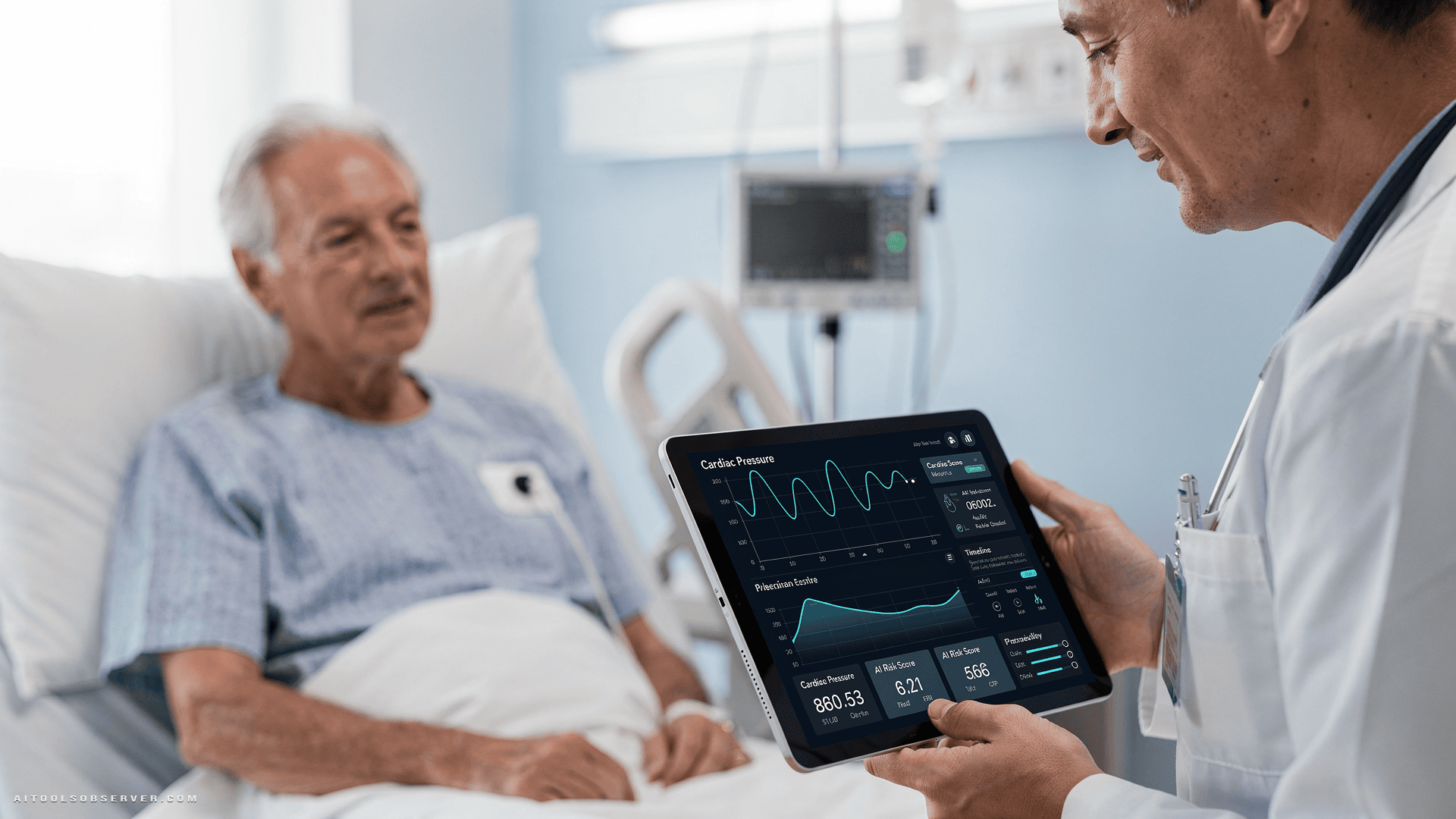
The software estimates pulmonary capillary wedge pressure (PCWP), a key indicator of fluid buildup in heart failure patients. Historically, getting that data meant threading a catheter into the heart. Now it means strapping on a small wearable sensor and letting the AI handle the interpretation.
No catheter. No implant. Just data.
Why PCWP Matters
Fluid buildup is one of the most dangerous and common complications in heart failure. Tracking it accurately — and frequently — is how clinicians decide when to adjust medications, when to discharge a patient, and when to intervene before things spiral.
The problem has always been access. PCWP measurements were invasive enough that they were reserved for hospital settings and acute situations. That limitation created blind spots, especially for patients managing heart failure at home.
Cardiosense’s software is indicated specifically for adults with heart failure with reduced ejection fraction (HFrEF), the subset of patients where precise pressure monitoring is most clinically consequential.
The Bigger Picture for Cardiology AI

This clearance lands at an interesting moment. AI in cardiology has largely focused on imaging analysis, ECG interpretation, and risk scoring. Pressure-guided care — the kind that directly informs therapy titration — has been harder to crack noninvasively.
Being first to do it with FDA backing is a meaningful moat. The De Novo classification doesn’t just clear the product; it establishes a regulatory framework that future competitors will have to navigate around.
Cardiosense also secured FDA clearance for its Cardio Tag device back in July 2025, so this latest approval builds on an already-validated hardware foundation. The pieces are assembling into a coherent remote monitoring platform.
What This Means in Practice

For clinicians, the pitch is straightforward: more data, less procedure, better decisions. The ability to track cardiac pressures outside the hospital walls could meaningfully reduce readmissions — one of the most expensive and persistent problems in heart failure management.
For the broader AI tools ecosystem, this is a reminder that the most durable AI products aren’t the ones that generate content or summarize documents. They’re the ones that unlock data that was previously inaccessible, and then make that data actionable.
A wearable that estimates what used to require a catheter is a genuinely hard technical problem. The FDA agreeing it’s solved — and solved safely — is the kind of clearance that tends to age well.






Comments (0) No comments yet
Want to join this discussion? Login or Register.
No comments yet. Be the first to share your thoughts!