


What the Clearance Covers

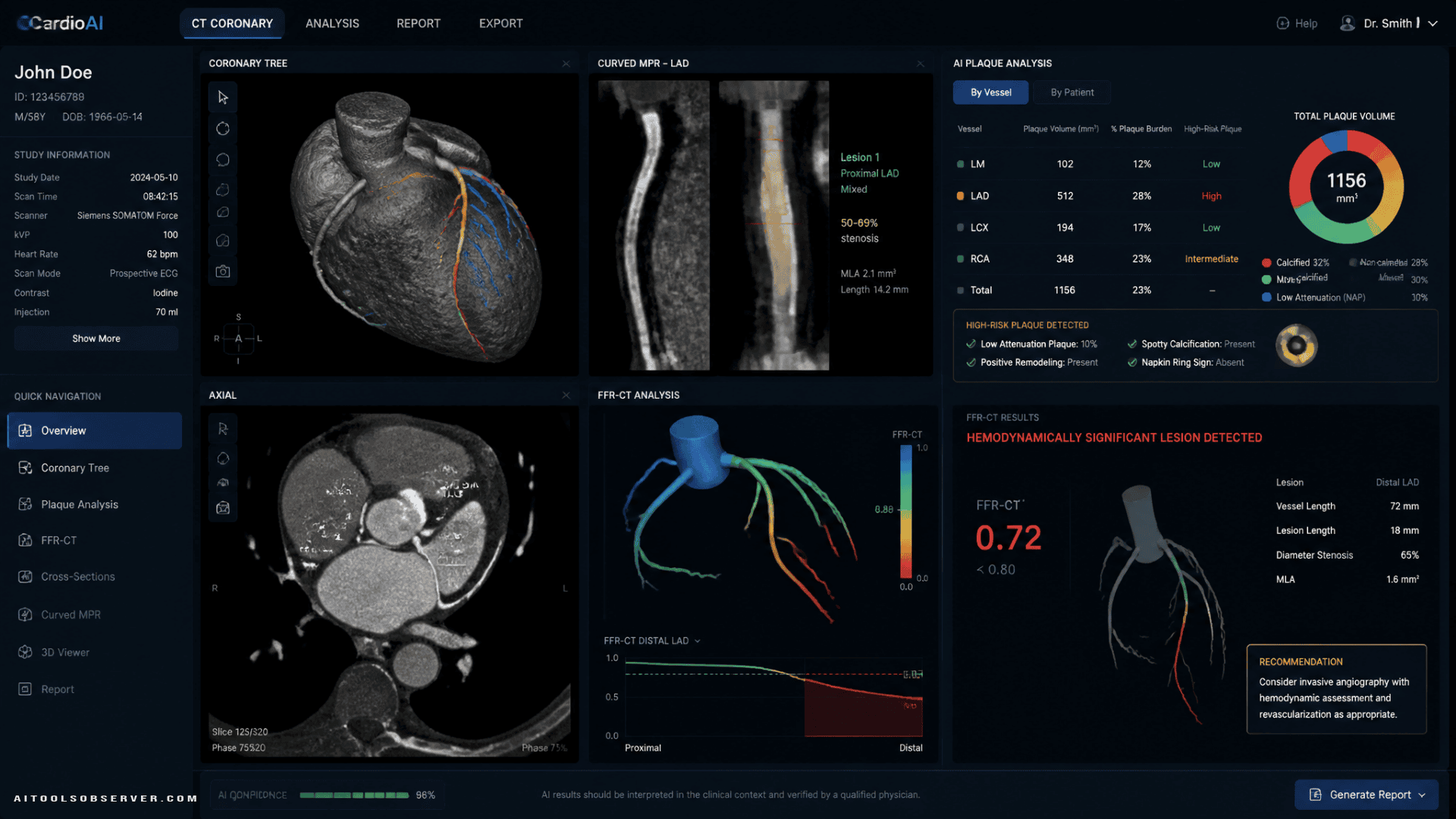
Deep Vessel Plaque is indicated for adults aged 22 and older with suspected or known coronary artery disease who have already undergone CCTA imaging. The algorithm produces a structured plaque analysis report covering total plaque volume, calcified and non-calcified plaque volumes, low-density plaque volume, plaque burden measurements, and analysis at both the vessel segment and patient level.
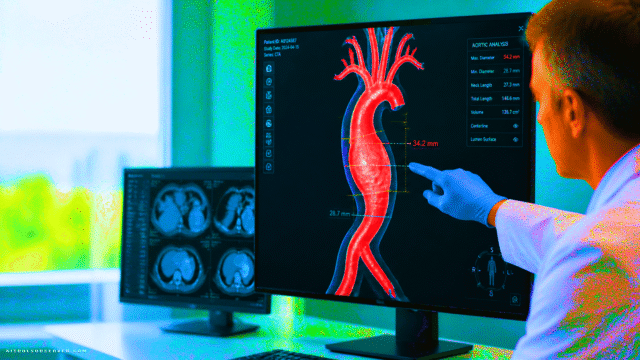
The report also includes CAD-RADS categorization and an AI-powered vessel and lumen segmentation diagram, giving clinicians a detailed anatomical picture from data they have already collected.
One Scan, Two Assessments

What distinguishes this clearance in practical terms is its combination with Keya’s existing FDA-cleared FFR-CT algorithm, which received clearance in April 2022. Together, the two tools deliver both anatomical plaque quantification and functional hemodynamic assessment—specifically CT-derived fractional flow reserve—from a single CCTA scan.
This matters operationally. Historically, obtaining both types of data required either separate imaging procedures or referral to invasive testing. A unified workflow reduces patient burden, eliminates redundant imaging steps, and gives the interpreting physician a more complete picture at the point of analysis.
Clinical Validation

The FDA clearance was supported by a multicenter U.S. clinical validation study. Keya reported that the research demonstrated strong agreement with expert-reader consensus for both plaque quantification and stenosis assessment. Full trial results are scheduled to be presented by Matthew Budoff, MD, and investigators from The Lundquist Institute at the SCCT 2026 meeting in San Diego.
Budoff noted in a statement that the tool adds to the growing set of instruments available for identifying and quantifying coronary plaque, enabling more precise risk stratification and more targeted application of preventive therapies.
Why This Matters for Coronary Artery Disease Management

The clinical significance of AI plaque analysis extends beyond diagnosis at a single point in time. CCTA experts have increasingly argued that serial plaque imaging—tracking the progression or regression of disease across multiple scans over time—could fundamentally change how coronary artery disease is monitored and treated.
Early detection of subclinical plaque burden, combined with quantitative tracking after therapeutic intervention, creates a feedback loop that traditional risk scoring models cannot provide. Tools like Deep Vessel Plaque are positioned to support exactly this kind of longitudinal, individualized assessment.
Reimbursement conditions for AI-based plaque analysis are also improving, which is a practical prerequisite for broad clinical implementation. Without viable reimbursement pathways, even well-validated tools struggle to move from research settings into routine care.
Where Keya Medical Fits in the Market

Keya Medical, which operates in both the United States and China, is now among a growing cohort of vendors offering FDA-cleared AI plaque analysis tools. The competitive field includes established radiology AI companies as well as cardiology-focused software developers. What differentiates Keya’s current offering is the integration of both plaque quantification and FFR-CT under a single cleared platform, reducing the need for multiple vendor solutions within one imaging workflow.
For health systems evaluating AI cardiac imaging tools, the practical question is not only clinical accuracy but also workflow integration, reimbursement viability, and the ability to generate actionable outputs without adding procedural complexity. On those dimensions, a combined anatomical and functional assessment from a single scan is a structurally sound proposition.
The SCCT 2026 presentation will be worth watching for the full validation data. Until then, the FDA clearance itself signals that the evidence met the agency’s threshold for clinical use—a meaningful bar in a field where regulatory rigor is the primary filter separating credible tools from unvalidated claims.










Comments (0) No comments yet
Want to join this discussion? Login or Register.
No comments yet. Be the first to share your thoughts!