



Why this matters
For a while, the AI market narrative was simple: the largest model providers win, and everyone else rents a seat. Fireworks suggests the picture is messier.
The company runs open-source and open-weight models for developers, and its growth points to a clear demand pattern: businesses are actively looking for alternatives to expensive closed models. Not because they dislike the frontier labs, but because finance teams tend to notice bills.
That makes Fireworks less of a side character and more of a market tell.
The real story: inference is becoming its own battleground
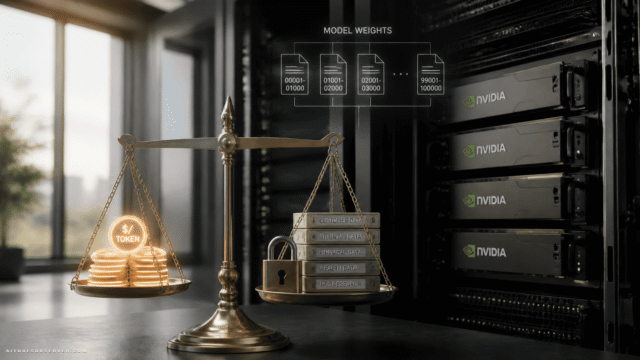
Training gets headlines. Inference gets invoices.
Fireworks sits in the inference cloud layer, helping companies run models inside real products and workflows. That’s where costs compound, latency matters, and “pretty good but much cheaper” becomes a very persuasive sentence.
This matters because enterprise AI adoption is moving from experimentation to operations. Once teams put AI into customer support, coding tools, search, internal assistants, or data workflows, they stop asking only, “Is this model smart?” They start asking:
- How much does this cost at scale?
- Can we customize it with our own data?
- Who controls the stack?
- How hard is it to switch later?
That is the opening Fireworks appears to be exploiting.
Open-source models are no longer just the budget option
There’s a familiar assumption that open models are what teams choose when they can’t afford the top closed models. That framing now looks too shallow.
The better way to read this shift: open models are increasingly attractive because they give companies more room to optimize around their own use cases. If a business can tune a model on its own data and get strong results for a specific task, paying a premium for generalized capability may stop making sense.
That’s especially true for “specialized intelligence” work:
- coding
- enterprise search
- internal knowledge tools
- domain-specific copilots
- workflow automation
In other words, companies may not need the most famous model. They may need the most practical one.
This is also a cloud story
Fireworks competes in territory usually associated with Amazon, Google, and Microsoft. That alone makes the news notable.
The company’s momentum suggests there is still room for infrastructure specialists, even in a market dominated by giant cloud vendors. Buyers appear willing to mix providers if it improves cost, flexibility, or access to a broader model menu.
That’s an important signal for anyone tracking the AI tools stack. The cloud story around AI is not settling into a neat winner-take-all pattern. It looks more like a crowded transit map.
Microsoft partnership: cooperate, then compete, then cooperate again
One of the more revealing details is Fireworks’ partnership with Microsoft.
At first glance, it sounds odd. Microsoft has its own platform for model access, yet it’s also working with a company that helps customers run open models through a separate infrastructure layer. But this is classic AI market behavior: everyone is building their own stack while also making sure customers can reach them through someone else’s.
For buyers, this is actually useful. It means the ecosystem is being shaped around access and distribution, not just pure exclusivity.
The practical takeaway: if a tool can plug into the workflows companies already use, it has a better shot at adoption than a technically strong product that asks users to start from scratch.
What enterprises seem to want now
The Fireworks story lines up with a broader enterprise mood. Companies want AI, but with fewer surprises.
That usually means some mix of:
- lower inference costs
- open model availability
- control over proprietary data
- reduced dependency on a single provider
- easier fine-tuning for specific tasks
- infrastructure that can scale without becoming a budgeting horror show
This doesn’t mean closed models are fading. It means “best model” is no longer the only buying criterion. Procurement has entered the chat.
Why developers should pay attention
If you build AI products, this shift changes how you should evaluate your stack.
A few practical implications:
1. Model choice is becoming a product decision, not just a research decision
The smartest model on paper may not be the best fit in production. Cost, speed, customization, and reliability matter just as much once real users show up.
2. Open-weight access is increasingly strategic
Being able to run, adapt, and route across multiple models gives teams leverage. Leverage is rarely glamorous, but it ages well.
3. Infrastructure vendors are becoming tastemakers
Developers often discover usable models through the platforms that host, optimize, and operationalize them. In practice, the infrastructure layer is starting to shape which models get adopted.
A note on market positioning
Fireworks is not being valued like a model lab. It’s being valued like a fast-growing access layer to the model ecosystem.
That distinction matters.
Model labs compete on intelligence and brand. Inference platforms compete on deployment, economics, availability, and ease of use. If demand for cheaper open models keeps rising, that second category becomes much more valuable than many people expected.
It also helps explain why investors are paying attention to companies that sit between raw compute and end-user applications.
What this means for the AI tools market
For founders, this is a reminder that there’s still room to build around AI without owning the biggest foundation model.
For enterprise buyers, it’s a sign that the menu is widening. You may not have to choose between “elite closed model” and “DIY infrastructure headache.” There’s a growing middle layer designed to make open models usable at scale.
For anyone comparing AI tools, one pattern is becoming harder to ignore: buyers are rewarding flexibility. Not just impressive demos, but pricing sanity, deployment options, and control over data.
That’s the useful lens here. Fireworks’ valuation is big news, but the more important story is smaller and more practical: the market is paying up for AI infrastructure that makes cheaper, more adaptable models easier to use. If you’re choosing AI tools in 2026, that’s not a side trend. That’s the shortlist.











Comments (0) No comments yet
Want to join this discussion? Login or Register.
No comments yet. Be the first to share your thoughts!