



The Infrastructure Side Is Not Cooling Off
Despite volatile chip stocks and headlines about Meta and xAI renting out excess GPU capacity, the executives closest to the infrastructure layer are not describing a slowdown. Data center builders report more demand than they can fulfill. Optical connectivity products are reportedly sold out years into the future. Semiconductor startups are positioning themselves as credible challengers in a market that still appears supply-constrained.
The Meta and xAI capacity-rental stories look less like overcapacity signals and more like large organizations optimizing assets they already own. For the broader market, the bottleneck appears to remain on the supply side, with the market still appearing supply-constrained.
The Enterprise Side Is Changing Behavior
Here’s where the shift is happening. For a while, the dominant enterprise posture toward AI was essentially: use more, worry about ROI later. Encourage employees to run prompts, spin up tools, experiment freely. This is what’s been called tokenmaxxing — maximize token consumption, figure out the value afterward.
That era appears to be ending.
CFOs are now in the room. Enterprises are asking harder questions about which models they actually need, what tasks justify frontier pricing, and whether open-source alternatives can handle the bulk of their workloads just as well.
This shift has a name too: valuemaxxing. Spend on AI where it demonstrably creates return. Cut where it doesn’t.
The Model Choice Question Gets Practical
One concrete consequence of valuemaxxing is that enterprises are rethinking their default of reaching for the most powerful frontier model for every task.
The logic is straightforward. Frontier models from labs like OpenAI and Anthropic remain expensive relative to capable open-source alternatives from players like DeepSeek or Alibaba. If a lighter model handles 80% of your workloads adequately, routing everything through a frontier model is a cost decision, not a capability decision.
As one executive framed it: you don’t need a giant bus to go to the grocery store.
The practical implication is a move toward model routing — matching task complexity to model capability and cost. Simple, high-volume tasks go to cheaper or open-source models. Complex reasoning or high-stakes outputs justify the premium.
What This Means for AI Tool Buyers
The tokenmaxxing-to-valuemaxxing shift has a few direct implications for anyone evaluating or managing AI tools right now:
- Default tool choices are worth revisiting. If your team defaulted to a frontier model during the “just use it” phase, that choice may not survive a cost-benefit review.
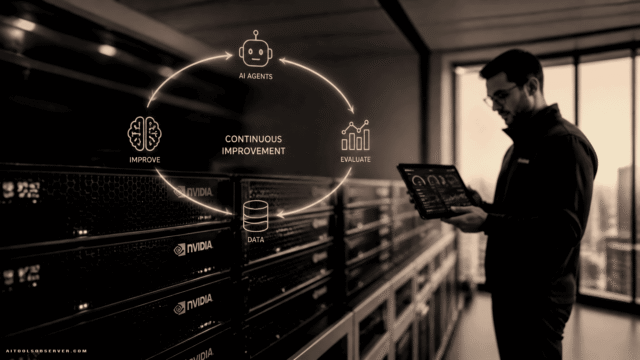
- Observability matters more. You can’t valuemaxx what you can’t measure. Tools that surface usage, cost-per-task, and output quality are becoming more valuable.
- Open-source is a serious option, not a fallback. The performance gap between frontier and capable open-source models has narrowed enough that dismissing them is now a financial decision, not just a technical one.
- Vendor consolidation is likely. Enterprises running five AI tools with overlapping functions will rationalize. Platforms that do more with less friction have an advantage.
The Bigger Picture
The infrastructure buildout is not slowing. The demand for compute appears genuine and supply-constrained. But the layer above the infrastructure — how enterprises actually deploy, manage, and justify AI spend — is maturing fast.
That maturation is healthy. It pushes the conversation from “are we using AI?” to “is our AI use working?” The tools and vendors that survive this shift will be the ones that make the answer to that second question easy to find.
Observe what your AI stack is actually producing. Then choose accordingly.














Comments (0) No comments yet
Want to join this discussion? Login or Register.
No comments yet. Be the first to share your thoughts!