



The Engine Behind the Numbers
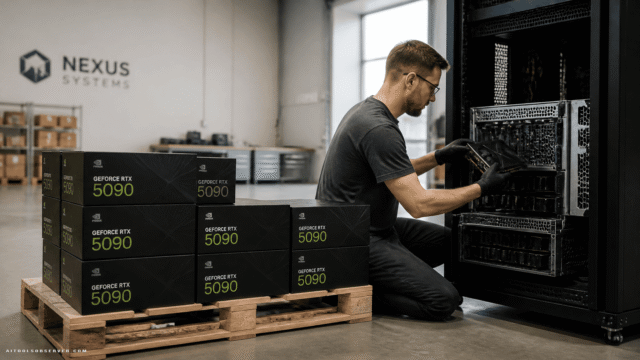
Foxconn isn’t just assembling iPhones anymore. As Nvidia’s biggest server manufacturer, it sits at the physical center of the AI buildout — making the racks and servers that data centers need to train models, run inference, and power everything from chatbots to autonomous agents.
Governments and tech giants are pouring capital into data center expansion at a pace that’s hard to overstate. Foxconn is one of the clearest beneficiaries, because someone has to bolt the hardware together.
The company also reported a 40% year-on-year jump in second-quarter revenue, announced in July. The profit beat follows that trajectory.
Where the Growth Is Going
Foxconn isn’t standing still. A few things worth noting:
- New factories in Mexico and Texas are being built specifically to manufacture AI servers for Nvidia.
- India is now the primary assembly hub for iPhones sold in the US, a significant supply chain shift away from China.
- The company is also exploring electric vehicle manufacturing, though that’s a longer-term play.
For 2026, Foxconn is forecasting “strong” growth — the same language it used for this year, which turned out to be accurate.
The Stock Story Is More Complicated
Despite the strong earnings, Foxconn shares have risen only 17% this year — well behind Taiwan’s broader index, which is up around 57%. The market appears to be pricing in the company’s role as a high-volume, lower-margin manufacturer rather than a direct AI technology play.
That’s the classic contract manufacturing tension: you’re essential to the ecosystem, but the premium valuations go to the companies whose names are on the chips and the software.
What This Means for the AI Tools Ecosystem
For anyone tracking AI tools and infrastructure, Foxconn’s results are a useful signal. When the world’s largest contract electronics maker beats earnings on AI server demand, it confirms that enterprise and government AI investment is translating into real hardware orders — not just announcements.
The AI infrastructure layer is being built out aggressively. That’s the foundation everything else — the models, the APIs, the tools — runs on. Foxconn’s profit jump is, in a sense, a receipt for that investment.
The takeaway: If you’re evaluating AI tools or planning infrastructure decisions, the supply chain is healthy and scaling. The bottleneck is less likely to be hardware availability and more likely to be how well the tools built on top of it actually solve your problem.











Comments (0) No comments yet
Want to join this discussion? Login or Register.
No comments yet. Be the first to share your thoughts!