



The Core Idea: Distributed by Design

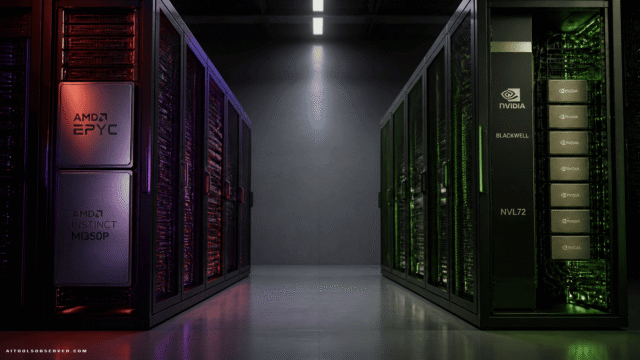
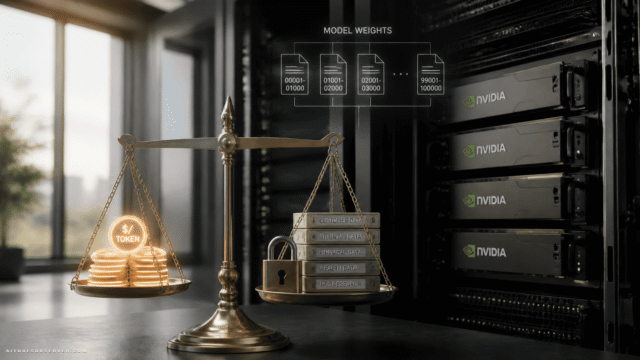
SPAN’s product is called XFRA — a node that packs 16 Nvidia RTX Pro 6000 Blackwell Server Edition GPUs and 4 AMD EPYC server CPUs into a liquid-cooled, low-noise enclosure designed to sit beside a residential home. The company claims it can deploy 8,000 of these units at one-fifth the cost of building a comparable 100-megawatt centralized data center.
The math only works if you already have the infrastructure. And in most modern US homes, you do.
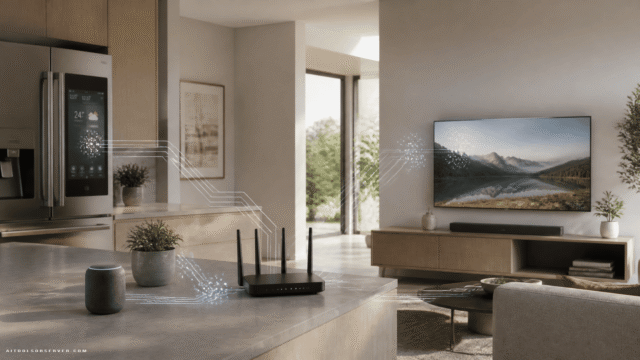
Most homes built in the last 30 years carry 200-amp electrical service. SPAN says roughly 80 amps of that sits unused at any given time — enough to run a single XFRA node continuously without touching what the homeowner actually needs. The node taps the slack, not the supply.
By 2027, SPAN plans to scale this to 80,000 nodes across the US, delivering over 1 gigawatt of distributed compute capacity.
What Homeowners Actually Get

This isn’t a charity arrangement. SPAN takes on the electricity and internet bills entirely, offering residents either a flat monthly fee — the example floated is $150 — or potentially nothing at all. Every installation also includes a 16 kWh home battery and a SPAN smart panel running their proprietary PowerUp software.
Think of it as a landlord-tenant relationship, except the tenant is a rack of GPUs and the rent is paid in kilowatt-hours.
During rare peak usage moments, the system draws from the battery first before touching anything in the home. Homeowners can configure load priorities through PowerUp — deciding, for instance, whether the EV charger or the dishwasher gets curtailed first. SPAN is emphatic that such events will be rare and brief.
During outages, the node shuts down and shifts its workload elsewhere on the network. The homeowner keeps the battery running their home. It’s a reasonable trade.
Why This Matters for the AI Tools Ecosystem

Here’s the part that should interest anyone watching where AI infrastructure is heading: XFRA nodes aren’t built for training. They’re built for inference.
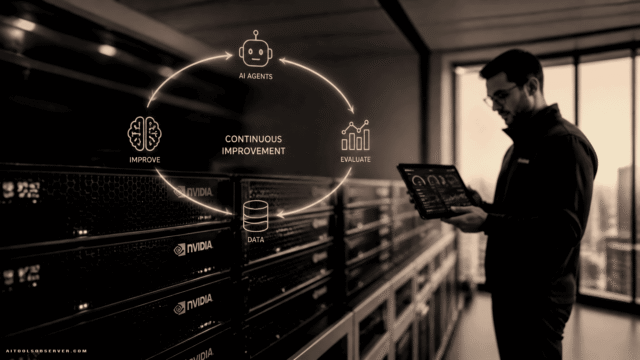
Training a frontier model requires thousands of GPUs working in tight coordination inside a single facility. Inference — running a trained model to answer questions, generate code, or handle conversations — is far more distributable. A few GPUs close to the user, with low latency, can handle most real-world AI workloads efficiently.
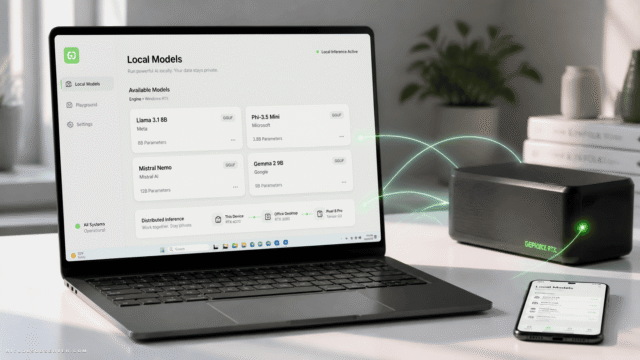
This is the edge AI thesis applied at residential scale. And it has real implications for how AI tools get delivered.
If SPAN’s network scales as planned, it could underpin a new tier of compute — cheaper than hyperscaler cloud, faster than distant data centers, and more resilient than any single point of failure. Cloud gaming, content delivery, and AI inference are the named use cases. But the infrastructure pattern matters more than the specific applications listed today.
Grid Dynamics Aren’t Simple

Harvard Law’s Ari Peskoe flagged a real concern: a block of homes all maxing out their XFRA nodes simultaneously pushes significant load into a local grid segment not designed for it. Utilities will need to adapt their neighborhood-level grid management — and that’s not a fast process.
SPAN’s pitch to utilities is that distributed nodes increase revenue over existing infrastructure without requiring costly upgrades. That’s a compelling argument in theory. In practice, local grid operators will need to be convinced case by case.
Security Is a Genuine Weak Point

Centralized data centers are physically secured, monitored, and isolated. A GPU node sitting beside a suburban house is none of those things.
Benjamin Lee, a computer architect at the University of Pennsylvania, noted that many side-channel attacks require physical proximity — exactly the kind of access that’s trivial in a residential neighborhood. And with each Nvidia RTX Pro 6000 GPU worth roughly $10,000, the hardware theft risk is not hypothetical. Reddit comment threads have already done the math.
SPAN will need a credible answer to both vectors before enterprise or sensitive workloads touch this network.
Granularity vs. Practicality
Lee also raised a subtler question: is the home-scale granularity actually necessary? Deploying conventional 20-megawatt data centers instead of 1-gigawatt hyperscale facilities might achieve similar grid benefits with far fewer operational headaches. SPAN’s model is innovative, but “innovative” and “optimal” aren’t synonyms.
The Bigger Shift This Signals

SPAN isn’t the only company exploring unconventional data center form factors — orbital facilities and ocean-going AI infrastructure have both attracted serious investment and serious press. But suburban compute nodes have something the others don’t: existing power connections, existing land, and existing humans who might actually benefit from the arrangement.
The 100-home pilot planned for this year will be the first real test of whether the homeowner experience holds up, whether utilities cooperate, and whether the security concerns are manageable or fatal.
What to Watch

For founders and product teams building on AI infrastructure, SPAN’s model hints at a coming diversification of compute tiers. The hyperscaler cloud won’t disappear — but a distributed inference layer, priced differently and located differently, could reshape how AI-powered products are architected and costed.
For AI tool builders specifically: if edge inference becomes cheaper and more accessible through networks like this, the economics of running AI features in consumer products shift meaningfully. Latency drops. Margin improves. Dependency on a single cloud provider weakens.
The suburb might be the next compute frontier. Homeowner associations permitting.








Comments (0) No comments yet
Want to join this discussion? Login or Register.
No comments yet. Be the first to share your thoughts!