



The core shift: support is moving outside the brand boundary
According to the survey context, customers are three times more likely to use third-party generative AI tools than brand-owned chatbots for customer service. At the same time, use of third-party AI has doubled over the past year, while company chatbot usage has not shown a statistical increase since 2022.
That combination matters more than either number alone.
It suggests customers are not merely experimenting with AI in general. They are forming a habit around specific AI products they already use in daily life and at work. When a support issue appears, they start with the familiar interface, not necessarily the official one.
For brands, this changes the default assumption. The old model was: customer visits website, opens chatbot, gets help. The emerging model is: customer asks ChatGPT, Claude, Copilot, or another assistant first, then decides whether to visit the brand at all.
Why third-party AI is winning the first interaction
The reason is not difficult to understand. Convenience usually beats ownership.
Customers already use third-party AI across multiple contexts. They know the interface, they trust the output enough to begin there, and they do not need to learn a new support flow for each company. A brand chatbot, by contrast, is often used rarely, appears in a small widget, and may offer limited help.
This creates a strong behavioral advantage for external AI tools:
- one interface across many brands and tasks
- higher familiarity from daily use
- lower friction at the start of the support journey
- growing trust based on repeated exposure
That does not mean brand chatbots are obsolete. It means they are no longer the default starting point simply because they sit on the company website.
The uncomfortable ROI question
A large share of customer service AI spending still goes into upgrading owned chatbots. The logic is understandable: the chatbot already exists, so adding GenAI should improve engagement and resolution.
But the Gartner context introduces an important warning. If customers are not already engaging with a chatbot, adding AI alone may not change that behavior.
This is a classic adoption mistake. Teams optimize the intelligence of a tool without fixing its reach, relevance, or role in the journey. The result is predictable: better technology, flat usage.
For founders and operators evaluating support AI tools, this is a useful filter. The right question is not only, “How capable is the bot?” It is also, “Where does the user naturally begin?” That framing also changes how teams think about ROI.
Where brand chatbots still have a real advantage
Third-party AI is strong at explanation, summarization, and guidance. But brands still own something valuable: the ability to take action inside authenticated systems.
That is the practical opening.
Based on the survey context, many customers are already using generative AI not just to ask questions but to complete tasks. In B2B settings especially, task completion appears central. This is exactly where a company-owned support experience should be strongest.
A brand assistant can potentially:
- update account details
- modify orders or subscriptions
- check service status
- trigger workflows
- authenticate the customer
- execute transactions inside company systems
A third-party assistant usually cannot complete those actions directly across a brand’s internal environment. It can advise, but it often cannot execute.
This means the strategic value of a brand-owned support AI is less about answering generic questions and more about closing the loop on real customer intent.
The missed opportunity: too many chatbots stop at explanation
One of the clearest points in the context data is that many brand chatbots still answer a question and then redirect the customer elsewhere to finish the task.
That is not a minor UX flaw. It undermines the main reason a customer would use the brand interface in the first place.
If the chatbot says, “Here is how to change your billing address,” and then sends a link, the customer has gained little. A third-party AI could have done the same job. The owned experience only becomes meaningfully better when it can say, “I can change that for you now.”
This is where support automation and conversational UX need tighter alignment. A chatbot that cannot transact is increasingly easy to bypass.
The interface problem: the support widget feels outdated
The familiar chatbot bubble in the bottom-right corner made sense when chat was an add-on. In a GenAI environment, it can feel like a leftover.
Customers do not think in terms of “website navigation first, chatbot second.” They think in terms of intent: I have a problem, I want an answer, I want it solved.
That is why the idea of an “intelligent front door” matters. Instead of treating AI as a side widget, some organizations are moving toward making conversational interaction the main entry point to the digital experience.
In practice, that can look like:
- a prominent search-or-ask field on the homepage
- a single interface centered on “What are you trying to do?”
- fewer menus and more guided task completion
- conversational routing across help, account, and transaction flows
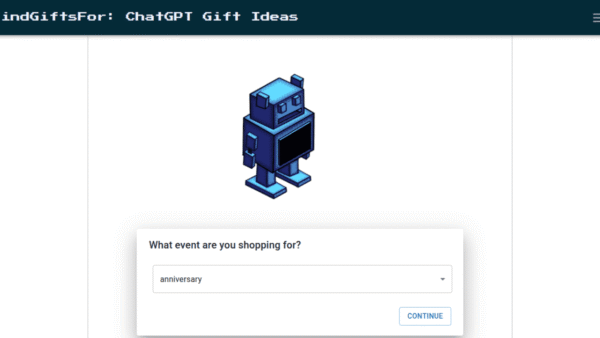
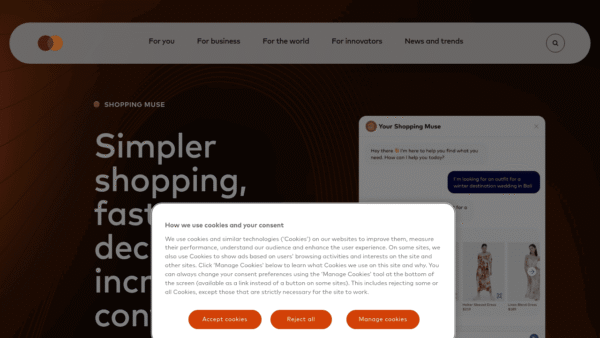
This is not just a design trend. It reflects a deeper change in user expectation. If people are already using AI as the front door to information elsewhere, they will expect the same from brands. That expectation is also shaping adjacent experiences like AI-powered shopping bots.
What this means for tool builders and CX teams
This shift has consequences beyond support strategy. It changes how AI tools for CX should be evaluated.
1. Distribution matters as much as model quality
A highly capable chatbot with low adoption is not a strong support product. Tools that improve visibility, fit into the primary journey, or support cross-channel discovery may matter more than another increment in answer quality.
2. Actionability is the moat
If every AI assistant can explain your return policy, the winning support layer is the one that can process the return. Integration depth matters more than generic conversation quality.
3. UX should start from customer behavior, not internal org charts
Many support experiences mirror the company structure: billing here, technical support there, account changes elsewhere. Customers do not care. They want one starting point and one path to completion.
4. External AI will influence support even if you do nothing
Customers are already using third-party tools to interpret documentation, troubleshoot issues, and decide next steps. Brands should assume their support content is being mediated by outside AI systems and design accordingly.
A practical response for brands
The wrong response is to panic and remove the chatbot. The better response is to redefine what the owned support experience is for.
A practical roadmap looks like this:
- improve the owned assistant where it can perform authenticated actions
- reduce dead-end responses that only send customers to links
- rethink placement and presentation beyond the classic floating widget
- make support content easier for both humans and AI systems to interpret
- track actual entry points to support, including search and external AI-assisted journeys
- focus adoption efforts intentionally rather than assuming AI alone will pull users in
This is also a useful lens for comparing support AI vendors. Look closely at workflow execution, system integration, interface flexibility, and analytics around real usage behavior. Those are likely to matter more than broad claims about conversational intelligence.
The bigger trend behind the data
This is not only a chatbot story. It is a sign that AI usage is consolidating around general-purpose assistants that become habitual operating layers for users.
When that happens, brand-owned interfaces lose their privileged position. Customers no longer begin every journey where brands expect them to begin. They start where their habits are strongest.
For support teams, the implication is clear: being present is no longer enough. The owned experience must do something the external assistant cannot.
The takeaway
If third-party GenAI is now the preferred first stop for support, then brand chatbots should stop trying to win on generic answers alone. Their job is to become the place where intent turns into action.
For CX leaders, the smartest next move is not “add more AI to the widget.” It is to build a support experience that is easier to start, able to complete real tasks, and designed around how customers already behave.











Comments (0) No comments yet
Want to join this discussion? Login or Register.
No comments yet. Be the first to share your thoughts!