



“It’s Like a Friend” vs. “It’s Making Us Dumber”
The split starts early. Charles Ansevin, 15, from Gates Mills, Ohio, describes ChatGPT as something close to a companion—a tool he uses for real intellectual conversation. For him, it adds to the learning experience rather than replacing it.
Dorian Prado, 16, from Fort Worth, Texas, sees it differently. His concern isn’t about cheating. It’s deeper: when thinking becomes optional, learning stops. That’s not a small critique. It’s a fundamental question about what school is actually for.
These two positions aren’t fringe views. They represent a genuine fault line running through how young people relate to AI tools right now.
The Private Tutor Argument
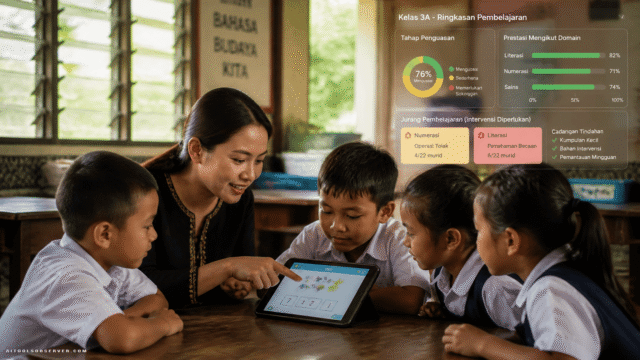
Tessa Klein, 18, from Oradell, N.J., makes one of the most compelling cases for AI in education. She’s used it to get feedback on essays and work through difficult science concepts—the kind of personalized support that’s historically been locked behind expensive tutoring.
Her point lands hard: access to a patient, always-available explainer used to cost money most families don’t have. AI changes that equation. For students without tutors, without extra help at home, or without teachers who have time for one-on-one support, tools like ChatGPT can genuinely level the playing field.
That’s not hype. That’s a real structural shift in who gets academic support.
The Jobs Concern Is Already Here
Dammie’on McColley, 18, from Indianapolis, isn’t thinking about homework. He’s thinking about his community. His worry is straightforward: if AI takes over jobs, what happens to the people whose families depend on that income?
This isn’t abstract anxiety. It’s a grounded concern about economic displacement—and it’s coming from a teenager, not a policy paper.
What’s notable is that Gen Z students aren’t just asking “will AI help me study?” They’re asking “what kind of world is this building?” That’s a more sophisticated question than most AI coverage gives them credit for.
What Teachers Are Seeing
Most K-12 teachers believe AI’s impact on education will be larger than the internet or personal computers. That’s a significant benchmark. It also puts schools in an uncomfortable position: they’re being asked to manage a technology that moves faster than curriculum, policy, or training.
Detection software exists to flag AI-written work—but it’s imperfect, and false positives are already creating problems for students who didn’t use AI at all. The tools meant to enforce academic integrity are introducing their own form of unfairness.
The Critical Thinking Question
The sharpest tension in this conversation isn’t about cheating. It’s about cognitive development.
If students use AI to generate answers before they’ve wrestled with the problem themselves, do they build the same reasoning skills? That’s genuinely unknown. But the concern is legitimate—and it’s one that educators, parents, and students themselves are raising without waiting for research to catch up.
The honest answer is: it depends entirely on how the tool is used. AI as a starting point for exploration is different from AI as a shortcut to avoid thinking. The difference is in the habit, not the tool.
What This Means for Anyone Building or Choosing AI Tools
Gen Z’s instincts here are a useful signal for the broader AI tools market:
- Transparency matters. Students want to know what AI is doing and why. Black-box outputs breed distrust.
- Augmentation beats replacement. Tools that help users think better get more buy-in than tools that think for them.
- Access is a real value. AI tutoring and learning tools have genuine equity implications—that’s a market and a mission worth taking seriously.
- Job displacement anxiety is real and young. It’s not just older workers worried about automation. Teenagers are already doing the math.
The Takeaway
Gen Z isn’t uniformly pro-AI or anti-AI. They’re watching it closely, using it practically, and asking harder questions about it than most adults expect.
The students who will get the most out of AI tools are the ones learning to use them as thinking partners—not answer machines. That distinction matters whether you’re 16 and writing an essay, or 36 and running a workflow.
The tool doesn’t decide. The habit does.







Comments (0) No comments yet
Want to join this discussion? Login or Register.
No comments yet. Be the first to share your thoughts!