



From Industry 1.0 to 5.0: A Surprisingly Fast Journey
The term “Industrial Revolution” was coined by economic historian Arnold Toynbee to describe a seismic shift in how humans produce things. That was Industry 1.0 — steam, iron, and ambition.
Fast forward through electrification (2.0), computerisation (3.0), and digital connectivity (4.0), and you arrive at the threshold of Industry 5.0. The difference this time isn’t just about smarter machines. It’s about putting humans back at the centre — not as operators, but as collaborators.
Industry 4.0 is still very much in motion. But 5.0 is already knocking.
Automation: Way Beyond the Assembly Line

Early automation replaced muscle. Modern automation replaces monotony.
Programmable logic controllers, collaborative robots (cobots), and computer-integrated manufacturing systems now handle complex, high-precision tasks with minimal human intervention. Cobots, in particular, are the quiet revolution — they work alongside people, not instead of them.
The factory floor isn’t emptying out. It’s upgrading.
IoT: When Every Vibration Tells a Story
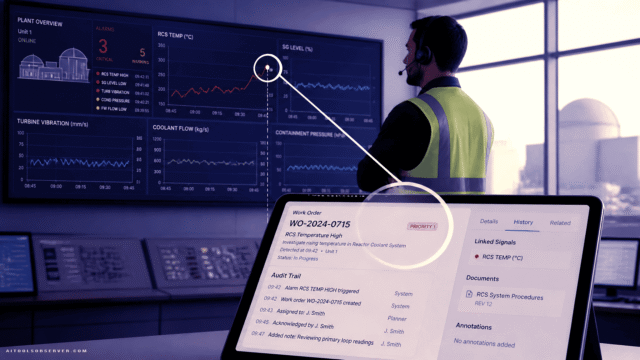
The Industrial Internet of Things turned machines into communicators. Every sensor reading, temperature fluctuation, and motor vibration feeds into a continuous stream of operational intelligence.
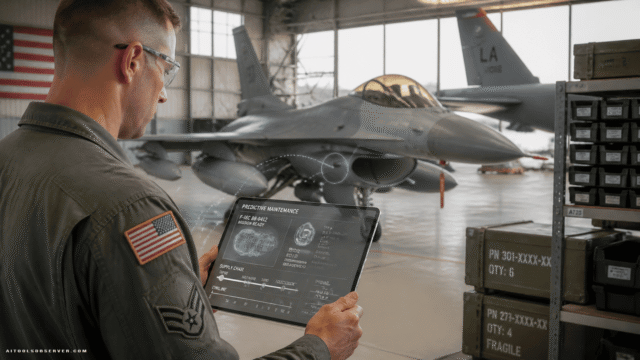
The practical payoff? Predictive maintenance. Instead of waiting for a machine to break down, manufacturers now service equipment before failure — cutting downtime and costs in one move.
Smart factories run on this connectivity. Real-time data doesn’t just monitor production; it guides it.
AI: The Brain Behind the Operation

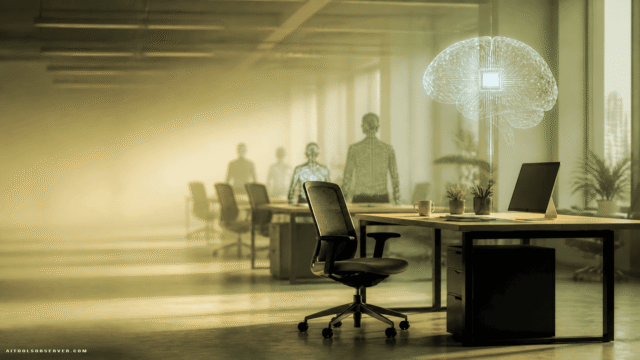
If IoT is the nervous system, AI is the brain.
Algorithms sift through data volumes no human team could process, identifying patterns, optimising workflows, and forecasting demand with unsettling accuracy. Machine vision systems catch microscopic defects in quality control. AI-driven design tools simulate product variations before a single prototype is built.
The reach extends beyond the factory floor too — into logistics, procurement, and customer engagement. AI is quietly stitching the entire value chain together.
3D Printing: Complexity Without the Waste
Additive manufacturing flipped the traditional production logic on its head.
Instead of cutting away material to create a shape, 3D printing builds it layer by layer. The result: complex geometries, near-zero material waste, and customisation at scale. Aerospace companies print lightweight structural components. Medical firms produce patient-specific implants. Automotive teams run rapid prototyping cycles in days, not months.
It’s not a niche technology anymore. It’s a competitive advantage.
Digital Twins: The Factory That Exists Twice
Here’s a concept worth sitting with: a perfect virtual replica of your physical production environment, running simulations in real time.
Digital twins let engineers test scenarios — stress conditions, process changes, equipment failures — without touching the actual production line. Problems get solved in the virtual world before they appear in the real one.
Paired with cloud platforms that enable cross-geography collaboration and data sharing, this virtual-physical blend has fundamentally changed how manufacturers design, troubleshoot, and innovate.
Sustainability Isn’t a Buzzword Here
In Industry 5.0, sustainability isn’t a PR exercise — it’s a design principle.
Energy-efficient machinery, renewable energy integration, smart grids, and circular economy frameworks are now core to manufacturing strategy. Waste reduction and resource optimisation aren’t just ethical choices; they’re financial ones. Manufacturers who build sustainability into their operations are finding it pays back in both margins and resilience.
The planet and the P&L are, for once, pointing in the same direction.
The Human Upgrade
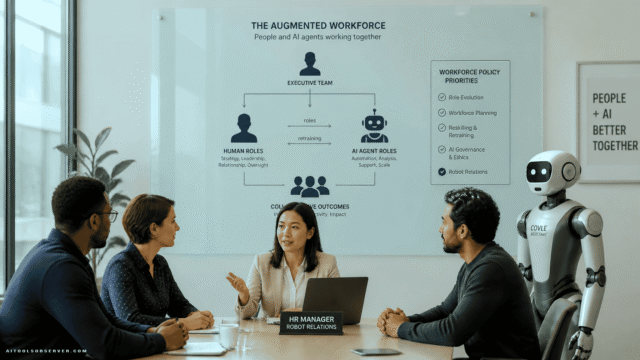
Here’s what often gets lost in the automation conversation: humans didn’t get replaced. They got promoted.
Workers today need digital literacy, data interpretation skills, and the ability to make strategic decisions in real time. Training programmes now focus on human-machine collaboration — preparing people to oversee automated systems with insight, not just oversight.
Chaplin’s cog-in-the-machine fear hasn’t materialised. Instead, the machine became a tool, and the human became its most intelligent user.
What’s Coming in Industry 5.0
The next wave is already taking shape: quantum computing, advanced bio-manufacturing, applied AI at scale, and human-centric design philosophies that treat worker wellbeing as a production variable, not an afterthought.
Supply chains are getting smarter too — blockchain-based tracking, AI-driven logistics, and advanced transparency tools mean manufacturers can trace materials from origin to end consumer and respond to disruptions before they cascade.
The trajectory is consistent. Manufacturing has always been where new technologies get tested, refined, and scaled. That hasn’t changed. The technologies just got exponentially more interesting.
The Takeaway
The modern factory is quieter than Chaplin imagined — and far more intelligent.
In a world where geopolitical shifts and supply chain shocks can disrupt trade overnight, the manufacturers who’ve embraced AI, IoT, digital twins, and sustainable practices aren’t just more efficient. They’re more resilient.
The question for anyone in the space isn’t whether to adopt these technologies. It’s how fast you can move without losing the human judgment that makes the whole system actually work.
Smart tools. Smarter decisions. That’s the Industry 5.0 promise.









Comments (0) No comments yet
Want to join this discussion? Login or Register.
No comments yet. Be the first to share your thoughts!