



What Was Announced
NVIDIA, alongside ecosystem partners including Hugging Face, introduced a coordinated set of local AI tools timed to the upcoming availability of RTX Spark laptops. The release centers on two primary components: Llama Windows and NVIDIA PAIR, both free and aimed at making on-device AI inference practical for a broader audience.
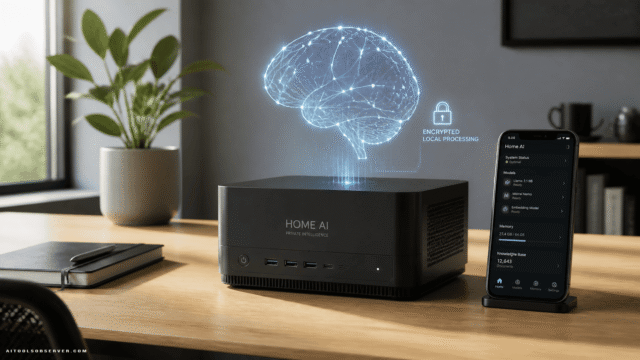
The broader goal appears to be lowering the entry barrier for running open-source models privately on Windows hardware—without routing data through external cloud services.
Llama Windows: A GUI for Local LLMs
Llama Windows is a free, open-source application from Hugging Face designed specifically for Windows. It allows users to browse, download, and run open-source neural network models through a graphical interface, using the widely adopted llama.cpp engine under the hood.
The key practical detail: no command line required. The application is natively optimized for RTX Spark laptop architecture, automatically distributing model weights across available video memory to make full use of tensor core throughput.
For users who have wanted to experiment with open-source LLMs but stopped at the setup complexity, this is a meaningful reduction in friction.
NVIDIA PAIR: Distributed Inference Across Local Devices
NVIDIA PAIR has moved out of beta with direct support for RTX Spark and llama.cpp. The utility is designed to pool computing resources across multiple compatible machines on the same local network—offloading generation and inference tasks to adjacent devices without sending data to the cloud.
This positions PAIR as a practical tool for:
- Users with multiple RTX-capable machines who want to distribute workloads
- Teams or households running resource-intensive models that exceed a single device’s VRAM
- Anyone with a hard requirement for data privacy who cannot use cloud-based inference
MCP Servers and Agent Connectivity
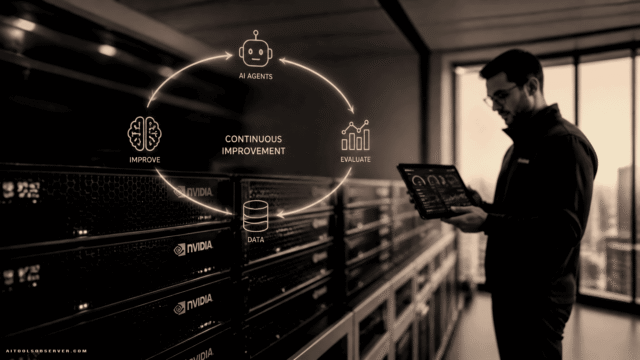
The announcement also included support for MCP servers and skills that connect local AI agents to a range of tools and platforms. Named integrations include Broadcast, the NVIDIA app, RTX Remix, and Omniverse on the NVIDIA side, alongside third-party tools such as Hermes, OpenClaw, and Perplexity.
This layer suggests NVIDIA is positioning RTX Spark laptops not just as inference hardware, but as a local hub for autonomous agent workflows—where the laptop orchestrates tasks across connected tools without leaving the local environment.
What This Means in Practice
The combination of Llama Windows and NVIDIA PAIR addresses two distinct bottlenecks in local AI adoption: the setup complexity of running models at all, and the compute ceiling of running them on a single device.
Neither tool requires cloud connectivity, which matters for users handling sensitive data or operating in environments where external API calls are restricted. The llama.cpp foundation also means compatibility with a wide range of open-source models already in active use.
The practical takeaway is straightforward: if you are evaluating RTX Spark hardware or already working with local LLMs on Windows, both tools are worth testing as part of your stack assessment. The shift toward graphical, no-configuration interfaces for on-device inference is a meaningful signal about where the local AI tooling market is heading.





Comments (0) No comments yet
Want to join this discussion? Login or Register.
No comments yet. Be the first to share your thoughts!