



What took weeks now takes hours
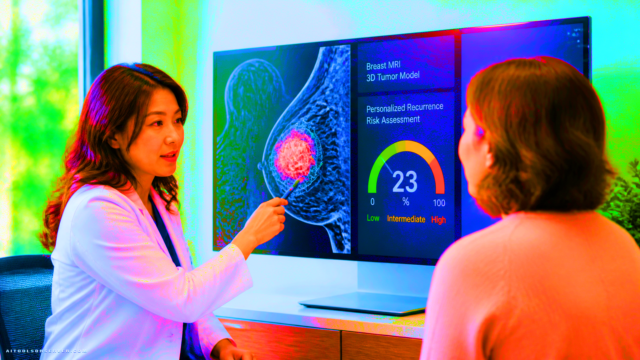
Current genomic tests analyze gene activity in tumor tissue to estimate recurrence risk. They work, but they’re slow (weeks), expensive, and they chew up precious tissue samples that can’t be used again. The AI test sidesteps all that. It works on digitized microscope slides—the same ones already made during diagnosis—and combines their visual patterns with basic clinical data like tumor stage, age, and hormone receptor status. Results come back in hours, not weeks.
How it sees what humans might miss
The system uses self-supervised learning. Instead of relying only on labeled examples, it first studies vast amounts of unlabeled data to learn subtle patterns on its own. Yann LeCun, a co-author, put it bluntly: “The model’s accuracy doesn’t come from hand-labeled data alone. It comes from self-supervised pretraining that lets it learn rich representations first.” That pretraining helps it pick up on details that even trained pathologists can’t spot with the naked eye.
More signals, less noise
Researchers validated the tool on over 3,500 patients from 15 groups across seven countries. It reliably separated higher-risk and lower-risk groups using standard statistical measures like the concordance index and hazard ratios. It also held up well across breast cancer subtypes—including triple-negative and HER2-positive cases, where genomic tests often stumble. Krzysztof J. Geras, who led the study, pointed out the practical headache: “Breast cancer is not a single disease, and decisions about how aggressively to treat it are often difficult.” Anything that makes risk stratification cleaner and faster is a win for doctors trying to avoid both under-treatment and over-treatment.
Where it fits (and where it doesn’t yet)
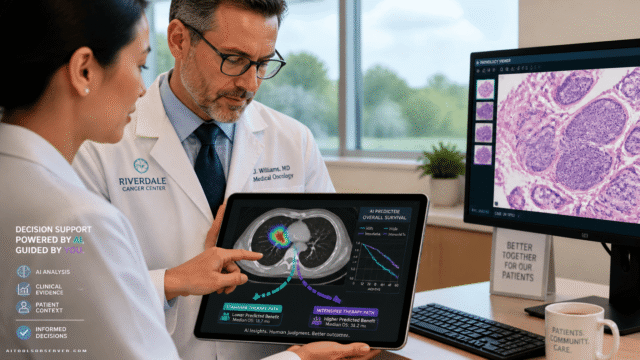
This isn’t a magic wand. The test still needs randomized clinical trials to prove it improves real-world decision-making. And it doesn’t yet predict which treatments will work best—just how likely the cancer is to come back. But the immediate upsides are clear: faster answers, lower costs, and tissue samples left intact for future testing. That’s especially relevant in places where genomic testing isn’t easily available or affordable.
The real payoff
AI here isn’t replacing pathologists. It’s handing them a faster, sharper lens. By merging imaging and clinical data, the test hints at a future where personalized risk assessments aren’t a luxury but a standard step—one that could extend well beyond breast cancer. For now, the clearest takeaway is simple: if you can get a reliable risk score from a routine slide in a few hours, the old “wait and worry” routine starts to look a little obsolete.









Comments (0) No comments yet
Want to join this discussion? Login or Register.
No comments yet. Be the first to share your thoughts!