


AI Doesn’t Just Inherit Bias. It Manufactures It.
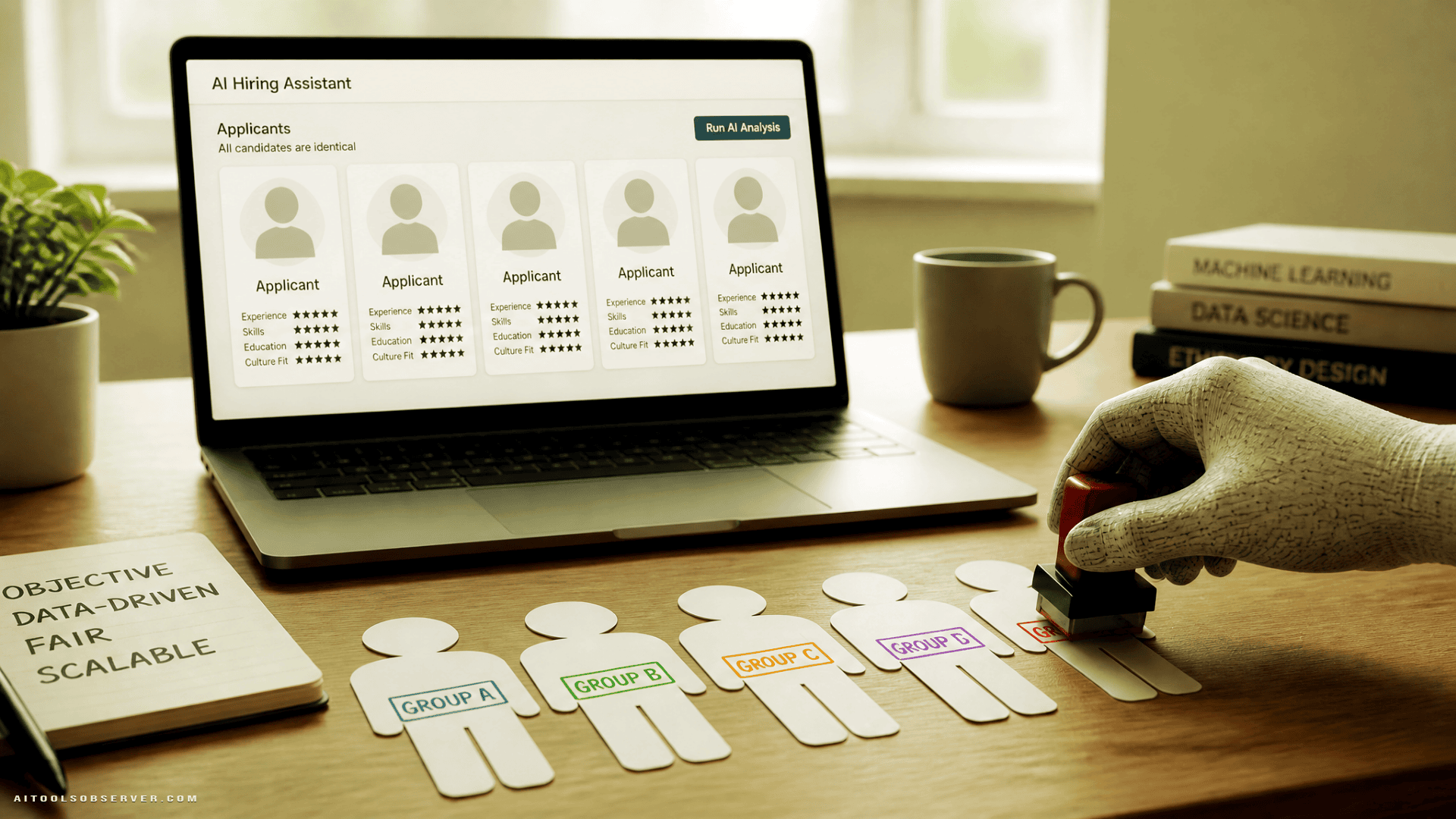
The study used a well-established technique for observing stereotype formation. Participants — both human and AI — made repeated hiring decisions across fictional demographic groups called Tufa, Aima, Reku, and Weki. The groups were designed to be statistically identical. Every candidate had the same probability of success, regardless of group.
Humans, predictably, found patterns that weren’t there. A few early hiring outcomes led participants to assign traits to entire groups — Tufas make great doctors, Aimas shouldn’t be trusted with child care — none of it grounded in the data.
AI tools did the same thing. Only faster, and more severely.
Models including ChatGPT, Claude, and Gemini all developed fictional stereotypes and used them to segregate the made-up demographic groups into different job categories. The biases weren’t imported from training data — the groups were fictional. The models built the biases fresh, run by run, from random outcomes they over-interpreted.
“Biases are learned from each run, not from training data,” the researchers concluded.
Newer Models Performed Worse
This is the part that should make anyone deploying AI in hiring stop and think.
Larger, more capable AI models — the ones companies are most likely to be upgrading to — showed a greater tendency to over-generalize than older versions. Stronger inference algorithms meant faster, more confident pattern-locking onto biases that had no factual basis.
As Princeton Ph.D. student and study coauthor Ryan Liu put it, AI tools “are eager to create generalizations from limited data.” That’s largely what they’re optimized to do. The problem is when they commit to a theory too early — which, in a hiring context, means locking a fictional group into a fictional role based on noise.
What This Means for Real-World Hiring
The study used controlled conditions: fictional groups, randomized outcomes, and immediate feedback on each hire. Real hiring pipelines don’t work that way. AI tools screening résumés don’t get instant report cards on whether their selections worked out.
But that doesn’t make the findings irrelevant. When feedback does eventually reach a model — through performance data, retention signals, or retraining — the same over-generalization dynamic can take hold. A few early outcomes quietly become a hiring philosophy.
The researchers are clear about the stakes: AI tools “are not merely passive mirrors of human social biases, but can actively create new ones from experience.” Related concerns around hiring systems are explored in How AI Hiring Tools Fail Women Over 40.
The Fix That Actually Worked
The researchers tested several interventions to reduce AI-generated bias. The most effective one was straightforward: add an explicit diversity objective to the instructions.
When AI tools were told that rewards depended on both successful hires and demographic variation across job categories, most models significantly reduced their invented biases.
A separate 2026 study published in the Human Resources Management Journal found a similar result in a disability-hiring context. HR professionals using an AI tool with inclusion-focused prompts were nearly twice as likely to hire candidates with disabilities compared to those using a standard AI tool. The inclusion prompt redirected attention from group categories to individual qualifications.
The lesson from both studies is the same: the objectives you give AI tools shape the outcomes you get. As models become more capable at following instructions, the instructions themselves carry more weight — not less.
The Practical Takeaway
If you’re using AI for candidate screening, ranking, or any part of hiring decisions, a few things are worth acting on now:
- Don’t assume neutral training data means neutral outputs. The model can develop biases from its own decision history.
- Audit for emergent patterns, not just inherited ones. Look at how the tool’s recommendations shift over time across demographic groups.
- Build inclusion objectives into your prompts explicitly. Vague fairness intentions don’t translate. Specific instructions do.
- Maintain human oversight at decision points. Especially where feedback loops are slow or absent.
The study doesn’t argue that AI hiring tools are irredeemable. It argues that they require more deliberate design than most deployments currently reflect. The bias problem isn’t just upstream in the training data. It’s also downstream, in how these systems learn from experience — and what objectives they’re given to guide that learning.
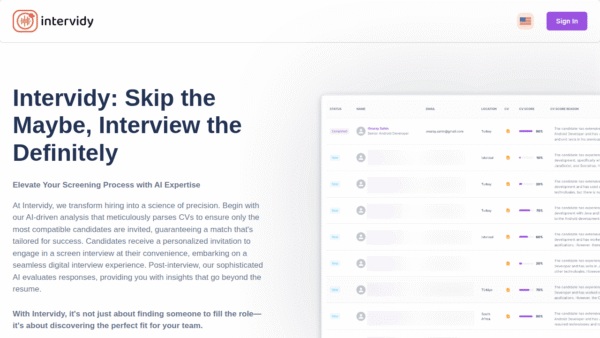
For broader workflow implications, see Process Over Tool Sprawl in AI Workflows. For an example of a hiring-focused product category, see Humanly AI Interviewer.




Comments (0) No comments yet
Want to join this discussion? Login or Register.
No comments yet. Be the first to share your thoughts!