


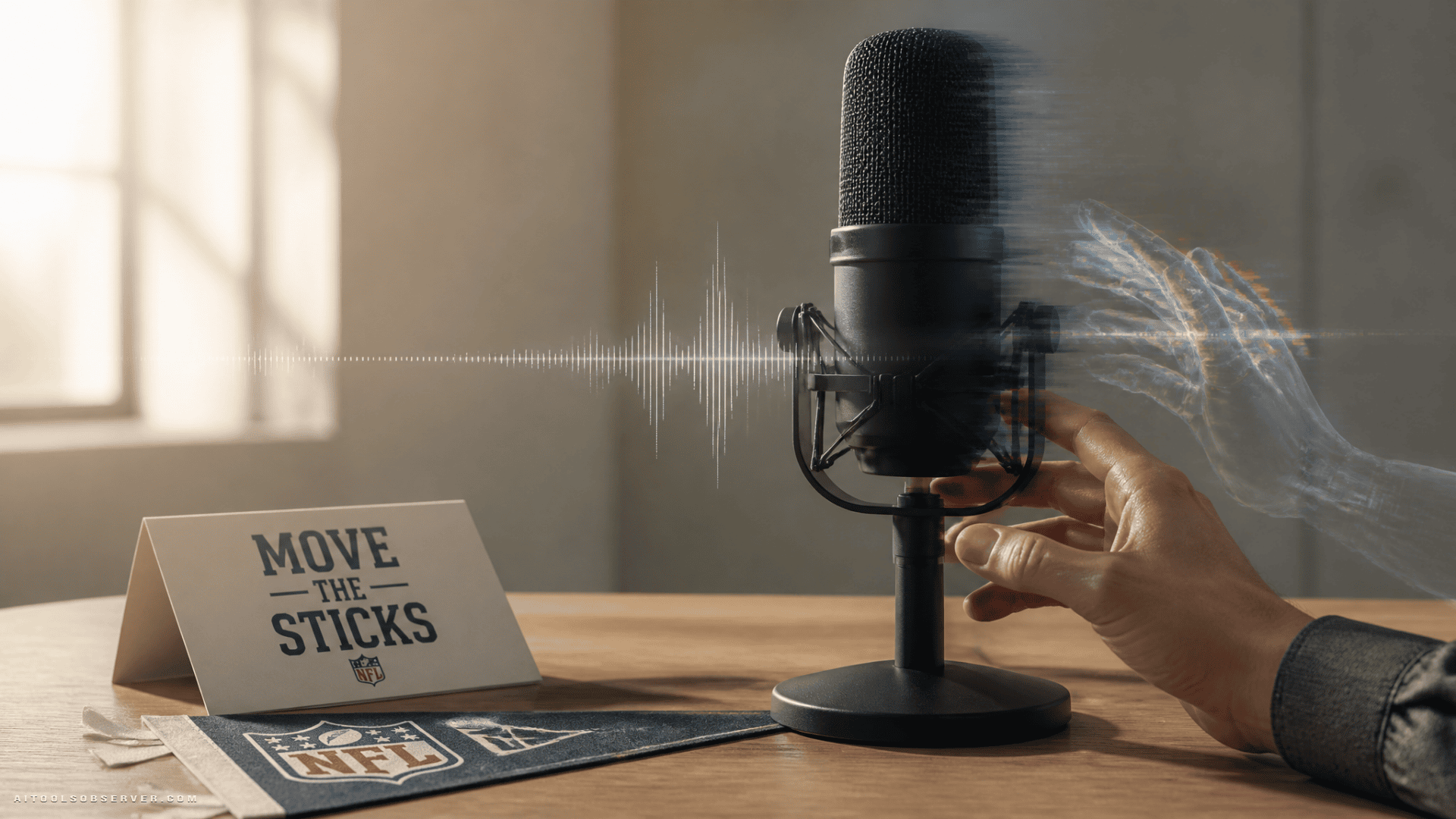
What happened on the Move the Sticks feed
The Move the Sticks show had been associated with Daniel Jeremiah and Bucky Brooks. After a period of inactivity, new episodes reportedly appeared on the older feed with team preview-style content focused on NFL divisions.
What triggered the backlash was not simply that new episodes showed up. It was the way they sounded.
Reports described the audio as strange and clunky, with narration that did not land naturally and with press conference or game audio seemingly dropped in awkwardly. For listeners already primed to spot synthetic media, that was enough to raise questions about whether AI-generated audio had been used.
Why listeners immediately got suspicious
There are a few common signals that make audiences think, “This sounds AI-made,” even when they cannot prove it.
In this case, the concern appears to have come from a mix of factors:
- narration that sounded unnatural
- pacing that felt stitched together
- audio inserts that seemed random or poorly integrated
- a mismatch between what listeners expected from the original show and what they heard
That last point matters more than it may seem. If a well-known podcast feed suddenly publishes content that feels stylistically different, audiences notice fast.
For listeners already primed to spot synthetic media, those signals can be enough to raise immediate questions.
Daniel Jeremiah added more fuel to the confusion
Part of the story gained traction because Daniel Jeremiah publicly clarified that he no longer appears on that old feed and that he is launching a new podcast elsewhere.
That matters because Move the Sticks listeners likely associated the feed with familiar voices and a familiar format. If those expectations are broken without a clear explanation, people start filling in the gaps themselves.
In AI-related media controversies, silence and ambiguity often make things worse.
The NFL’s response
After the criticism spread, the NFL provided a statement insisting the podcast episodes were not AI-generated.
That denial addresses the core accusation, but it does not automatically resolve the underlying problem. Even if the episodes were not created by AI, the fact that many listeners believed they might have been says something important about content quality, production choices, and audience trust.
There was also an odd wrinkle in the reporting: one of the episodes reportedly included a disclaimer saying it was guaranteed to be hosted by a human. Instead of calming concerns, that kind of language can have the opposite effect. If listeners were not already suspicious, a disclaimer like that may make them wonder why it needed to be said at all.
Why this controversy matters beyond one podcast
This is not just a niche sports media story. It highlights a broader problem facing every publisher, platform, and media brand now using or experimenting with AI-assisted production.
The issue is no longer just whether AI is being used. It is whether audiences can tell, and whether they feel misled when they do.
That creates several risks:
1. Brand trust can drop faster than content costs
AI can lower production friction. But if the output sounds generic, robotic, or poorly edited, the savings can be wiped out by reputational damage.
For a media brand, that tradeoff is brutal. Cheap content that weakens trust is often expensive in the long run.
2. Legacy feeds create confusion
Old podcast feeds carry built-in authority. Audiences assume continuity unless told otherwise.
If a dormant feed starts publishing new content without clear context, listeners may assume the original hosts are still involved. If they are not, the content needs stronger labeling and clearer communication.
3. “Human-made” claims now face more scrutiny
As synthetic audio improves, simple assurances are becoming less effective. Audiences want clarity, not vague comfort language.
That means publishers need to think carefully about how they describe production methods. A disclaimer that sounds defensive can undermine confidence instead of strengthening it.
The bigger shift in sports media AI
Sports media is especially vulnerable to this kind of backlash because fans are highly familiar with voices, tone, and rhythm. They know when something sounds wrong.
That makes AI voice narration, synthetic media, and automated recap content harder to slip past attentive audiences. Unlike generic blog content, sports audio often depends on personality, timing, credibility, and chemistry.
If any of those elements disappear, fans notice immediately.
What publishers and media teams should learn from this
Whether or not AI was used in this case, the reaction offers a practical playbook for any media teams experimenting with automation.
Here are the key lessons:
- keep old feeds clearly labeled if the original hosts are gone
- explain format changes before audiences discover them on their own
- avoid publishing low-polish audio that sounds stitched together
- use disclosure language carefully and specifically
- assume listeners will compare new content against the brand’s past standard
This is not really just an AI problem. It is a content governance problem.
What this means for AI tool buyers and observers
For founders, marketers, and media operators evaluating AI audio tools, this story is a useful reminder: output quality is only part of the equation. Perceived authenticity matters just as much.
A tool may produce passable narration, summaries, or repackaged audio. But if the result feels uncanny, confusing, or disconnected from the brand voice, the audience may reject it regardless of how efficient the workflow looks internally.
That is the practical filter worth using when comparing AI media tools:
- Does the output sound natural enough for your audience?
- Is the content clearly labeled?
- Would your listeners feel informed or misled?
- Does the workflow protect the brand, not just speed up production?
The real takeaway
The NFL’s denial may settle the narrow question of whether these Move the Sticks episodes were AI-generated. It does not settle the bigger issue.
When audiences cannot tell what they are hearing, or when the content feels artificial enough to spark immediate suspicion, trust becomes the story. Any media brand using AI, automation, or even just low-context republishing should treat that as the real warning sign.















Comments (0) No comments yet
Want to join this discussion? Login or Register.
No comments yet. Be the first to share your thoughts!