


The Problem It’s Solving
When someone asks ChatGPT “best CRM for a 20-person team in India” or “top protein powder brands in India,” they get four or five names back. If your brand isn’t one of them, you don’t get an impression, a click, or even a bounce. The conversation ends without ever touching your website.
That’s not a 2027 problem. According to Pallix founder Akash Singh, the traffic is already gone — and most brands find out the hard way, when a customer casually mentions they asked an AI assistant and got a competitor’s name instead.
What Pallix Actually Tracks
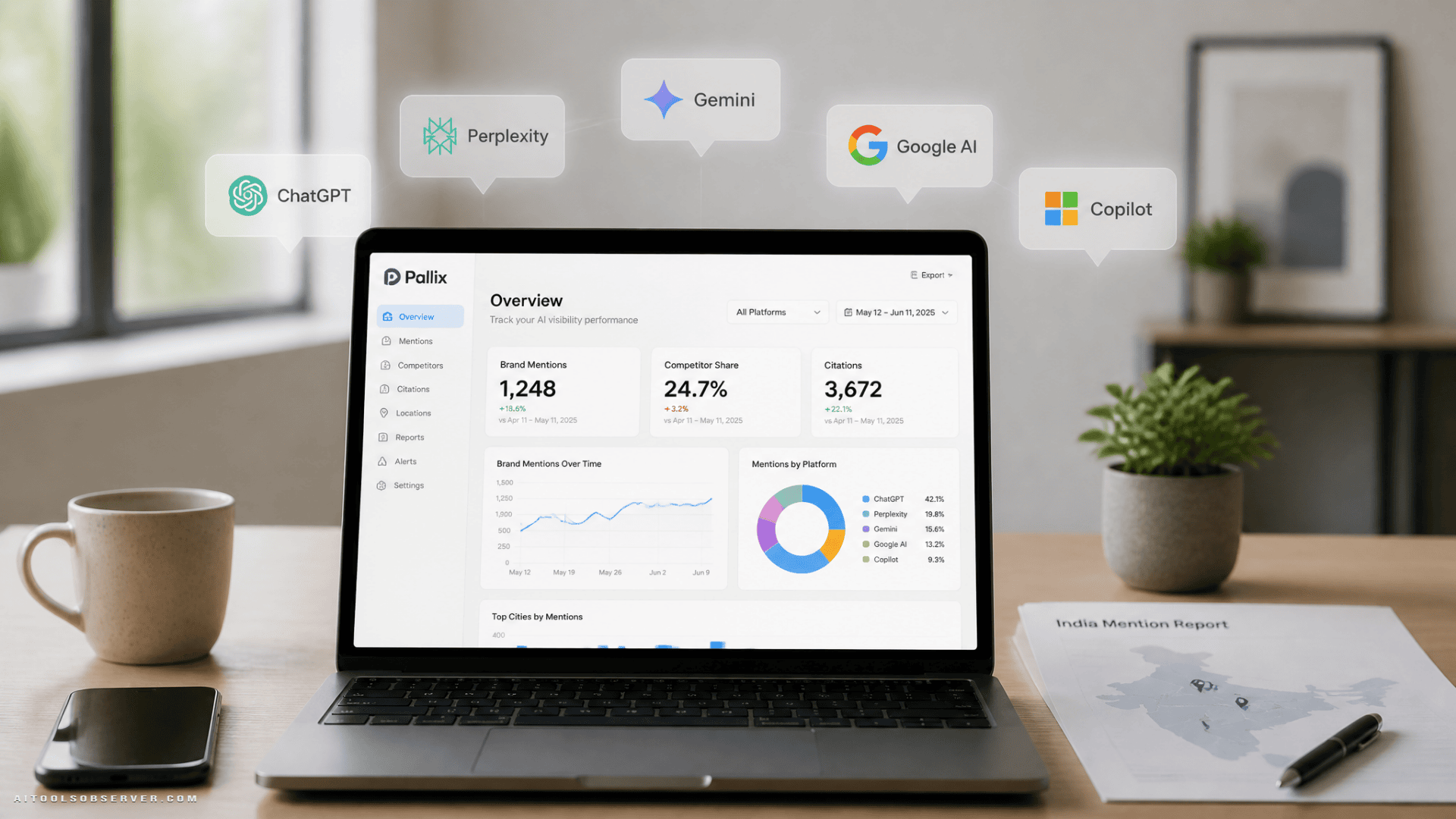
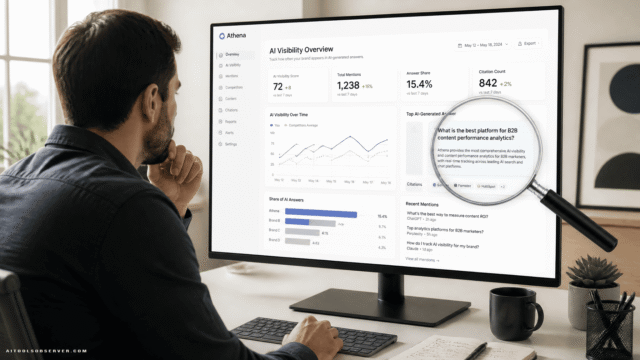
You give Pallix the prompts your customers are likely typing. It runs those prompts on a schedule across ChatGPT, Perplexity, Gemini, Google AI Overviews, and Copilot, then records what comes back.
The tool measures three things:
- Brand mentions — how often your brand appears in AI-generated answers
- Competitor share of voice — which rivals are getting named instead, across a competitor set you define yourself
- Citations — which pages and domains the AI assistants keep pulling from in your category
That last one matters more than it sounds. In most audits, the citation list is where the actual optimization work lives. For related context on Tracking Brand Visibility in AI, this framing is useful.
Plans and Pricing
Pallix prices in rupees, bills monthly if you want, and puts unlimited seats on every plan. No per-seat charges, no annual contract required upfront.
| Plan | Price | Prompts | Refresh Cadence |
|---|---|---|---|
| Starter | Rs 2,499/mo | 30 | Every two weeks |
| Growth | Rs 5,999/mo | 50 | Daily |
| Agency | Custom | 200+ | Daily + weekly sweep |
Starter covers ChatGPT, Gemini, and Google AI Overviews. Growth and Agency add Perplexity and Copilot. Annual billing shaves roughly 10% off.
For context, most comparable tools were built for US search behavior, priced in dollars, and structured around per-seat charges and sales calls. Pallix is a deliberate departure from that model.
Built for Indian Categories
This is worth flagging. Indian brand categories — D2C, regional ecommerce, B2B SaaS built for the subcontinent — are full of names a US-built tool would never have on file. Pallix lets you define your own competitor set, which means the comparisons are actually relevant.
Early accounts are concentrated in D2C, ecommerce, and B2B SaaS: the categories where AI assistants are already shortlisting brands before buyers visit a single website. That shift overlaps with broader changes in Generative Engine Optimization.
The Agency Angle
Agencies are getting an increasingly awkward question from clients: why aren’t AI answers in the monthly report? The Agency plan addresses this directly. Each client brand gets its own workspace under one login, reports export white-labelled, and onboarding happens with the Pallix team rather than a help doc.
Because seats are unlimited, agencies can put clients inside the account without the bill moving. That’s a meaningful structural difference from tools that charge per user or per brand.
Worth Knowing Before You Try It
Pallix offers a free audit that requires no account — useful for a quick reality check on where your brand stands across AI surfaces right now. After that, there’s a 14-day trial at Growth level with no card and no sales call required.
“I don’t think a score is worth Rs 2,499 a month. Anyone can tell you that you are invisible. The useful part is the list of what to change.”
If your brand is already investing in SEO and wondering why organic traffic feels increasingly disconnected from actual buyer behavior, that list might be the most useful thing you haven’t looked at yet.




Comments (0) No comments yet
Want to join this discussion? Login or Register.
No comments yet. Be the first to share your thoughts!