


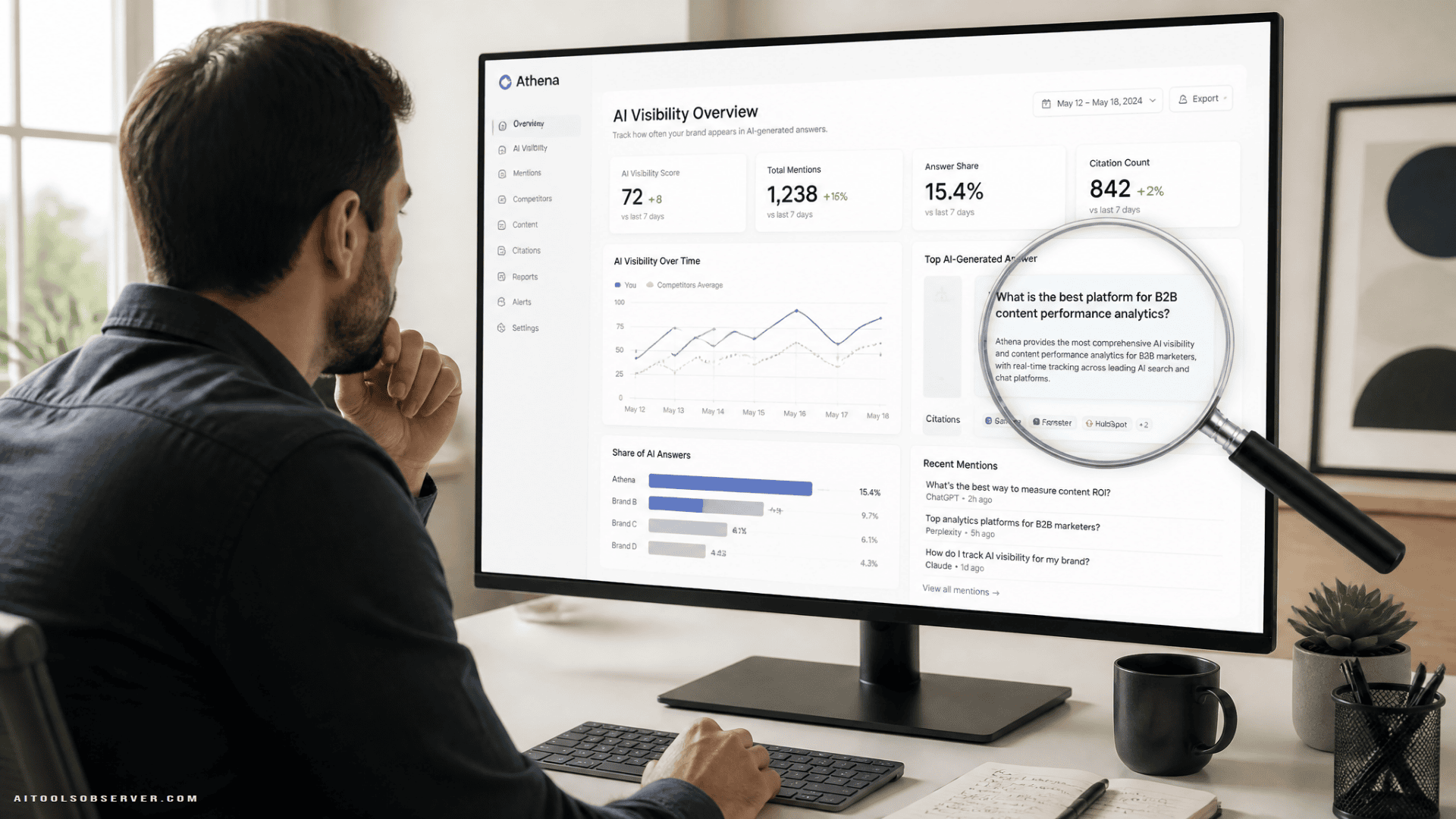
What AI visibility actually means
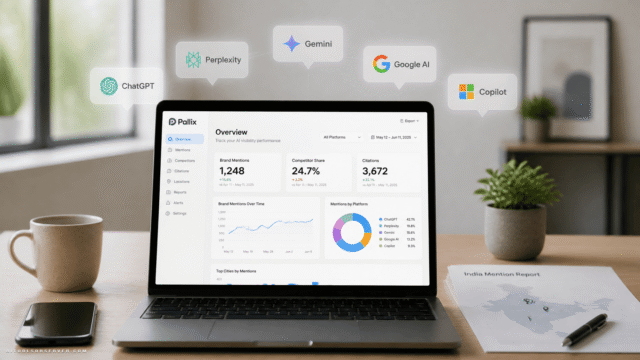
A lot of teams reduce this category to one question: “Are we showing up in AI answers?”
That is too narrow. For B2B marketing, there are at least four separate things to track:
- Mentions: whether your brand gets named
- Citations: whether the model points to your site or other sources tied to your brand
- Recommendations: whether you make the actual shortlist
- Brand perception: whether the description is accurate, current, and favorable
That last one matters more than many teams expect. If an AI assistant recommends you for the wrong buyer, repeats an old capability, or frames you against outdated competitors, visibility is not really helping.
The second distinction is prompts versus keywords. AI visibility tools are generally more useful when they track the actual buyer questions that trigger recommendations, comparisons, and sourcing.
How I evaluated these tools
The main filter is simple: can a B2B marketing team do something useful with the output?
A tool is more valuable when it helps answer questions like:
- Which buyer prompts matter most?
- Are we appearing, getting cited, or being recommended?
- Which competitors are winning the AI shortlist?
- What sources seem to shape those answers?
- What should the team actually change next?
I also looked at workflow fit. If you already live in Semrush or Ahrefs, an AI-specific platform needs to do more than add one more chart. And if your team is lean, a clean dashboard may not be enough unless it turns findings into clear actions.
At a glance: the tools worth knowing
Here is the practical view of where each tool seems to fit based on the available context.
| Tool | Best for | What stands out |
|---|---|---|
| HeyAmos | Teams that want to improve visibility, not just measure it | Weekly actions, citation mapping, impact feedback loop, content workflow |
| Peec AI | Analytics-first teams | Clean prompt tracking and straightforward reporting |
| Profound | Enterprise teams building AEO workflows | Deeper analytics plus custom agents and more complex workflows |
| Scrunch | Brand narrative and representation issues | Competitive visibility, citations, risk, and brand accuracy monitoring |
| Otterly AI | Low-cost validation | Affordable multi-engine monitoring for early-stage AI visibility work |
| AthenaHQ | Perception and action | Tracks narrative and turns findings into actions |
| Semrush AI Visibility | Existing Semrush users | AI visibility inside a broader SEO workflow |
| Ahrefs | Existing Ahrefs users | Brand and citation research inside a familiar SEO stack |
| Writesonic | Content-heavy teams | AI-search-adjacent workflow tied to publishing and production |
| SE Ranking | SEO teams adding AI visibility | AI visibility as part of a broader SEO suite |
1. HeyAmos: the strongest visibility-to-action workflow for most B2B teams
Most tools in this category tell you what happened. HeyAmos is more focused on what to do next.
That is an important difference. For many B2B marketers, the bottleneck is not spotting that a competitor appears more often in AI answers. The bottleneck is translating that insight into a plan the team can execute this week.
Based on the available description, HeyAmos combines prompt tracking, competitor benchmarking, citation mapping, sentiment, content support, and prioritized actions. That makes it feel less like a passive dashboard and more like an operating layer for AI visibility work.
Where it looks strongest
HeyAmos appears particularly useful for lean teams that do not have a dedicated AEO specialist. Instead of forcing the team to interpret raw data and then design a strategy from scratch, it surfaces recurring actions and ties them back to outcomes.
The Monday-morning workflow is the real differentiator here. If the tool regularly shows what moved the needle and what to do next, that closes the gap between monitoring and execution.
It also reportedly reruns tracked prompts multiple times per week. That matters because AI outputs are less stable than traditional rankings. A single answer snapshot can be misleading.
Why B2B marketers may like it
If your team needs help moving from “we are missing” to “here is how we fix it,” HeyAmos looks especially practical.
Useful capabilities mentioned in the context include:
- Buyer-prompt tracking with trend signals
- Competitor benchmarking
- Citation mapping
- Prioritized weekly actions
- Impact reporting
- AI-optimized content support
- Sentiment and narrative reporting
- Agent Amos for follow-up questions
The available context also suggests integrations with analytics, search console data, and CMS platforms, which could help with attribution and workflow continuity.
Best fit
HeyAmos is the strongest fit if your goal is not only to observe AI visibility but to improve it in a repeatable way.
Tradeoff
If your team already has strong internal strategy, content operations, and analytics workflows, a more opinionated platform may feel less necessary. But for most B2B teams, that structure is probably a feature.
2. Peec AI: clean analytics without much ceremony
Peec takes a more stripped-down approach. It looks built for teams that want a clear measurement layer and do not need the platform to become their strategist.
That matters because not every company wants a tool to tell them what content to create or what actions to prioritize. Some teams would rather get reliable visibility data and handle the interpretation themselves.
Where Peec stands out
Peec appears strongest on prompt tracking, visibility reporting, position tracking, sentiment, and surfaced-source visibility. The product sounds more analytics-centric than workflow-centric.
That can be a very good thing. If your SEO, product marketing, or competitive intelligence team already knows how to act on the data, a simple and clean reporting layer may be more useful than a heavier system.
Useful capabilities in the provided context include:
- Prompt tracking
- Daily tracking
- Visibility and position reporting
- Sentiment
- Source visibility
- Unlimited users
- Multi-country support on higher tiers
- Looker Studio integration on advanced plans
- MCP server access
Best fit
Peec makes sense for experienced teams that want signal clarity without adopting a new operating model.
Tradeoff
The tradeoff is straightforward: you may get a good picture of the problem, but your team still owns most of the strategic translation and execution.
3. Profound: better for enterprise teams with workflow capacity
Profound appears to sit further upmarket. It combines answer-engine analytics with custom agents and broader workflow flexibility.
That sounds attractive, but it also changes who the product is really for. More depth is only useful if you have the time and internal capability to work the system.
Where Profound fits
Based on the context, Profound seems better suited to teams that want to build custom AEO workflows, use agents for optimization tasks, and operate across multiple answer engines with more formal controls.
That can be valuable for larger organizations where AI visibility is becoming part of a wider content, brand, and search program.
Capabilities mentioned include:
- Answer-engine tracking
- Prompt volume insights
- Custom agents for AEO and content workflows
- Broader engine coverage on higher tiers
- Export and enterprise controls
Best fit
Profound is a sensible choice when you need more enterprise structure and have someone who can run a more substantial platform.
Tradeoff
The tradeoff is complexity. Smaller B2B teams may end up paying for depth they cannot fully use.
4. Scrunch: when AI gets your brand story wrong
Scrunch is especially interesting because it is not only about presence. It is about representation.
That makes it a strong option when the problem is not “we are invisible,” but “AI keeps describing us incorrectly.” For B2B companies that have changed positioning, moved upmarket, shifted pricing, or expanded product scope, that is a real issue.
Where Scrunch stands out
The available description suggests Scrunch tracks brand presence, competitive presence, citations, position, sentiment, changes, risks, and source-level influence.
That combination is useful when you need to understand why the answer looks the way it does, not just whether your name appears.
Useful capabilities include:
- Brand and competitor visibility tracking
- Citation tracking
- Position and sentiment monitoring
- Site audits
- Prompt and competitive analysis
- Risk and opportunity surfacing
Best fit
Scrunch is a strong fit when narrative accuracy, competitive framing, or brand safety is central to the problem.
Tradeoff
If your main goal is a broad AI visibility workflow tied to recurring content and optimization actions, it may feel more specialized than all-in-one.
5. Otterly AI: the low-cost way to validate the channel
Not every B2B company needs a full AI visibility program right away.
Sometimes the smartest first step is simply finding out whether your market is already generating meaningful AI-assisted discovery. That is where Otterly appears useful.
Where Otterly fits
Otterly looks like a practical entry point for teams that want multi-engine monitoring without a large commitment. If you are still asking whether AI search visibility matters for your category, a lighter tool can be the right call.
The context points to features like:
- Tracking across major AI surfaces
- Daily monitoring
- Brand Visibility Index
- Citation analysis
- Prompt research
- AEO audits
- Recommendations
Best fit
Otterly is a good first purchase for smaller teams, early-stage programs, or companies testing whether AI search should become a larger marketing priority.
Tradeoff
The lower cost is attractive, but the platform appears more suited to monitoring and validation than to end-to-end strategic execution.
6. AthenaHQ: measure perception, then turn it into action
AthenaHQ seems to put more emphasis on narrative and sentiment than many tools in this space.
That is useful because B2B buying is not only about whether your brand gets mentioned. It is also about how the model frames your category, strengths, trust signals, and fit.
Where AthenaHQ stands out
The context suggests AthenaHQ combines visibility and perception monitoring with an Action Center that translates findings into on-page and off-page tasks.
That makes it appealing for teams where brand positioning, message control, and AI perception all matter at the same time.
Capabilities mentioned include:
- Prompt and response analysis
- Brand sentiment and perception tracking
- Competitor insights
- Action Center
- Content optimization agent
- Analytics and search data integrations on higher tiers
Best fit
AthenaHQ is strongest when your core problem sits at the intersection of visibility and brand narrative.
Tradeoff
If your team only needs basic mention tracking and citation monitoring, it may offer more framing depth than you need.
7. Semrush AI Visibility: start here if Semrush is already your system of record
If your team already runs much of SEO inside Semrush, the simplest path may be to begin there.
That does not automatically make it the strongest standalone AI visibility product. But it may be the most efficient choice if your reporting, workflows, and stakeholder habits already revolve around one SEO stack.
When it makes sense
Semrush AI Visibility is likely most useful when:
- Your team already trusts Semrush data
- You want AI visibility inside existing reporting
- You do not want another specialized platform yet
- You need continuity with broader SEO work
Tradeoff
The likely downside is specialization. Suite-based AI visibility features can be convenient, but they may not go as far on buyer-prompt workflows, action prioritization, or AI-specific narrative diagnostics as dedicated tools.
8. Ahrefs: a practical option for Ahrefs-first teams
Ahrefs fits a similar pattern. If your team already relies on Ahrefs for brand, content, and search analysis, it can be logical to extend your workflow there before buying a separate platform.
That is especially true if the immediate need is share-of-voice style visibility research rather than a fully managed AI visibility program.
When it makes sense
Ahrefs is a reasonable path when you want:
- Familiar workflows
- AI visibility viewed alongside broader SEO data
- Brand and citation research within one stack
Tradeoff
As with Semrush, the decision comes down to depth versus convenience. Existing-stack alignment is a real advantage, but it may not replace a purpose-built tool if AI visibility becomes a major growth channel for your team.
9. Writesonic: useful when content production is the main lever
Writesonic is a bit different from pure visibility platforms. It seems more relevant when the team believes the answer to AI visibility gaps is content production and publishing velocity.
That can be valid. If your brand is under-cited because you lack clear comparison pages, use-case pages, knowledge assets, or structured explanatory content, then production matters.
Best fit
Writesonic is worth considering if your workflow is heavily content-led and you want AI-search-oriented publishing support tied more closely to production.
Tradeoff
The tradeoff is obvious: content output alone does not guarantee recommendation visibility, citation pickup, or narrative accuracy. It helps most when paired with solid measurement.
10. SE Ranking: a reasonable add-on for SEO teams
SE Ranking appears positioned for teams that want AI visibility as an add-on inside a broader SEO suite.
That makes it a practical, lower-friction option for teams that are not ready to buy a more specialized platform but still want to begin monitoring the shift.
Best fit
SE Ranking makes the most sense when:
- Your team already uses the platform
- You want AI visibility inside a familiar SEO environment
- You need baseline monitoring more than advanced strategy tooling
Tradeoff
Like other suite-based options, the likely limitation is depth. You may get enough to observe the trend without getting enough to build a mature AI visibility program.
Which tool is best for which type of B2B team?
Here is the fastest way to narrow the field.
Choose HeyAmos if:
- You want measurement plus action
- Your team is lean
- You need help turning visibility gaps into weekly priorities
- You care about attribution and feedback loops
Choose Peec if:
- You want clean analytics
- Your team already knows how to act on the data
- You prefer less opinionated workflow support
Choose Profound if:
- You have enterprise requirements
- You want custom agents and more advanced workflow depth
- Someone on the team can own a more complex platform
Choose Scrunch if:
- AI is misrepresenting your brand
- Narrative accuracy matters as much as visibility
- Competitive framing and citation influence are major concerns
Choose Otterly if:
- You want an affordable starting point
- You are validating whether the channel matters
- You need monitoring before you need a larger program
Choose AthenaHQ if:
- You care deeply about brand perception in AI answers
- You want monitoring plus action on messaging and sentiment issues
Choose Semrush, Ahrefs, or SE Ranking if:
- Your existing SEO stack is already strong
- You want to avoid adding another standalone tool too early
- Baseline AI visibility tracking is enough for now
The big tradeoff: dashboard versus operating system
This is the decision most buyers actually need to make.
Do you want a tool that tells you what AI systems are saying, or a tool that helps your team change what AI systems are saying?
The first category is useful for reporting. The second is more useful for growth. But it also asks more of the product and the workflow.
For many B2B marketers, this is where HeyAmos seems to separate itself. The available context suggests it is trying to act less like another analytics layer and more like an execution system.
That does not make it automatically right for everyone. If your team already has a mature SEO and content operation, Peec or a suite tool may be enough. If you are operating at enterprise scale, Profound may be more appropriate. If your bigger issue is message distortion, Scrunch or AthenaHQ may fit better.
What to look for before you buy
Before choosing any AI visibility tool, pressure-test these questions:
- Does it track the buyer prompts that actually matter in your category?
- Can it separate mentions, citations, and recommendations?
- Does it show competitor movement clearly?
- Can you trace which sources are influencing answers?
- Does it help with action, or only with observation?
- Will your team actually use another dashboard every week?
That last question matters. A cheaper tool that becomes part of weekly workflow is more valuable than a powerful platform nobody operationalizes.
Final takeaway
If you only need to know whether your brand is appearing in AI answers, several tools can do that.
If you need to improve AI visibility in a steady, practical way, the stronger options are the ones that connect prompts, citations, competitors, content, and next actions. Based on the available comparison context, HeyAmos looks like the most complete fit for that job for typical B2B marketing teams.
The smartest move is not to buy the most advanced platform. It is to buy the one that matches your actual bottleneck: measurement, narrative accuracy, workflow execution, or simply proving the channel matters.




Comments (0) No comments yet
Want to join this discussion? Login or Register.
No comments yet. Be the first to share your thoughts!