



Three Mega-IPOs Are About to Test the Market

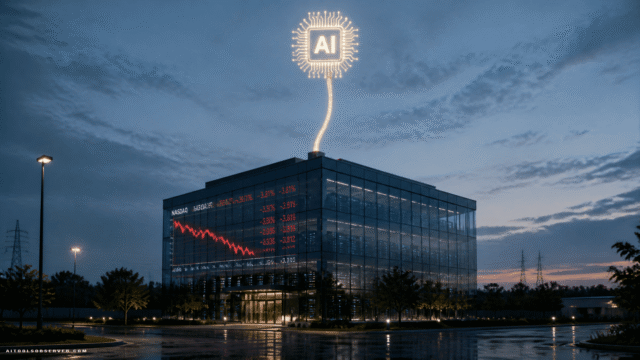
The timing here is significant. Anthropic — the Claude developer last valued at nearly $1 trillion — confidentially filed for an IPO last week. OpenAI followed on Monday with its own confidential filing. And SpaceX is heading to market this week.
Srinivas didn’t sugarcoat what’s at stake. “These listings, along with SpaceX this week, are going to be among the biggest in history and a test of investors’ appetite for these mega-IPOs,” he told CNBC.
He went further, calling the SpaceX IPO a leading indicator for how Anthropic and OpenAI will be received. If SpaceX stumbles, expect that sentiment to ripple directly into how investors price the AI giants.
Why Srinivas Thinks the AI IPOs Will Succeed
Despite the scrutiny, Srinivas is bullish. His reasoning is straightforward: these companies are performing, and performance justifies valuation.
“I think it’s important for the AI industry that these IPOs go well, and I actually think they will go well, because they’re doing well,” he said.
He also defended the sky-high valuations of Anthropic and OpenAI, arguing that frontier labs deserve premium pricing as long as they stay on the frontier. The risk, in his view, is stagnation — not current performance.
“If for six months you don’t see a model capability advance from one of these two companies, then it’s a problem for them,” Srinivas said.
That’s a useful benchmark for anyone tracking AI valuations. Continuous model improvement isn’t just a product story — it’s the core valuation thesis.
Enterprise AI Spending Is Getting Smarter

Beyond the IPO narrative, Srinivas touched on a shift that matters for anyone deploying AI tools at scale: enterprise spending is becoming more deliberate.
OpenAI CEO Sam Altman reportedly acknowledged in a company live stream that AI costs have become a “huge issue” for enterprises. Companies are no longer just adopting AI — they’re scrutinizing what they’re spending on it.
One trend that’s emerged from this pressure is “tokenmaxxing” — employees ramping up AI usage primarily to signal productivity rather than drive real outcomes. Srinivas acknowledged the pattern but noted that smarter usage is replacing it.
“People don’t want to just tokenmax, they really want to use whatever model is the best for that particular task,” he said.
Perplexity’s Model-Agnostic Bet Is a Direct Response to Cost Pressure
This is where Perplexity’s product strategy becomes a competitive differentiator. Rather than locking users into a single model, Perplexity routes queries to the best model for each task — factoring in both capability and cost.
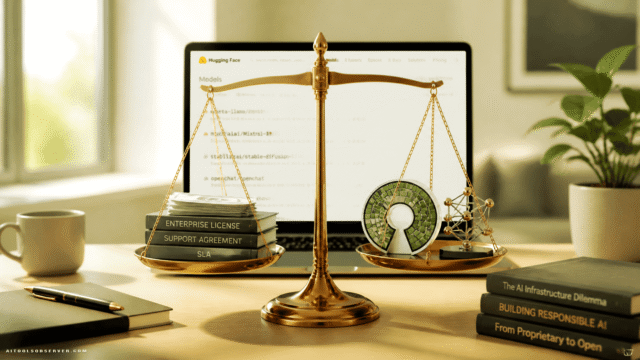
Srinivas made the logic explicit: “If there is an open source model that gets the job done 90% of the time, I’d probably use that if it’s 10 to 20 times cheaper than the frontier model.”
That’s not a knock on frontier AI — it’s a pragmatic architecture for a world where AI budgets are under pressure. Open source models are closing the capability gap fast, and enterprises are noticing.
“The future is still awesome for frontier intelligence, but it’s not going to be mindless spending, as we saw in the last few months,” Srinivas added.
What This Means for the AI Tools Ecosystem
For founders, marketers, and enterprise AI buyers, the signals here are worth paying attention to.
On valuations: Frontier AI companies are priced on the assumption of continuous capability gains. Any plateau in model advancement will hit valuations hard and fast. Watch the six-month model release cadence as a proxy for financial health.
On spending: The era of uncritical AI budget expansion is ending. Teams that build workflows around cost-aware, task-specific model selection will outperform those locked into single-vendor relationships.
On market timing: Perplexity’s 2028 IPO target gives the company runway to mature while the market digests three of the largest tech listings in history. That’s a calculated position, not a passive one.
The AI IPO wave isn’t just a financial story — it’s a stress test for the entire industry’s credibility with public markets. How Anthropic, OpenAI, and eventually Perplexity perform as public companies will shape enterprise confidence in AI investment for years. The companies that survive that scrutiny won’t be the ones with the biggest models. They’ll be the ones that can prove the economics work.




Comments (0) No comments yet
Want to join this discussion? Login or Register.
No comments yet. Be the first to share your thoughts!