


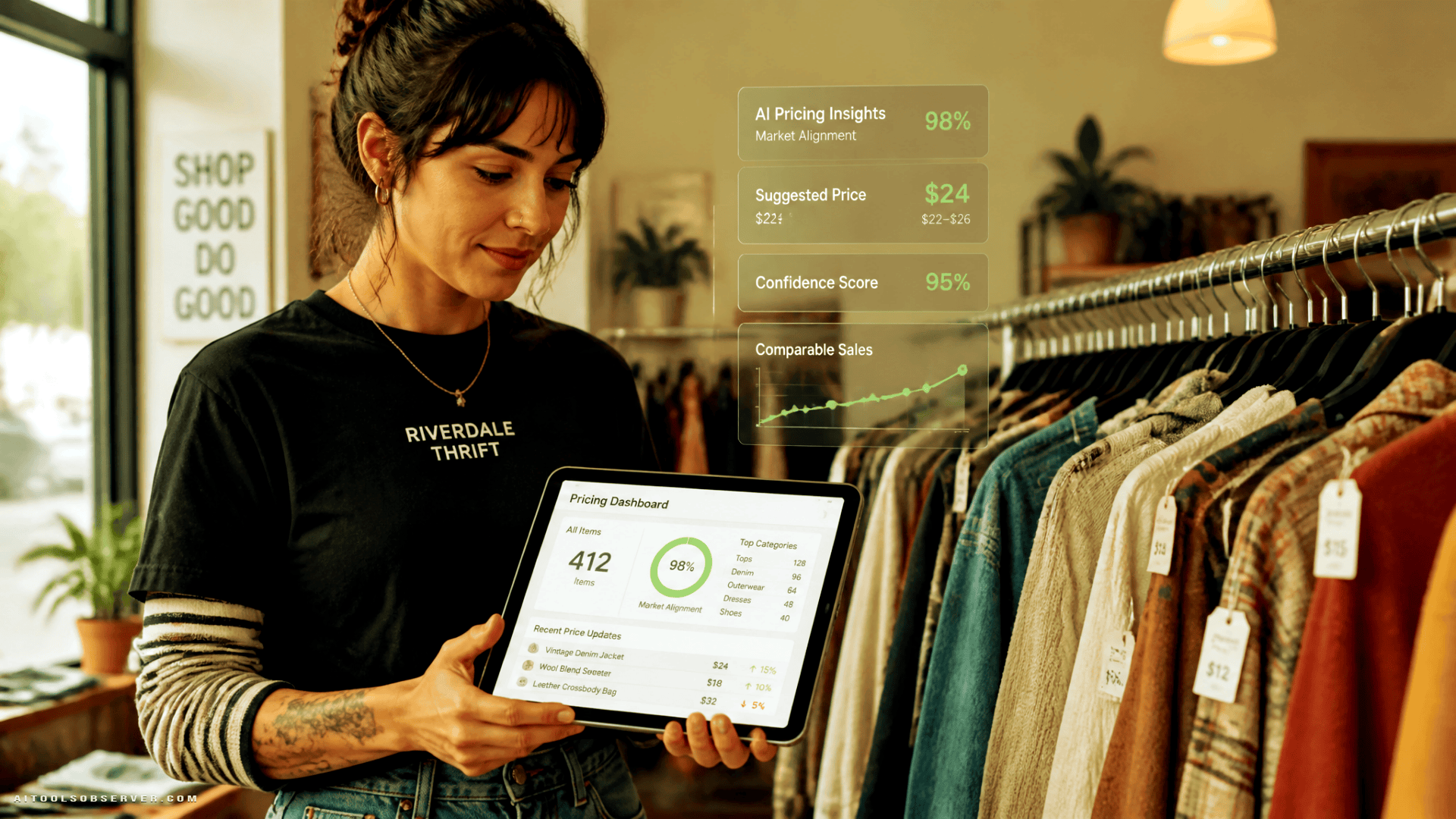
What ThriftIQ is actually doing
The practical pitch is simple: thrift stores process huge volumes of unique items, and pricing each one consistently is difficult. ThriftIQ appears positioned as a way to standardize that process while keeping pricing predictable for shoppers.
A few details stand out:
- It has already been piloted in 58 stores
- It has priced more than 25 million items
- Savers says it will expand across more U.S. and Canadian locations through early 2028
- The system was developed with Kaizen Analytix using Savers’ proprietary data
That scale matters. A pricing model on a few racks is a demo. A pricing model across tens of millions of items is operations.
Why this launch is worth watching
Retail AI stories often drift into the usual script: personalization, demand forecasting, dynamic pricing, and a lot of executive optimism. ThriftIQ is more interesting because it tackles a very specific retail pain point that standard retail systems don’t solve neatly.
Thrift inventory is not uniform. You’re not repricing 10,000 identical black T-shirts. You’re handling an endless stream of one-off garments with different brands, conditions, categories, and perceived value. Consistency becomes both a pricing problem and a labor problem.
That makes this launch less about flashy AI and more about workflow design.
The big signal: this is not dynamic pricing
One of the most useful details here is what ThriftIQ is not.
Savers says the tool does not use dynamic pricing, and once an item is priced and tagged, that tag does not change. That matters for two reasons:
- Customers get predictable prices instead of algorithmic mood swings
- The company avoids some of the trust issues that come with real-time price changes
For thrift, that restraint makes sense. Shoppers expect discovery. They do not expect surge pricing for a used blazer.
What problem Savers is really solving
The obvious problem is pricing speed. The less obvious one is pricing coherence.
If one store prices similar items very differently from another, or if individual staff decisions vary too widely, you get friction on both sides of the rack. Customers feel randomness. Operators feel inefficiency.
ThriftIQ appears designed to help with:
- More consistent pricing across stores
- Faster onboarding and ramp for new locations
- Better sell-through and basket outcomes, according to the company
- Higher productivity for store teams
That last point matters. Savers has been careful to frame the tool as labor support, not labor replacement. In retail, that distinction is strategic as much as cultural.
Why thrift is a good fit for AI pricing
Secondhand retail has become more mainstream, and not just because shoppers love the treasure-hunt vibe. Price sensitivity, inflation pressure, and broader acceptance of resale have made thrift more relevant to more people.
AI pricing fits well here because the category has three traits models tend to like:
- High volume
- Repetitive decision-making
- Historical data that can inform better future decisions
If Savers has been building those data assets for nearly two years, ThriftIQ is the operational layer sitting on top of that groundwork. The launch suggests a retailer moving from “we have data” to “we’re using it in-store.”
The tradeoff to keep in mind
Consistency is useful. Too much consistency can flatten the charm out of thrift.
Part of the appeal of secondhand shopping is that it feels less standardized than traditional retail. If AI pricing becomes too rigid, stores risk losing some of that messy human texture that thrift customers actually enjoy.
The smarter balance is probably this: use AI to create reasonable pricing guardrails, while keeping enough local judgment for edge cases, standout pieces, and category nuance. Based on Savers’ framing, that seems closer to the intention than full automation.
Who should pay attention
This launch is most relevant for operators dealing with irregular inventory, not just thrift chains.
That includes:
- Resale and consignment businesses
- Vintage apparel operators
- Off-price and liquidation formats
- Retail teams with labor-heavy pricing workflows
The broader takeaway is that AI in retail does not need to start with customer-facing novelty. Sometimes the better use case is the boring one with real operational drag.
Pricing donated clothing at scale is not glamorous. It is, however, a very real systems problem.
What makes this launch notable in the AI tools landscape
From an AI tools perspective, ThriftIQ is a good reminder that useful AI products often look narrow on the surface. “Price thrift apparel more consistently” is not a giant platform vision. It is a defined task with a measurable business role.
That usually makes for a stronger launch signal than broad claims about transformation.
Savers is using AI in a way that maps directly to store operations, customer expectations, and margin discipline. In plain English: fewer pricing headaches, more consistency, no robot drama at the tag gun.
Takeaway
ThriftIQ looks like the kind of AI launch that wins by being specific. It targets a messy retail workflow, avoids the trust issues of dynamic pricing, and slots into a secondhand market that is getting bigger and more operationally demanding.
If you track AI tools for retail, this is the pattern to watch: not louder AI, just better decisions in places where manual judgment doesn’t scale cleanly anymore.









Comments (0) No comments yet
Want to join this discussion? Login or Register.
No comments yet. Be the first to share your thoughts!