



The Honest Short Answer
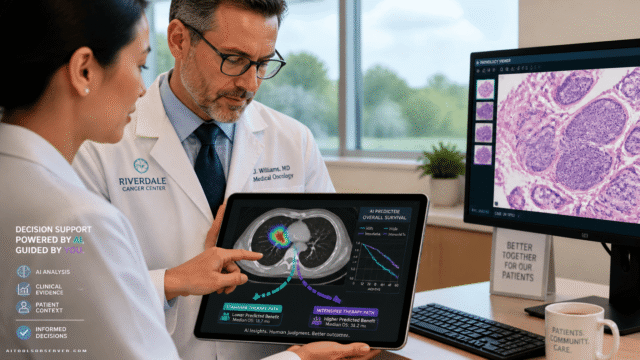
AI is useful in biomedical research right now as a research accelerator, not a research replacement. It can help scientists move faster through tasks that would otherwise take weeks—but it doesn’t remove the need for rigorous science at the end of that sprint.
The areas where it’s showing real traction:
- Hypothesis generation — surfacing patterns across large datasets that humans might miss or take much longer to find
- Literature summarization — synthesizing what’s already known before a study begins
- Genomics and biomedical informatics — integrating genetic variation, gene expression, protein data, imaging, and electronic health records to identify disease mechanisms
- Drug discovery — target identification, molecular design, toxicity prediction, and repurposing existing drugs for new conditions
These aren’t small tasks. In genomics alone, the data volumes involved make manual analysis impractical. AI doesn’t solve the biology—it narrows the search space so researchers can focus their experimental work more precisely.
Why Biomedical AI Is Harder Than It Looks
In most commercial applications, an AI error costs money or time. In biomedical research, it can corrupt a scientific conclusion or send a drug program in the wrong direction.
Biology compounds the difficulty. Disease is shaped by genetics, environment, behavior, immune function, aging, treatment history—and those factors interact in ways that aren’t fully understood. The data reflecting all of this is often noisy, incomplete, and collected across different populations, technologies, and health systems.
That’s before you get to the ethical layer: sensitive patient data, consent, fairness, and the question of whether a model trained on one population will generalize to another.
The Data Quality Problem Is Foundational
AI models are only as good as what they’re trained on. A large dataset with poor phenotype definitions or unrepresentative populations can produce results that look statistically solid but are scientifically unreliable.
Three things that matter most for biomedical AI data:
- Accuracy — well-characterized clinical samples and standardized measurements
- Representativeness — models trained primarily on one ancestry group or health system may not generalize
- Meaningful linkage — data needs to connect to real biological and clinical outcomes, not just volume
Getting this right is slow, expensive, and unglamorous. It’s also non-negotiable for data quality.
It Can Be Confidently Wrong
AI systems can produce outputs that appear sophisticated and convincing even when they’re incorrect or biased. In a field where reproducibility is a core scientific value, that’s a serious problem—especially with models that are difficult to interpret.
The Question Has to Be Right First
A technically strong AI analysis can still be scientifically flawed if the research question is poorly framed or the causal interpretation is off. Biomedical questions require domain expertise to set up correctly. Feeding a well-tuned model a badly structured question doesn’t fix the question.
Validation Is Still Required
AI predictions still need experimental and clinical validation. The tools can help prioritize which genes, variants, or compounds are worth investigating—but they don’t replace the wet lab, the clinical trial, or the independent dataset test.
What This Means for Anyone Using These Tools
If you’re a researcher, clinician, or team evaluating AI tools for biomedical workflows, a few practical frames worth keeping in mind:
- AI literacy matters more than AI engineering. You don’t need to build models, but you do need to understand what they can and can’t do—and how to evaluate their outputs critically.
- Bias recognition is a core skill now. Knowing how to spot a biased dataset or a model that doesn’t generalize is as important as knowing how to run one.
- Interdisciplinary teams are the actual unit of value. The most useful biomedical AI work tends to involve clinicians, computational scientists, statisticians, and ethicists working together—not AI operating in isolation.
The Useful Takeaway
AI is genuinely useful in medical research right now—for literature review, hypothesis generation, genomics integration, and drug discovery workflows. It’s not useful as a shortcut around rigorous study design, data quality, or experimental validation.
The tools that will earn trust in this space are the ones that are transparent, reproducible, and honest about their limits. The researchers who will get the most out of them are the ones who bring the same standards to AI outputs that they’d apply to any other data source.
Fast answers are easy to get. Right answers still take work.














Comments (0) No comments yet
Want to join this discussion? Login or Register.
No comments yet. Be the first to share your thoughts!