


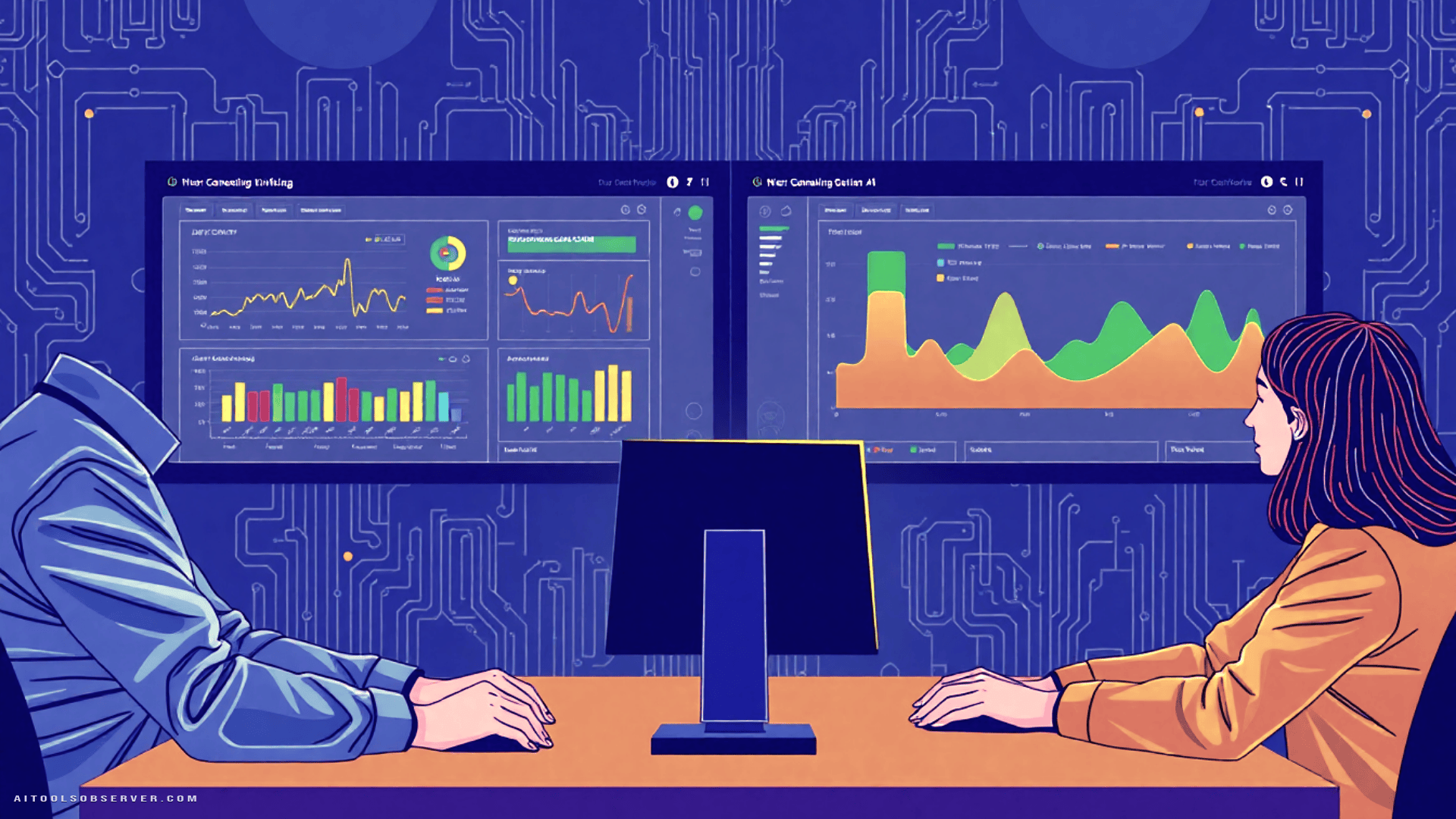
The Newest Warning Isn’t About Replacement
The freshest concern about generative AI isn’t that it will take your job. It’s that it might make you worse at the job you still have.
That’s a more uncomfortable argument, especially for startups. Your edge rarely comes from headcount or process maturity. It comes from seeing the problem differently, making sharper calls, and doing the awkward original thinking that larger competitors have optimized away.
So when AI starts touching the first draft of thought itself, the stakes change.
The Speedup Illusion Is Real — And Measurable

A May 2026 preprint on cognitive offloading describes what researchers call the speedup illusion: the gap between how fast people feel when using AI assistance and what’s actually happening to the quality of their thinking.
The study tracked 1,237 participants across simple cognitive tasks. Workers felt faster. Output looked cleaner. But the underlying reasoning? Quieter than before.
This isn’t just behavioral theory. MIT researchers tracked students writing essays with and without ChatGPT, using EEGs to measure brain activity. Students who used the chatbot showed lower neural engagement in areas tied to attention and creative function. They also had more trouble accurately recalling the papers they had just produced — papers they technically authored.
Microsoft Research and Carnegie Mellon surveyed 319 knowledge workers using generative AI weekly across more than 900 tasks. Participants judged fewer than 600 of those tasks as requiring critical thinking. That number should give any founder pause.
Every Tool Changes the Habits Around the Work It Touches

Calculators didn’t destroy mathematics. Search engines didn’t end research. But both reshaped what people practice, and what they quietly stop practicing.
Generative AI is more intimate than either. It doesn’t just retrieve or compute — it enters the reasoning layer, producing structured thought before the human has fully formed their own.
For a product manager who uses Claude or ChatGPT to frame every customer problem, the documents get cleaner. The instinct for what users actually mean gets less exercise. For a junior analyst using Copilot to summarize every market report, the output looks sharper. The muscle for challenging a bad assumption atrophies a little each week.
Neither person notices. That’s the point.
Cognitive Dependency Is the Next Enterprise Evaluation Criterion

Serious buyers already ask about security, privacy, audit trails, and model accuracy. The next wave of serious buyers will ask something harder: does this tool keep users engaged, or does it train them to accept smoother answers?
The questions worth asking before you roll out any AI tool at scale:
- Does the tool surface its own uncertainty, or does it project confidence by default?
- Does it ask for the user’s reasoning before generating an output?
- Does it make verification easier, or does it reward one-click acceptance?
- Does it preserve a record of human assumptions, or just the AI’s conclusions?
A 2026 paper introducing a Critical Thinking in AI Use Scale found that people with stronger critical-thinking habits around AI were more likely to verify sources, judge AI-assisted fact checks more accurately, and reflect more carefully on responsible use. The issue isn’t whether someone uses AI. It’s whether they use it like a partner, a shortcut, or a substitute.
The Startup Opportunity: Better Friction

This creates a genuinely interesting product gap — and it isn’t another wrapper promising faster emails.
The more durable opportunity is cognitive fitness software: tools that keep reasoning muscles active while still delivering AI’s speed advantages.
That could look like:
- Writing tools that require a human outline before generating suggestions
- Research platforms that separate evidence, interpretation, and recommendation instead of blending them into a polished answer
- Team-level management layers that track whether AI outputs are being challenged, revised, and traced to reliable sources before they reach customer decks, code reviews, or investment memos
Enterprise buyers may want this more than vendors expect. A company doesn’t need employees who can produce endless synthetic strategy slides. It needs people who can notice when the strategy is wrong.
In finance, healthcare, law, and security, that distinction isn’t philosophical. It’s operational risk.
The Credibility Problem Is Growing
If an AI startup claims its product augments human intelligence, it should be able to show how.
Does usage improve independent performance over time, or does the user become more dependent with every session? Does the product teach better questions, or does it train people to accept better-sounding answers? These are product design questions, not ethics seminar topics.
The startups that win the next phase of AI adoption won’t be the ones that make thinking disappear. They’ll be the ones that know when to automate — and when to make the user slow down.
The Scarce Asset Isn’t Speed

Speed is still valuable. But in a startup, judgment is the scarce asset.
Any tool that quietly erodes it isn’t saving time. It’s borrowing from the future — and the interest compounds in ways that don’t show up in your productivity dashboard until it’s too late.
Observe what your tools are actually doing to how your team thinks. Then choose smarter.












Comments (0) No comments yet
Want to join this discussion? Login or Register.
No comments yet. Be the first to share your thoughts!