


The number that changed the mood
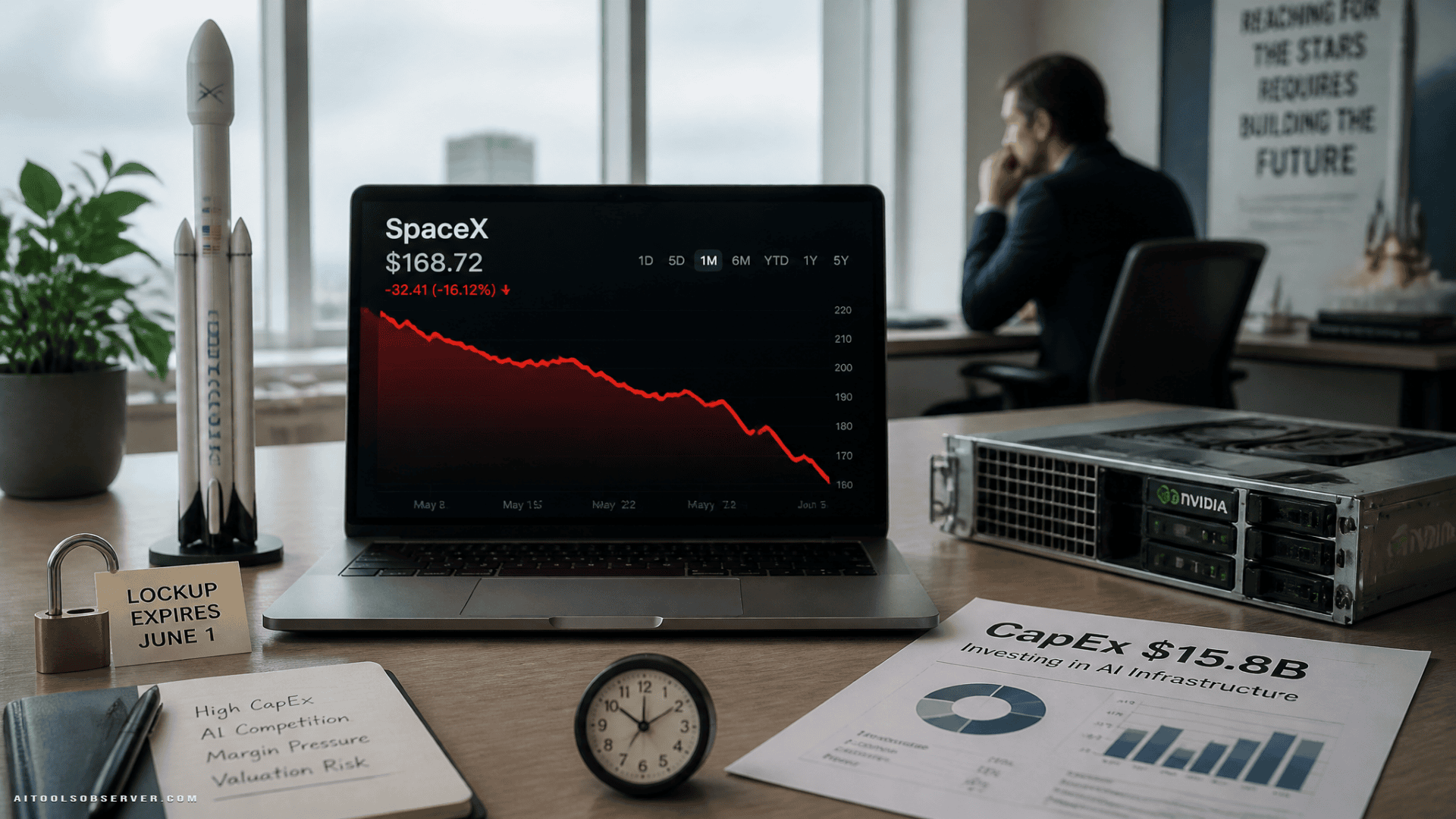
The big headline was capital expenditure tied to xAI, the unit behind Grok. That spending reached $15.8 billion for the quarter.
That mattered for two reasons:
- It was above expectations
- It was more than double the prior quarter
In plain English: investors were ready for big AI costs, just not quite that big, that fast.
SpaceX also reported overall quarterly capital expenditures of $18.4 billion, which means Grok-related buildout appears to be doing most of the heavy lifting. When one line item starts eating the budget, people notice.
Why investors cared more about spending than revenue
SpaceX reportedly beat revenue expectations, with Starlink doing much of the work. Normally, that is the kind of update that keeps a stock moving up.
Instead, the market focused on the cost side. That is a familiar pattern in AI capex right now: investors like AI ambition, right until the invoice arrives.
The concern is not that SpaceX is investing in AI at all. It is that AI infrastructure can become a very expensive habit before it becomes a dependable business engine.
Grok is not a side project anymore
A spend level like this suggests Grok is being treated as core infrastructure, not an experimental add-on. That changes how investors evaluate SpaceX.
It is no longer just a space and connectivity story. It is also an AI capex story.
That shift brings a new set of questions:
- How long will spending stay elevated?
- When does Grok start justifying the buildout?
- Does AI investment strengthen the broader business, or distract from it?
Markets do not need perfect answers. But they usually want a believable path. Right now, the path looks expensive.
The lockup clock made things worse
The stock drop was also amplified by a classic post-IPO pressure point: insider sales.
SpaceX has only a small portion of its total shares trading publicly. That means supply is relatively tight, which can help a stock rise quickly. It also means any increase in tradable shares can hit sentiment fast.
With the lockup period expiring, investors were preparing for insiders to sell. More available shares usually means more selling pressure, or at least fear of it. Sometimes the anticipation alone is enough to push a stock lower.
Why post-IPO volatility hits harder here
SpaceX became public with massive expectations attached. That tends to leave little room for surprises that feel even slightly off-script.
This one had several at once:
- AI spending came in hotter than expected
- The stock had already run up before earnings
- Insider selling fears were looming
- Broader market nerves around AI capex were already in play
That is how a strong operating update can still turn into a rough trading day. The business report and the stock reaction are not always telling the same story.
The Nvidia deal did not cancel out the concern
SpaceX also got a lift from announcing a future satellite partnership with Nvidia. Strategically, that sounds meaningful.
But a good partnership headline does not erase immediate investor anxiety about spending discipline. One says, “interesting future.” The other says, “expensive present.”
Markets usually price the second one first.
What this says about AI infrastructure stocks
The bigger lesson goes beyond SpaceX. Investors are getting pickier about AI spending.
For a while, “we are investing heavily in AI” was enough to earn applause. Now the follow-up question is sharper: investing heavily in what, exactly, and when does it pay off?
That matters for any company tying its valuation to AI buildout, especially when the infrastructure bill starts to overshadow the rest of the business.
What to watch next
If you are tracking this as an AI market story, a few signals matter more than the daily drama:
1. Whether Grok spending stays at this pace
One spike can be explained. A pattern is a strategy.
2. How investors respond after insider selling begins
Sometimes the fear is worse than the actual selling. Sometimes it is not.
3. Whether SpaceX can show AI as a business multiplier
If Grok helps strengthen Starlink, satellite services, or other parts of the company, the spending story changes. If it remains mostly a cost center, pressure likely stays.
The practical takeaway
SpaceX stock did not drop because the company looked weak. It dropped because investors saw a company becoming more expensive, more complex, and more exposed to AI spending scrutiny all at once.
For anyone comparing AI-heavy companies, this is the useful filter: do not just ask who is building the most. Ask who can afford the build, explain the build, and eventually turn the build into something other than a very sophisticated receipt.











Comments (0) No comments yet
Want to join this discussion? Login or Register.
No comments yet. Be the first to share your thoughts!