



Predictive Analytics That Catch Problems Before They Escalate
One of Cigna’s highest-impact AI applications involves using predictive analytics to identify patients at risk for chronic conditions — including cancer, kidney disease, and high-risk pregnancy — before those conditions become expensive emergencies.
The goal is straightforward: proactively connect at-risk patients with clinicians rather than waiting for a crisis. Cigna projects this approach can generate an estimated $200 million in savings over three years.
That’s not a small number. But the more important metric is what it means for patients who get earlier intervention, better care coordination, and fewer catastrophic health events.
Cutting Clinical Documentation Time by Up to 90%
Clinicians spend an enormous amount of time on paperwork. It’s one of the biggest drivers of burnout in healthcare — and it pulls attention away from patients.
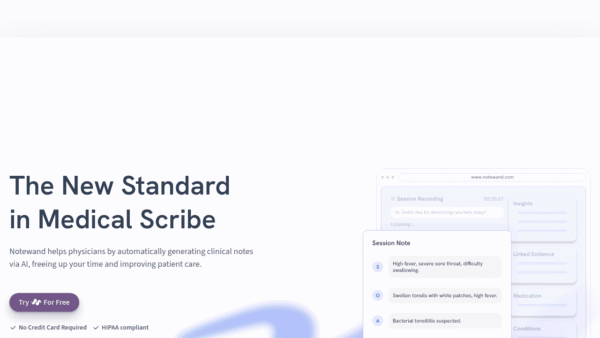
Cigna has committed $100 million through 2028 to use AI to reduce that burden. At its telehealth service MDLIVE, AI-enabled summarization has already cut note-taking time by up to 90% for health practitioners.
That’s not a marginal improvement. It’s the kind of time savings that lets clinicians see more patients, make faster decisions, and focus on care rather than documentation.
The same investment is also aimed at speeding up the prescription process — another friction point that delays treatment and frustrates both patients and providers.
Using AI to Shift Patient Behavior at Scale
Here’s one of the more interesting use cases Andresen has shared publicly.
Cigna was fielding a high volume of patient questions about biosimilars — drugs that can treat chronic conditions at a fraction of the cost of biologics. One biologic, Humira, can cost a patient $7,000 per month. Biosimilars offer a much cheaper alternative, but patients often don’t understand the difference or trust the switch.
Cigna used AI to analyze thousands of prior customer conversations about biologics and biosimilars. Those insights were used to craft more targeted, clearer digital messaging — addressing the specific concerns patients were actually raising.
The result: more than 80% of targeted patients opted for the biosimilar. That translated into hundreds of millions of dollars in savings for patients, along with meaningful margin improvement for Cigna.
This is a good example of AI doing something that’s easy to underestimate — not replacing a human decision, but improving the quality of information people receive so they can make better choices for themselves.
Generative AI Across Customer Service and Internal Operations
Cigna has deployed generative AI in several other areas worth noting:
- Call center intelligence: LLMs are used to summarize millions of phone calls, and those insights power an internal AI tool that helps call center agents quickly find answers to complex policy questions — like whether a specific treatment for plantar fasciitis is covered.
- Mobile app assistant: A conversational AI virtual assistant inside Cigna’s mobile app handles patient questions directly, reducing the need to call a representative.
- Workplace tools: Cigna has rolled out Microsoft Copilot and the AI coding agent Cursor internally, while also working with large language model providers including OpenAI and Anthropic.
- Specialized AI partnerships: For customer service, Cigna has worked closely with Sierra, an AI startup focused on conversational agents, co-developing features aligned with Cigna’s specific use cases.
The pattern here is deliberate. Cigna isn’t trying to build everything in-house or outsource everything to a single vendor. It’s mixing proprietary data and tools with targeted partnerships — using each where it makes the most sense.
Governance Isn’t an Afterthought
AI in healthcare carries real risk. Patient data is sensitive. Answers to medical and insurance questions need to be accurate. Guardrails matter.
Andresen’s position is that Cigna isn’t starting from zero on this. Because healthcare is heavily regulated, a significant compliance and governance infrastructure was already in place — built over more than a decade of working with machine learning models. That same framework extends to third-party vendors who access Cigna’s data.
That’s a meaningful advantage. Many organizations deploying AI are scrambling to build governance structures from scratch. Cigna is applying an existing, tested framework to new AI capabilities.
What Personalization Actually Means in This Context
Andresen has spoken about a personal experience — navigating the healthcare system after a close family member was diagnosed with breast cancer — that shaped her view of where AI in healthcare needs to go.
Her conclusion: navigation isn’t enough. The real differentiator is personalization. Not just pointing someone to the right resource, but understanding their specific situation and giving them precise, relevant guidance.
Her vision for where this leads: AI in healthcare that is conversational, ambient, and proactive — systems that get better over time by feeding real-world outcomes back into their models.
That’s a longer-term ambition, but the use cases Cigna is already running show the direction of travel.
The Practical Takeaway for AI Adopters
Cigna’s approach offers a useful framework for any organization thinking seriously about AI deployment:
Start with the problem, not the tool. Andresen’s guiding principle is simple: what problem are we trying to solve, and how can AI help? That question keeps teams from chasing use cases that look impressive but don’t move the needle.
Measure outcomes, not activity. The $200 million savings projection, the 90% reduction in documentation time, the 80%+ biosimilar adoption rate — these are outcome metrics, not vanity metrics. They tie AI investment directly to business and patient impact.
Governance is a competitive advantage. In regulated industries especially, having a mature compliance framework already in place means you can move faster and more confidently when deploying new AI capabilities.
Mix proprietary data with the right partnerships. No single AI vendor will solve every problem. Cigna’s approach — combining its own data assets with targeted partnerships across large hyperscalers and specialized startups — reflects how sophisticated AI programs actually work in practice.
The organizations that will get the most out of AI aren’t the ones deploying the most tools. They’re the ones asking the sharpest questions about what they’re actually trying to change.











Comments (0) No comments yet
Want to join this discussion? Login or Register.
No comments yet. Be the first to share your thoughts!