


What the Toolkit Actually Does
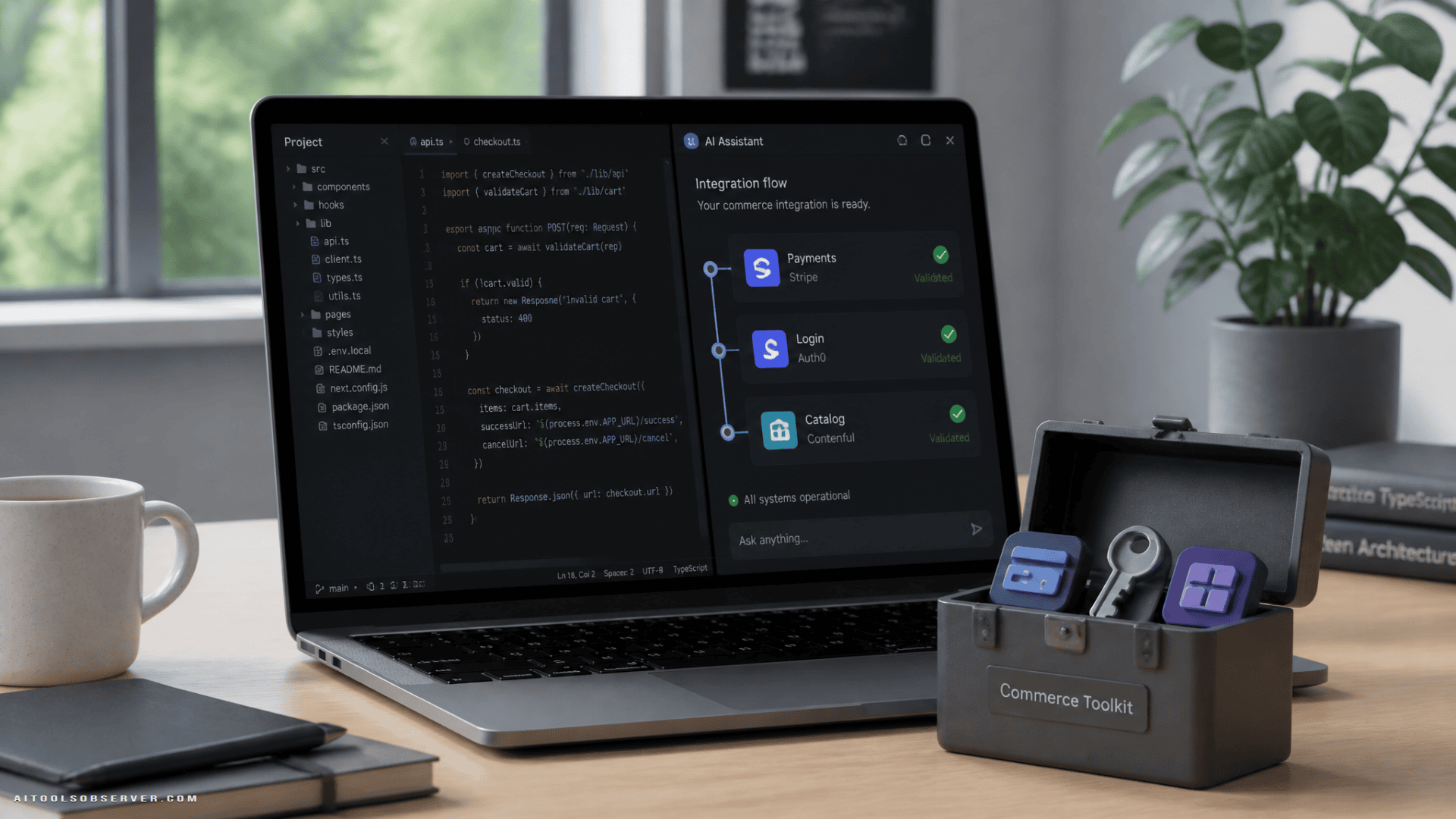
The Xsolla AI Toolkit embeds validated integration logic for Xsolla’s commerce APIs directly into the AI coding environments developers already use—Claude Code, GitHub Copilot, and Codex CLI at launch, with Cursor support listed as coming soon. It ships as SKILL.md files hosted in a public GitHub repository (xsolla/xsolla-ai-kit) and as installable plugins in supported AI tool marketplaces.
The core idea is straightforward: instead of relying on an AI assistant to infer correct integration behavior from raw API documentation, the Toolkit encodes the correct paths directly. The AI coding tool then has access to validated, production-ready logic rather than generating plausible-but-broken implementations from general training data.
Four Skill Areas, One Complete Web Shop
The Toolkit launches with four skill areas, each covering a distinct integration domain:
- Merchant setup — Creates a Publisher Account and retrieves API credentials so the LLM can interact with Xsolla’s systems from the start.
- Login — Implements the full login flow via Xsolla’s Login API, including edge cases beyond the standard happy path.
- Catalog — Manages and displays product catalogs with enforced correct API usage patterns.
- Payments — Covers payment processing, full Merchant of Record configuration, and web shop setup through to a working storefront.
Each skill area includes embedded validation logic that confirms end-to-end integration behavior—not just isolated API call responses—before deployment. The practical implication is that work previously measured in weeks of documentation review and debugging cycles is positioned to compress into a single afternoon build session.
Who Maintains the Skills Matters
One detail worth noting: the skills are maintained by the teams building the Xsolla APIs themselves. This matters because AI coding tools trained on public documentation tend to lag behind API changes, producing integrations that were correct at some point but are no longer current. Skills maintained by the API owners can, in principle, stay synchronized with the platform as it evolves.
This is a structural advantage over relying on general-purpose AI assistants to stay current with third-party API changes through periodic retraining.
Engine-Agnostic by Design
The Toolkit is described as engine-agnostic, which means it is not tied to Unity, Unreal, or any specific game engine. It targets the web commerce layer—headless web shops where publishers control the frontend while Xsolla handles payments, catalog, and login infrastructure. This positions it for studios that want customization control without building commerce infrastructure from scratch.
The target audience spans solo developers launching a first web shop to larger teams managing multiple integrations. The common thread is that they use AI coding tools as a core part of their workflow and have Xsolla commerce integration on their near-term roadmap.
Installation and Access
Installation is described as lightweight and developer-driven. Teams install the relevant plugin into a supported AI coding environment and begin using the skills alongside existing projects immediately, with no additional setup required beyond having an Xsolla merchant account.
The Toolkit is available now at xsolla.com/ai-toolkit and through the public GitHub repository.
The Broader Direction
Xsolla has indicated that the AI Toolkit will eventually pair with an Xsolla CLI to create a fully AI-assisted path from first prompt to live storefront in a single session. The CLI would handle merchant setup—project configuration, API keys, webhooks—while the Toolkit guides the integration itself. That combination, if it delivers on the description, would represent a meaningful reduction in the operational overhead of launching a game commerce storefront.
For developers already using Claude Code or GitHub Copilot as primary coding environments, the practical takeaway is simple: the Toolkit is worth evaluating before the next Xsolla integration sprint. The installation cost is low, and the potential reduction in debugging cycles is concrete.







Comments (0) No comments yet
Want to join this discussion? Login or Register.
No comments yet. Be the first to share your thoughts!