



From Automation to Autonomy: Why the Distinction Matters
Automation executes a predefined sequence. Autonomy executes, evaluates, and adapts — with minimal human involvement. That distinction separates a business that requires constant founder attention from one that continues operating while the founder sleeps.
McKinsey reports that nearly two-thirds of companies have experimented with AI agents, yet fewer than 10% have scaled them successfully. The bottleneck is rarely access to technology. Every solopreneur today has access to the same tools as enterprise teams. The real gap is configuration: whether AI is set up to operate independently or still depends on a human to push it forward at every step.
The seven tools covered here are engineered to close that gap — across analytics, prospecting, pricing, and institutional knowledge — in a single weekend.
The Core Problem These Tools Solve
Most one-person businesses quietly lose time and money in the same seven places: undocumented processes, manual execution, scattered information, underused data, ineffective outreach, poor pricing decisions, and disconnected systems.
Each tool below targets one of those failure points directly. Together, they form a coherent operating stack — not a collection of disconnected experiments.
1. Automated Growth Reporting

Feed your last 90 days of analytics into an AI system configured to produce a structured growth report every Monday morning. No manual data pulls. No spreadsheet assembly. The report arrives before the week begins.
This removes one of the most time-consuming rituals in a small business: translating raw data into actionable insight. When that process runs automatically, the founder shifts from data processor to decision-maker.
2. Plain-English Business Intelligence
Ask your business questions in plain English — which product line produced the highest margin last quarter? — and receive a direct, structured answer without wrestling with pivot tables or SQL queries.
This capability democratizes analysis that previously required either a data analyst or significant personal time investment. For a one-person operation, that is not a minor convenience. It is a structural advantage.
3. Overnight Prospect Research and Outreach Drafting

Configure AI to research prospects during off-hours and prepare personalized outreach drafts before your working day begins. By the time you open your inbox, the groundwork is already laid.
This compresses what traditionally takes hours of manual research into a background process. The founder reviews and approves; the system does the heavy lifting.
4. Offer Restructuring and Pricing Optimization
Use AI to analyze your current offer architecture, identify pricing gaps, and surface revenue opportunities that manual review would likely miss. Pricing decisions that once required a consultant or weeks of competitive analysis can now be generated in a fraction of the time.
This is one of the highest-leverage applications in the stack. Pricing errors — whether undercharging or misaligning offers with market positioning — compound quietly over months. AI-assisted analysis surfaces those gaps before they become costly.
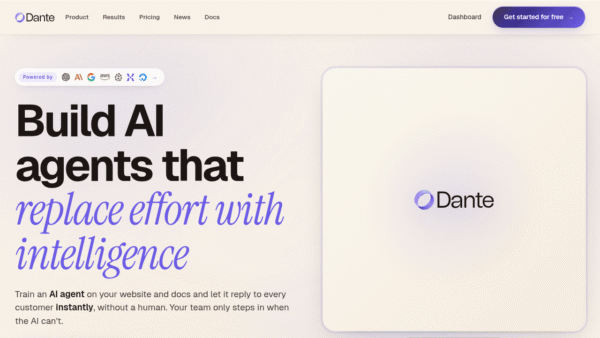
5. AI Agents for Workflow Execution
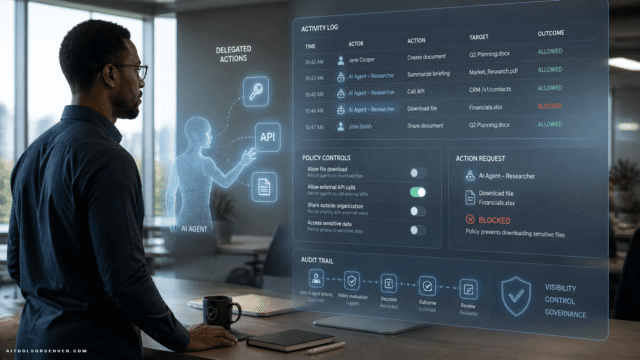
AI agents differ from standard automation in one critical way: they can break a complex objective into subtasks, execute those subtasks sequentially, and adjust based on intermediate results. A single strategist prompt can run for hours, producing the kind of growth analysis that would otherwise require a high-priced consultant.
For solopreneurs, this means delegating not just tasks but entire problem-solving sequences. The founder defines the objective; the agent manages the execution path.
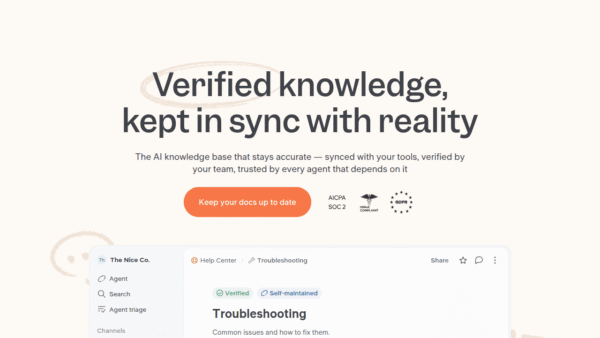
7. System Integration and Disconnected Workflow Repair
The final tool addresses the silent inefficiency that undermines every other investment: disconnected systems. Data that does not flow between tools creates manual handoffs. Manual handoffs create bottlenecks. Bottlenecks reintroduce the founder as the connective tissue holding everything together.
A properly configured integration layer eliminates those handoffs. Information moves automatically between analytics, outreach, pricing, and reporting systems — and the business operates as a coherent whole rather than a collection of isolated tools.
How to Build This in a Weekend
The practical sequence matters. Attempting to deploy all seven tools simultaneously produces confusion rather than capability. A more precise approach:
Saturday — Foundation
Configure automated reporting and plain-English business intelligence first. These two tools establish the information layer everything else depends on. Without reliable data access, downstream decisions lack grounding.
Saturday afternoon — Outreach and Prospecting
Set up overnight prospect research and outreach drafting. Test the first run before the day ends so results are available Sunday morning for review and refinement.
Sunday — Offer, Pricing, and Integration
Run the pricing and offer analysis with your actual business data. Then address system integration — identify where manual handoffs currently exist and configure the connections that eliminate them.
By Sunday evening, the operating stack is functional. The following Monday morning, the first automated growth report arrives.
The Underlying Principle
The future of one-person business is not doing more work with AI. It is building systems that do more work without you.
That distinction is worth sitting with. Founders who treat AI as a faster way to complete their existing task list will gain efficiency. Founders who treat AI as infrastructure for autonomous operation will gain leverage — the kind that scales without adding headcount, overhead, or complexity.
The tools exist. The workflows are demonstrable. The remaining variable is configuration: whether the system is built to depend on the founder at every step, or built to operate independently and surface only what genuinely requires human judgment.
That is the decision a single weekend can resolve.










Comments (0) No comments yet
Want to join this discussion? Login or Register.
No comments yet. Be the first to share your thoughts!