


Why this suddenly matters
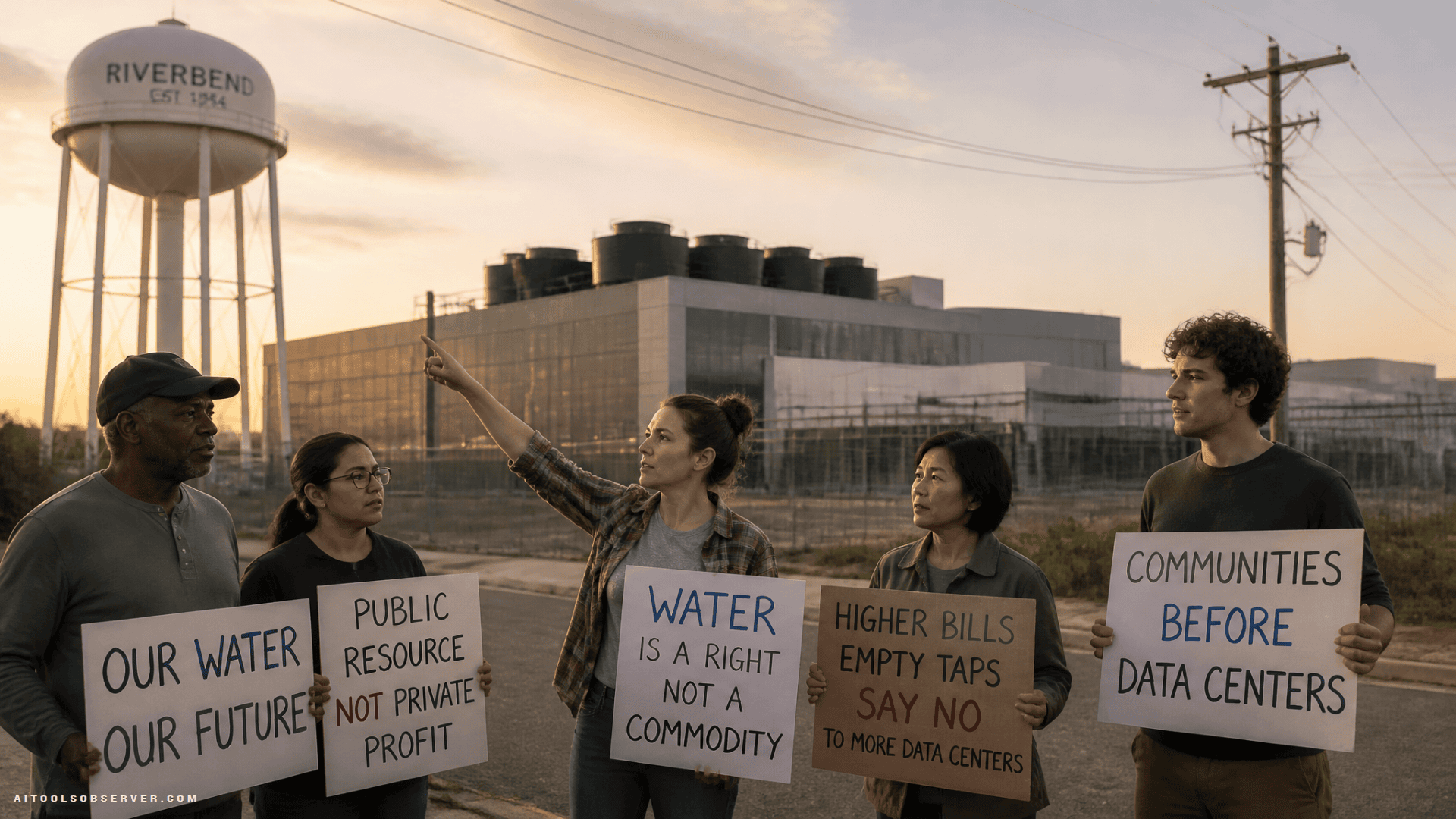
The backlash is no longer coming from one party, one region, or one activist niche. It’s becoming a bipartisan shorthand for a broader anxiety around AI: the sense that everyday communities carry the burden while large companies capture the upside.
That makes data centers politically sticky. They are tangible, local, and easy to campaign against in a way abstract debates about models and chips usually are not.
The new campaign prop: the data center
The context says the outrage is showing up everywhere from ads to elections, and that tracks. A satirical ad from beverage brands leaned into the water-usage angle with bathroom humor because, frankly, that’s how mainstream the issue has become. When consumer brands are spoofing AI cooling systems, the topic has escaped the trade press.
Politicians have noticed too. In Florida, data center restrictions became part of the Republican primary conversation. In Pennsylvania, the governor responded with strict development standards. In Texas, the tone has shifted from boosterism to guardrails.
That’s the signal: support for AI infrastructure is starting to come with terms and conditions.
What voters are actually mad about
This isn’t one complaint. It’s a stack of them.
- Water use, especially in places already sensitive to supply
- Electricity demand and grid strain
- The possibility of higher utility costs for residents
- Public subsidies or infrastructure spending for private projects
- Weak community input before projects move ahead
- A broader distrust of tech companies promising local benefits
None of those concerns require a person to be anti-AI. They just require a monthly utility bill and a functioning sense of self-interest.
The policy shift: “pay your own way”
The clearest emerging political position is not “ban AI.” It’s closer to: build it if you want, but don’t send the invoice to everyone else.
That appears to be the center of gravity in several state-level responses. The pushback is increasingly focused on requiring developers to cover the cost of:
- New generation
- Transmission and distribution upgrades
- Water mitigation or reuse measures
- Local community agreements
- Environmental compliance
Minimalist translation: no more vague talk about economic growth while ratepayers pick up the tab.
Why both parties are converging
This is one of those issues where the coalition writes itself.
Progressives can frame data centers as environmental and consumer protection problems. Conservatives can frame them as taxpayer protection, local control, and anti-corporate favoritism. Moderates can simply point to utility bills and ask uncomfortable questions.
That doesn’t mean every lawmaker agrees on the remedy. It does mean the political incentive is shifting toward visible skepticism.
The industry problem: trust, not just infrastructure
AI companies have already started making “good neighbor” style promises around jobs, local investment, energy responsibility, and lower water impact. That may help at the margins.
But the deeper issue looks like trust. Many communities don’t assume that large tech build-outs will naturally benefit them. They assume there’s fine print. Usually a lot of it.
And once that suspicion hardens, a new substation or cooling plan is no longer just an engineering decision. It becomes a campaign issue.
What this means for AI builders and buyers
If you build, fund, or depend on AI infrastructure, this matters beyond politics.
More scrutiny on data centers likely means:
- Slower approvals
- Tougher permitting
- Higher compliance costs
- More requirements for local engagement
- Greater pressure to prove energy and water efficiency
- More public discussion of the real cost of AI services
For AI tool buyers, this is worth watching because infrastructure politics eventually shows up in product economics. If compute gets more politically constrained or more expensive to deploy, that can influence pricing, availability, regional expansion, and which AI products scale cleanly.
The quiet shift beneath the headlines
The biggest change here is cultural. Data centers are no longer being treated as neutral back-end infrastructure. They are becoming public-facing symbols of AI’s tradeoffs.
That is a problem for any company still messaging AI growth as if communities should clap on cue.
Useful takeaway
If you’re evaluating the AI market, don’t just watch model launches and product demos. Watch power policy, water rules, and state-level permitting fights too.
The next bottleneck for AI may not be intelligence. It may be whether the neighbors, regulators, and ratepayers are willing to host the machines.









Comments (0) No comments yet
Want to join this discussion? Login or Register.
No comments yet. Be the first to share your thoughts!