


What Actually Happened
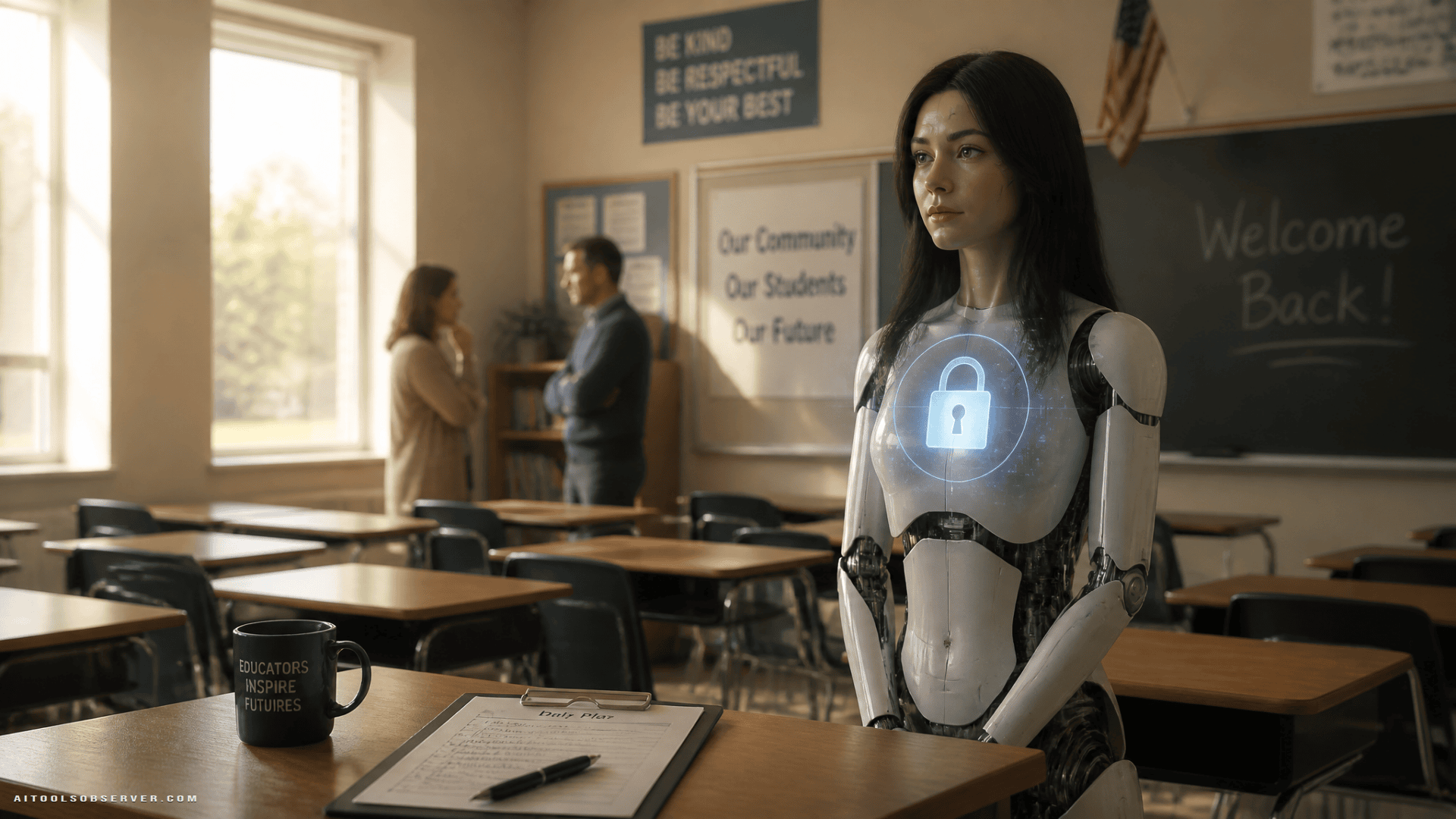
The district’s board approved the purchase with a clear educational vision. Sally — a stationary, life-sized robot with long dark hair — was intended to support high school students studying robotics and technology. She’d answer questions, explain concepts, and help students learn how to maintain and troubleshoot AI hardware.
Superintendent Mark Beehler framed it as an equity play. Salamanca sits on the Seneca Nation of Indians reservation near the Pennsylvania border. Students there typically have to travel one to two hours to encounter emerging technology firsthand.
That context matters. This wasn’t a wealthy suburban district chasing a trend.
Where It Unraveled
News spread. Parents worried about student data. Teachers worried about job replacement. And then came the headline nobody in the district’s PR plan had prepared for.
Realbotix LLC — the company behind Sally — shares ownership ties with Intima LLC, which holds a stake in RealDoll, a well-known manufacturer of sex dolls, including an AI-powered line marketed as the “world’s most advanced sex robot.”
The New York State United Teachers union didn’t mince words. Its president called it flatly: “A robot built by a company associated with sex dolls has no business in our classrooms.”
Realbotix pushed back, stressing that the two subsidiaries operate entirely independently — separate management, facilities, manufacturing, and product lines. Sally, they said, is a “newly manufactured, purpose-built educational unit” with no modified hardware from any adult product line.
The Data Privacy Layer
The corporate optics weren’t the only problem. New York State Education Commissioner Betty Rosa flagged a separate concern: what exactly is Sally’s role, and what happens to student data?
The district insists Sally won’t collect personal information, won’t record audio or video, and won’t send data back to Realbotix. Everything runs locally. Student authentication goes through the district’s existing systems. Realbotix confirmed that any student-linked data stays encrypted and under district control.
Still, Commissioner Rosa noted a tension in the district’s own messaging — publicly describing Sally as a “tutoring platform” while telling state officials she wouldn’t play a role in classroom instruction.
That kind of mixed messaging is exactly what accelerates scrutiny.
The Broader Signal for EdTech
This case isn’t really about one robot in one small district. It’s a preview of the friction that follows when AI tools enter schools without airtight answers to three questions:
- Who made this, and what else do they make?
- Where does student data go, and who controls it?
- What’s the actual role — supplement or substitute?
Beehler was clear that no robot can replace a human teacher, and that the pilot was never about cutting staff. But AI adoption in schools with understandable suspicion, and a single ambiguous slide deck can undo months of community trust-building.
teacher unions are watching AI adoption in schools with understandable suspicion, and a single ambiguous slide deck can undo months of community trust-building.
What to Watch
The pilot is on hold while the district works through enhanced student data privacy agreements with state officials. Realbotix remains in the picture for now.
Whether Sally ever makes it into a Salamanca classroom may matter less than what this episode signals: school districts deploying AI tools need vendor due diligence that goes well beyond the product spec sheet. Corporate structure, data architecture, and community communication aren’t afterthoughts — they’re the pilot.




Comments (0) No comments yet
Want to join this discussion? Login or Register.
No comments yet. Be the first to share your thoughts!