


What Actually Happened

SK Hynix has become one of Nvidia’s most critical suppliers — specifically for high-bandwidth memory (HBM), the specialized chip architecture that makes AI accelerators fast enough to train and run large models at scale.
Without HBM, Nvidia’s H100s and B200s are just expensive paperweights. SK Hynix makes the memory that turns them into the most sought-after hardware on the planet.
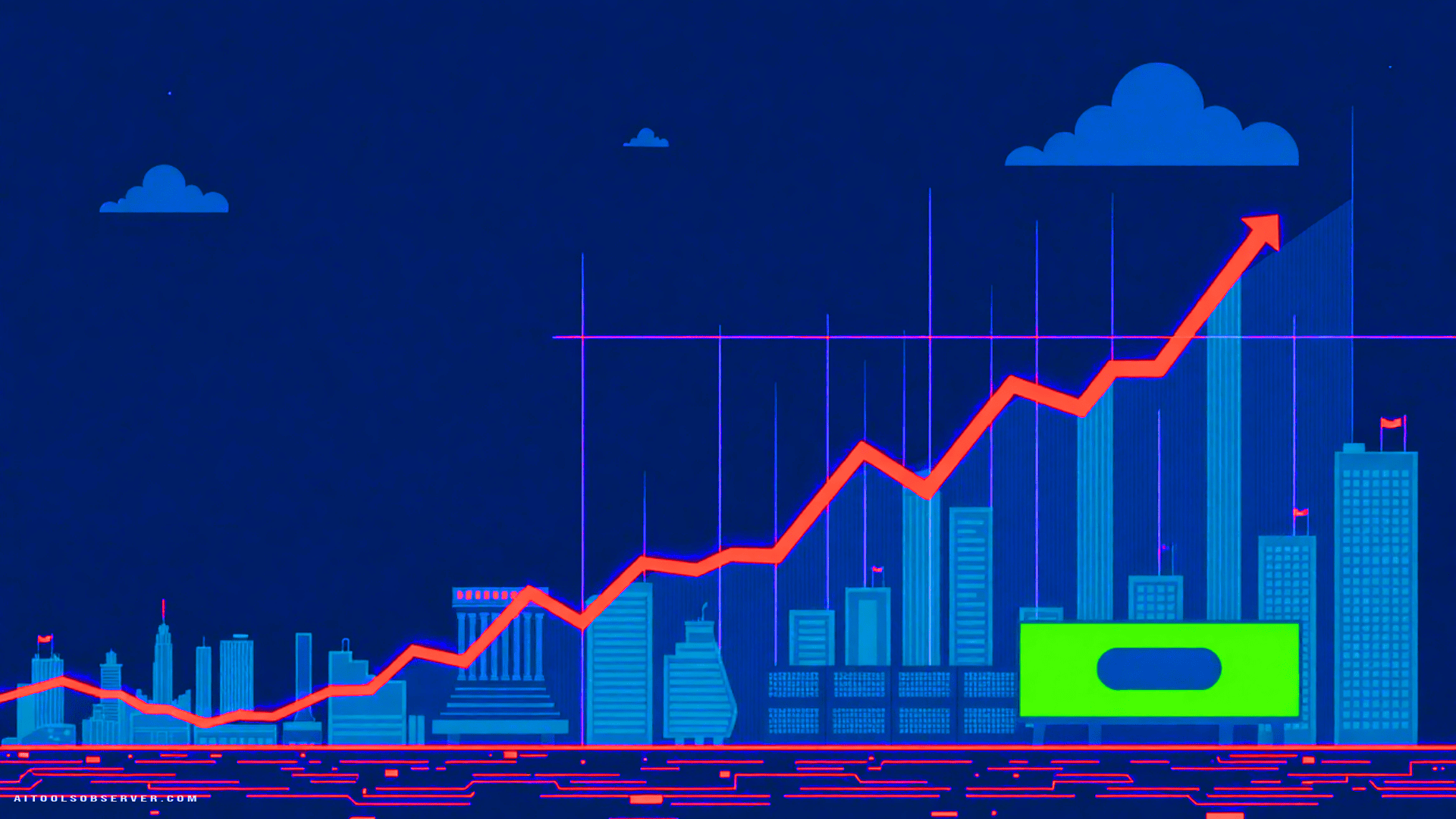
The result: shares up roughly 250% year-to-date. Earnings forecasts rising faster than the stock price. Analysts calling the valuation cheaper than it was before the rally started. That last part is the kind of sentence that makes investors do a double-take.
Korea’s Trillion-Dollar Twins

SK Hynix isn’t alone. Samsung Electronics crossed the $1 trillion mark just weeks earlier, and both companies now account for more than 40% of South Korea’s Kospi index.
The Kospi itself has nearly doubled since January. That’s not a diversified market rally — that’s two chip stocks dragging an entire national benchmark upward on the coattails of global AI infrastructure spending.
It’s impressive. It’s also a concentration risk that analysts are quietly flagging.
The HBM Bottleneck Nobody Talks About Enough

Here’s the part that matters for anyone tracking the AI tools ecosystem: the software layer everyone obsesses over — the models, the APIs, the agents — runs on hardware. And that hardware runs on memory.
HBM is the quiet chokepoint in the AI supply chain. It’s expensive to produce, technically demanding, and currently dominated by SK Hynix and Samsung. TSMC gets the headlines; these two get the actual leverage.
When Nvidia can’t ship enough GPUs, the bottleneck often traces back to HBM supply. That dynamic is why a Korean chipmaker is now worth more than most of the world’s largest banks.
What the Valuation Math Is Telling You
Peter Kim at KB Financial Group made an interesting observation: SK Hynix’s valuation has actually gotten cheaper as the stock climbed, because earnings upgrades have outpaced price gains.
That’s not typical bubble behavior. Bubbles see prices outrun fundamentals. Here, fundamentals are chasing the stock upward — and winning.
It suggests the market isn’t pricing in hype. It’s pricing in a sustained, multi-year demand cycle for AI infrastructure memory. The “supercycle” framing isn’t hyperbole — it’s the analyst consensus.
The Risk Hiding in Plain Sight

None of this is without downside. When two stocks represent 40% of a national index, any disruption — a data center spending slowdown, a supply chain shock, a geopolitical flare-up — hits the entire benchmark hard.
The Kospi is essentially a leveraged bet on AI infrastructure demand right now. That’s great when the cycle is up. It’s painful when it isn’t.
Analysts are watching data center capex commitments from the hyperscalers closely. If Microsoft, Google, or Amazon blink on infrastructure spending, Seoul feels it the same day.
What This Means for the AI Tools Ecosystem

For founders and teams building on AI: the infrastructure layer is tightening, not loosening. GPU scarcity isn’t going away. HBM supply constraints mean Nvidia’s production ceiling is partially set in Seoul.
That has real implications for pricing, availability, and the competitive dynamics between cloud providers. The tools you use — and their underlying compute costs — are downstream of this supply chain.
Understanding where the bottlenecks live helps you anticipate where pricing pressure will come from next.
Conclusion
The AI supercycle has a hardware spine. Right now, two companies in South Korea are holding a significant portion of it.
Observe the infrastructure. The software trends follow.








Comments (0) No comments yet
Want to join this discussion? Login or Register.
No comments yet. Be the first to share your thoughts!