



The Core Problem: You’re Fighting Asymmetric Battles
Insurers have had AI-assisted review tools for a while. Providers, meanwhile, have been pulling charts manually, navigating a maze of payer portals, and discovering documentation problems the day something is due.
The result is a familiar cycle: submit, get denied, appeal, repeat. It’s expensive in staff time, and it’s demoralizing for clinical teams who didn’t go into healthcare to manage spreadsheets.
Pulling Documentation at Scale
One of the clearest early wins is chart compilation. At one organization spanning 30 facilities, gathering materials for concurrent review used to take a full day. Now an AI tool compiles and summarizes documentation for 60–70 managed care patients by 8:30 a.m.
That’s not a marginal improvement. Cutting per-case review time nearly in half means case managers can actually do case management.
Catching Gaps Before Submission
Instead of auditing after a denial, AI can flag documentation gaps, level-of-care mismatches, and missing payer-specific requirements before a claim goes out.
Different payers want different things—specific formats, specific timeframes, specific clinical language. AI tools can be configured to check submissions against those individual criteria, so teams aren’t discovering problems at the deadline.
Identifying Revenue That’s Already Been Earned
This one tends to surprise people. AI isn’t just helping providers defend what they’ve billed—it’s surfacing reimbursement opportunities that were being missed entirely.
That includes flagging when documentation supports a level-of-care increase, or identifying high-cost medication carve-outs that should have been captured before or during admission. As one director of managed care put it, new opportunities are surfacing “every day.”
The Workforce Angle
There’s a reasonable fear that AI in healthcare means fewer jobs. In this context, the evidence points the other way.
Skilled nursing and rehab teams are already stretched thin. Moving clinical staff to the back office to handle authorization requests is a workaround, not a solution. AI handling the compilation, formatting, and pre-submission review work frees those people to return to patient care—which is both better for patients and better for retention.
The administrative burden in managed care has been a documented driver of burnout. Reducing it matters.
What to Look For in an AI Tool for This Use Case
If you’re evaluating tools for managed care workflows, a few practical criteria:
- Payer-specific logic — Can it adapt to different documentation requirements by payer, not just generic templates?
- EHR integration — Does it pull from existing clinical systems, or does it create new manual entry work?
- Pre-submission review — Does it flag issues before you submit, or only help you respond after a denial?
- Concurrent review support — Can it handle ongoing documentation requests during a patient stay, not just initial authorizations?
- Audit trail — Can it show what was submitted, when, and why? That matters for appeals.
The Honest Tradeoff
AI tools in this space are genuinely useful, but they’re not plug-and-play. Implementation requires someone who understands both the clinical documentation side and the payer requirements—ideally both. The tools augment expertise; they don’t replace it.
There’s also a strategic dimension worth naming: if payers are using AI to find reasons to deny, providers using AI to build airtight submissions are simply leveling the field. That framing—catching up, not leaping ahead—is probably the right one for now.
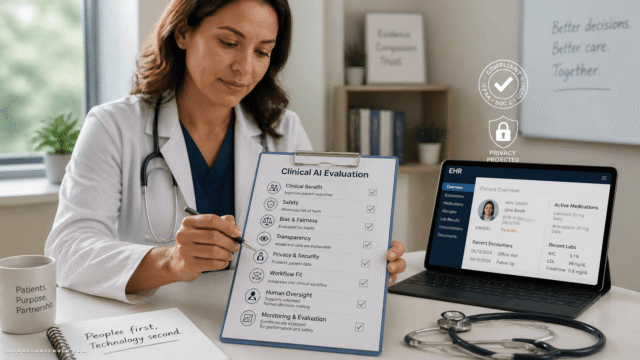
This is also where questions of AI in healthcare governance become relevant.
The Takeaway
The managed care authorization problem isn’t going away. But the manual, reactive approach to handling it is becoming a competitive disadvantage. AI tools that compile documentation, check payer-specific requirements, and surface missed revenue opportunities are moving from “interesting experiment” to practical infrastructure for skilled nursing and post-acute teams.
The providers seeing early wins aren’t using AI to replace clinical judgment. They’re using it to make sure that judgment actually makes it into the submission—correctly formatted, on time, and complete.










Comments (0) No comments yet
Want to join this discussion? Login or Register.
No comments yet. Be the first to share your thoughts!