



What Bezos Actually Said — and Why It Matters
Speaking at VivaTech on June 18, 2026, Bezos didn’t dismiss AI’s disruption. He reframed it entirely.
“I totally disagree with that point of view. And I think, in fact, AI is going to create a labor shortage,” he told the audience.
His argument centers on what he calls the dream build loop — the gap between ideas people have and ideas they can actually execute. Right now, that gap is enormous. Most business ideas die in someone’s head because the cost, complexity, and effort to build them is too high.
Bezos believes AI collapses that gap. When building becomes easier, more ideas become viable. More viable ideas mean more companies, more products, more demand — and ultimately, more need for human workers to bring all of it to life.
“We are limited not by our imaginations but by what we can actually do,” he said. “If we can accelerate the dream build loop, all of the ideas will then become possible.”
It’s an optimistic framework. But the data on the ground tells a more complicated story.
The Numbers Don’t Lie — AI Is Already Cutting Jobs

Here’s where the tension lives.
According to Challenger, Gray & Christmas, roughly 40% of the 97,006 job cuts announced in May 2026 were directly attributed to AI. That’s 38,579 positions — the highest monthly AI-linked job cut total since the firm started tracking it in 2023.
The tech sector alone announced 38,242 cuts in May, the highest since August 2024. Year-to-date in 2026, tech firms have announced 123,653 cuts — a 66% increase over the same period in 2025.
Amazon itself cut 16,000 jobs in January 2026, even as it continues pouring billions into AI infrastructure.
Andy Challenger, the firm’s chief revenue officer, put it plainly: “AI is now the leading reason companies give for cutting jobs.”
So the short-term reality and Bezos’ long-term vision are both true — and that’s exactly what makes this moment so disorienting for workers, founders, and businesses trying to plan ahead.
Two Timelines, One Technology
This is the core tension in the AI workforce debate, and it’s worth naming clearly.
Short term: AI is a cost-cutting tool. Companies are using it to reduce headcount, streamline operations, and justify layoffs to shareholders. The data from Challenger confirms this is happening right now, at scale.
Long term: AI is a capability multiplier. If Bezos is right, the same technology that’s eliminating roles today will unlock entirely new industries, product categories, and economic activity tomorrow — creating demand for workers that doesn’t yet exist.
Think about how spreadsheets played out. When Excel arrived, it wiped out entire categories of bookkeeping jobs. It also enabled financial modeling, startup finance, and data-driven decision-making at a scale that created millions of new roles. The transition was painful. The outcome was net positive.
AI is likely following the same arc — just faster, and across far more industries simultaneously.
What This Means for the AI Tools Ecosystem

If Bezos’ dream build loop thesis holds, the implications for AI tool adoption are significant.
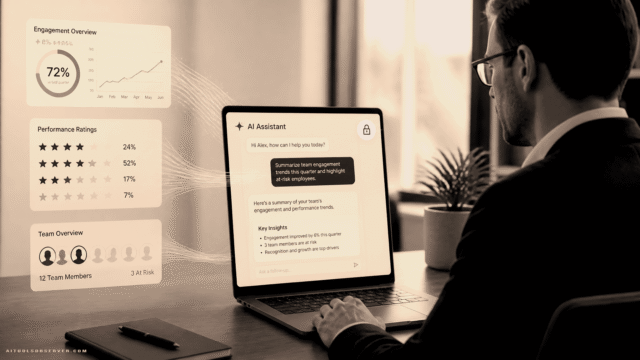
The tools that win won’t just be the ones that automate existing tasks. They’ll be the ones that enable entirely new workflows — helping founders prototype faster, marketers test more ideas, developers ship without large teams, and operators run leaner without sacrificing output quality.
We’re already seeing this pattern emerge across the AI tools landscape:
- No-code and low-code AI builders are letting non-technical founders launch products that previously required engineering teams.
- AI agents are handling multi-step workflows autonomously, compressing what used to take days into hours.
- Generative design and content tools are enabling solo creators to produce at agency-level volume.
The dream build loop isn’t a metaphor — it’s a product category. And the tools that accelerate it are the ones worth watching.
The Reindustrialization Angle Nobody’s Talking About
GOP strategist Chris Johnson, commenting alongside the Bezos story, raised a point that often gets lost in the jobs debate: AI isn’t just a software story.
AI is driving energy production and advanced manufacturing — sectors that require significant human labor. The push toward reindustrializing the U.S. through AI-powered factories, robotics, and smart infrastructure creates demand for skilled trades, technicians, and operators that can’t be offshored or fully automated.
This adds another dimension to Bezos’ labor shortage prediction. It’s not just about tech workers or knowledge workers. If AI accelerates physical production capacity, the bottleneck shifts to the humans who can build, maintain, and operate that infrastructure.
That’s a different kind of labor shortage — and one that current workforce pipelines aren’t prepared for.
How to Think About This as a Founder or AI Adopter
If you’re building with AI tools or evaluating them for your business, here’s the practical takeaway.
Don’t wait for the long-term thesis to play out before acting. The short-term disruption is real. Companies that delay AI adoption while competitors automate will face a different kind of labor problem — not a shortage, but irrelevance.
Choose tools that expand what you can do, not just tools that cut costs. Cost reduction is a floor, not a ceiling. The real leverage comes from using AI to pursue ideas you previously couldn’t afford to attempt.
Pay attention to which tool categories are enabling new industries. The next wave of AI tool adoption won’t look like replacing a human with software. It will look like a two-person team building what used to require twenty — and then hiring aggressively because demand explodes.
The Open Question That Defines the Next Decade
Andy Challenger said it best: “The open question isn’t whether AI changes the workforce, but how fast.”
Bezos is probably right about the destination. A world where the dream build loop accelerates means more ideas, more companies, more products, and more demand for human creativity, judgment, and execution.
But the transition period — the gap between today’s layoffs and tomorrow’s labor shortage — is where the real risk lives. Workers, businesses, and policymakers all need to navigate that gap without assuming the long-term outcome is guaranteed or painless.
The AI tools that help people stay relevant, build faster, and unlock new possibilities during that transition aren’t just useful. They’re essential.
Observe the ecosystem carefully. The tools that accelerate the dream build loop are already here — you just need to know where to look.













Comments (0) No comments yet
Want to join this discussion? Login or Register.
No comments yet. Be the first to share your thoughts!