



From Simple Assistance to Agentic Research Support
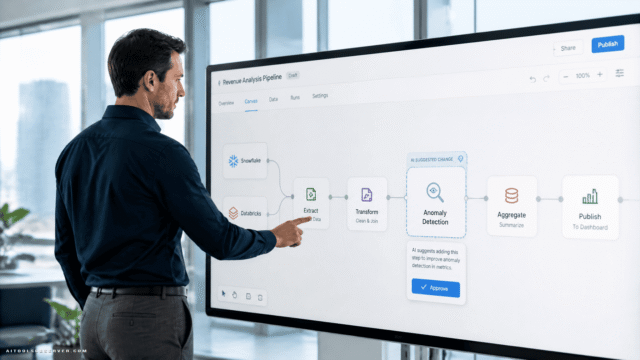
The distinction worth drawing first is between AI as a convenience layer and AI as a workflow participant. Earlier tools helped researchers write faster or search more efficiently. The current generation — frontier reasoning models, coding agents, locally hosted open-weight alternatives — can inspect codebases, reason through technical documentation, propose and test changes, and carry multi-step workflows forward.
This is not a marginal improvement. For researchers whose time is regularly consumed by debugging pipelines, navigating unfamiliar software environments, or translating between domain knowledge and implementation, the practical difference is significant.
Clemson’s stack addresses this directly by combining commercial frontier access with locally hosted infrastructure — giving researchers a genuine choice rather than a single default.
GPT-5.5 Inside the ChatGPT Edu Environment

Through Clemson’s ChatGPT Edu environment, faculty, graduate students, postdoctoral researchers, and staff have access to GPT-5.5 — OpenAI’s current frontier model. Access is institutional, which matters: it means the capability is available across research roles without individual licensing friction.
In practice, GPT-5.5 is most effective when the work involves connected reasoning steps rather than isolated queries. A computational scientist debugging a large codebase, a graduate student working through unfamiliar software documentation, a researcher entering a new domain who needs to accelerate literature review and method identification — these are the workflows where the model’s reasoning depth becomes visible.
The important qualification is equally clear. GPT-5.5 does not substitute for disciplinary expertise. It reduces the friction between a researcher’s question and a working approach. The verification, the domain judgment, and the scientific standards remain the researcher’s responsibility.
A Signal Worth Noting
OpenAI recently reported that one of its models disproved a longstanding conjecture in discrete geometry. The case remains exceptional — it should not be read as evidence that AI systems routinely contribute to mathematical discovery. But it is a directional signal. The boundary between AI as a support tool and AI as a contributor to scientific reasoning is not fixed, and it is moving.
Codex: Coding Agent for Research Software Environments

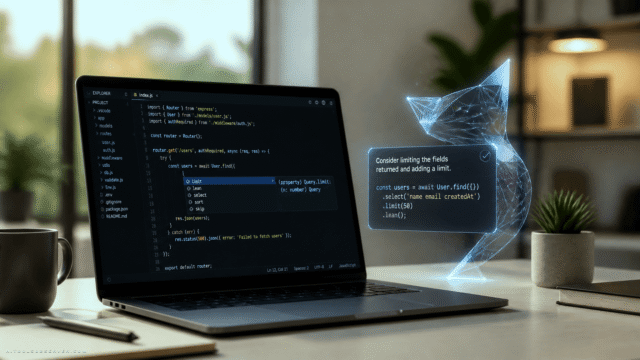
ChatGPT Edu also includes access to Codex, OpenAI’s AI coding agent. The distinction from traditional code-completion tools is architectural. Codex does not suggest the next line — it can work through larger software tasks, inspect repositories, propose changes, write tests, and help researchers navigate complex codebases as a whole.
For research groups maintaining analysis pipelines, HPC workflows, or custom software, this matters in a specific way. Small errors, undocumented assumptions, and unclear dependencies are common sources of lost time in research computing. A coding agent that can inspect the full context of a repository and reason about its structure addresses those problems at a different level than autocomplete ever could.
Codex can also be configured to work with Clemson-hosted models through the RCD LLM Service — a detail that becomes relevant when data governance or cost considerations favor local infrastructure over commercial APIs.
The RCD LLM Service: Local Infrastructure, Open-Weight Models
Clemson’s research AI ecosystem extends beyond OpenAI. The RCD LLM Service provides API access to open-weight models hosted directly on Clemson’s research computing infrastructure. Researchers can experiment with different model families, integrate them into applications and custom workflows, and evaluate performance against real research tasks.
This is where the stack becomes architecturally interesting. Local hosting introduces three practical advantages that commercial-only access cannot provide.
Cost control. API calls to frontier commercial models accumulate costs at scale. For high-volume research workflows — large dataset processing, repeated inference tasks, automated pipelines — locally hosted models can reduce operational costs substantially.
Customization. Open-weight models can be fine-tuned, adapted, or configured in ways that closed commercial models do not permit. Researchers with domain-specific requirements have more room to work.
Data governance. Some research data carries sensitivity requirements — regulatory, institutional, or contractual — that make transmission to external commercial APIs problematic. Local hosting keeps data within Clemson’s infrastructure, which simplifies compliance and reduces risk.
Choosing the Right Model for the Right Workflow
The most practically useful framing Clemson’s stack enables is comparative evaluation rather than categorical adoption. The question is not whether AI is useful in the abstract. The question is which model performs best for a specific workflow, data environment, and verification requirement.
For some projects, GPT-5.5’s reasoning depth and frontier capability will be the right choice. For others, a locally hosted open-weight model will offer better cost efficiency, customization options, or data governance alignment. For software-heavy work, Codex — whether connected to OpenAI’s infrastructure or Clemson-hosted models — adds a layer of agentic capability that neither a chat interface nor a code-completion tool provides alone.
This flexibility is not incidental. It reflects a mature approach to AI infrastructure: one that treats model selection as a research decision, not a default setting.
Workflow Integration: Where to Start
The practical entry point is straightforward. Researchers should identify a real problem from their own work — a difficult script, a confusing software environment, a stalled analysis, a literature search that needs acceleration — and test what these systems can and cannot do against it.
That empirical approach is consistent with how good research operates. Evaluate on real tasks. Measure actual performance. Adjust based on results.
A few workflow categories where the current stack shows particular utility:
- HPC pipeline debugging — Codex inspecting and reasoning through complex job scripts, dependency chains, or environment configurations
- Literature acceleration — GPT-5.5 helping researchers entering new domains identify relevant methods and synthesize technical documentation
- Data cleaning and analysis scripting — generating, testing, and iterating on analysis code with a model that can reason about the full context
- Software documentation navigation — reducing the time researchers spend decoding unfamiliar tools before they can use them productively
Data Governance and Research Integrity
Capability without compliance is not a research tool — it is a liability. Clemson’s AI Tool and University Data Use Guide sets the framework within which these tools should be used. Researchers are expected to ensure that AI tool use aligns with University requirements for data handling and research integrity.
This is not a bureaucratic footnote. For research involving sensitive data, proprietary datasets, or work subject to funding agency requirements, the governance question is as important as the capability question. The RCD LLM Service’s local hosting option exists, in part, precisely because that question has a real answer.
The Infrastructure Reflects the Moment
What Clemson has assembled is not a single tool recommendation. It is a layered infrastructure that gives researchers genuine optionality — frontier commercial reasoning, agentic coding capability, and locally hosted open-weight alternatives — within a governed, institutionally supported environment.
The shift from AI as convenience to AI as workflow participant is underway. The researchers who will benefit most are those who engage with these systems empirically: testing them against real problems, evaluating their actual performance, and integrating them where they demonstrably reduce friction or improve output quality.
The infrastructure is in place. The experiment is worth running.







Comments (0) No comments yet
Want to join this discussion? Login or Register.
No comments yet. Be the first to share your thoughts!