


What’s Actually New

The headline is the macOS launch, but the more interesting story is everything that shipped alongside it.
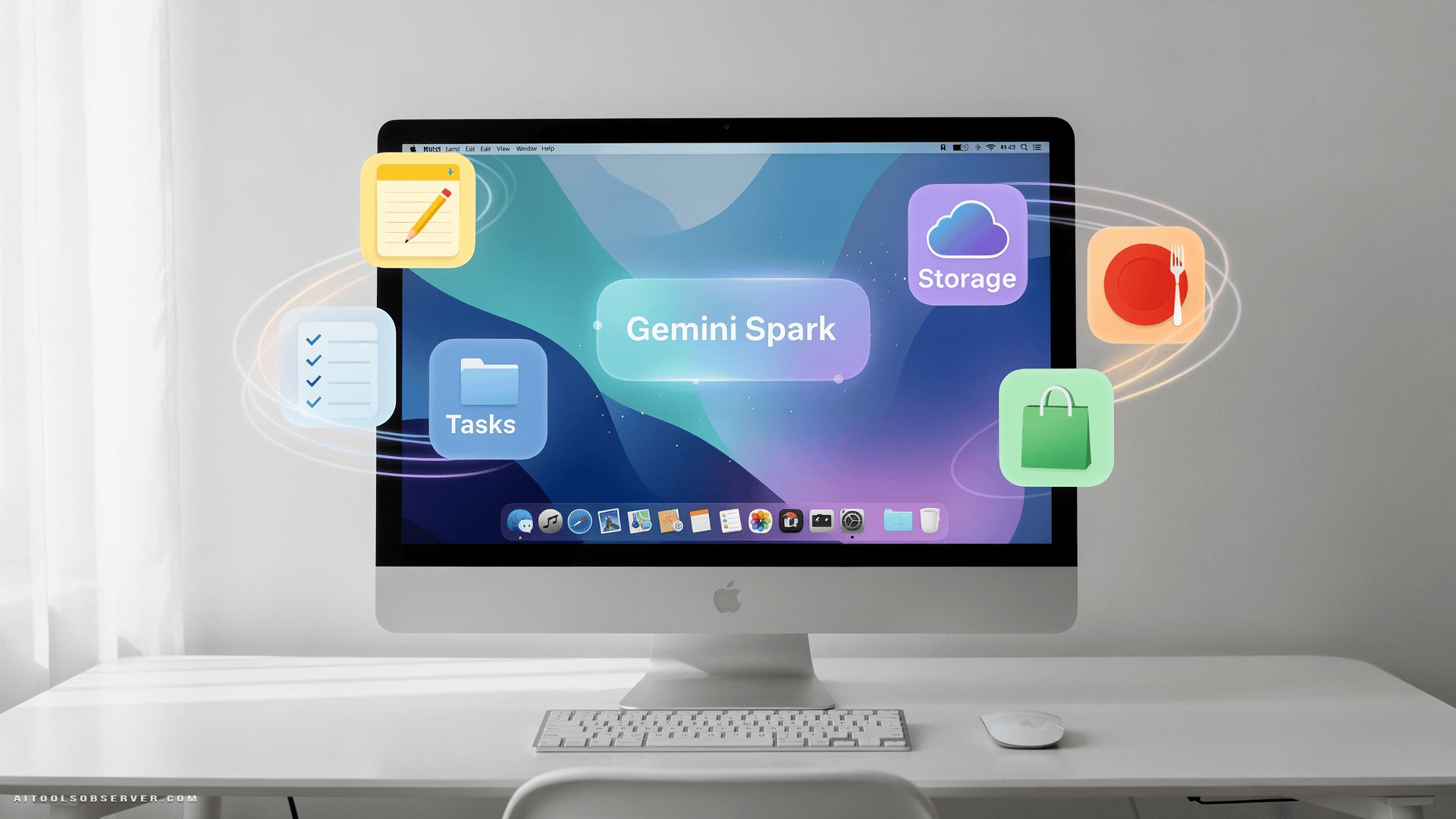
Google Keep and Tasks are finally in. When Spark launched last month, the absence of Keep integration was a genuine head-scratcher. Notes belong in a notes app — not a Google Doc. Google has now corrected course, adding both Keep and Tasks to Spark’s integration list. Small fix, big quality-of-life improvement.
Third-party apps expand the use case dramatically. Spark now connects with Canva, Dropbox, Instacart, OpenTable, and Zillow Rentals. That’s a meaningful range — design, storage, groceries, dining, and apartment hunting all in one agent. Whether you’re reserving a dinner table or ordering weekly groceries, Spark can handle the coordination without you switching between five different apps.
Real-time awareness is live. Spark can now track topics and react to events as they happen — sports scores, stock movements, breaking news, weather shifts, social media. This moves it closer to a genuine ambient assistant rather than a reactive chatbot.
Custom MCP support is rolling out. Model Context Protocol (MCP) support means you can connect your own preferred apps directly into Spark, building a more personalized assistant over time. For power users, this is the feature worth watching.
Desktop AI Just Got More Competitive

The macOS launch puts Spark in direct competition with Claude Desktop, Microsoft Copilot, and other desktop AI agents that have been quietly building their own file-aware, task-handling capabilities.
Spark’s current desktop strengths are file organization and Workspace integration — think turning a folder of invoices into a budgeting spreadsheet without touching a keyboard shortcut. The more compelling capability, cross-device task delegation (using your phone to trigger Spark on your Mac), is still marked “coming soon.”
That gap matters. The promise of a truly ambient, cross-device agent is what separates a useful tool from a genuinely transformative one. Google has the infrastructure to pull it off. The question is timing.
The Fine Print
Gemini Spark for macOS is currently in beta, available exclusively to Google AI Ultra subscribers in the U.S. That’s a premium tier, which means most users are still on the outside looking in.
It’s a familiar Google pattern: launch with a narrow audience, gather signal, expand. The real test will be whether the feature set holds up when it reaches a broader user base — and whether the third-party integrations stay reliable at scale.
The Takeaway
Spark’s macOS launch isn’t just a platform expansion — it’s a signal that Google is serious about the desktop AI agent race. The Keep fix, the third-party integrations, and real-time tracking all address real friction points from early feedback. That’s a good sign.
If you’re evaluating desktop AI agents right now, Spark has moved from “interesting but incomplete” to “worth a serious look” — especially if you’re already deep in the Google ecosystem. The MCP support, once fully rolled out, could make it one of the more customizable options in the category.
Keep observing. The desktop AI agent space is moving fast, and the gap between these tools is narrowing every month.











Comments (0) No comments yet
Want to join this discussion? Login or Register.
No comments yet. Be the first to share your thoughts!