


What the Deal Actually Involves

Precision matters here, because the headlines risk overstating what has been agreed.
Google DeepMind is not acquiring rights to train AI models on A24’s film and television catalog. That boundary was explicitly drawn — a notable concession that distinguishes this partnership from the more contentious data-licensing arrangements that have drawn legal fire elsewhere in the industry.
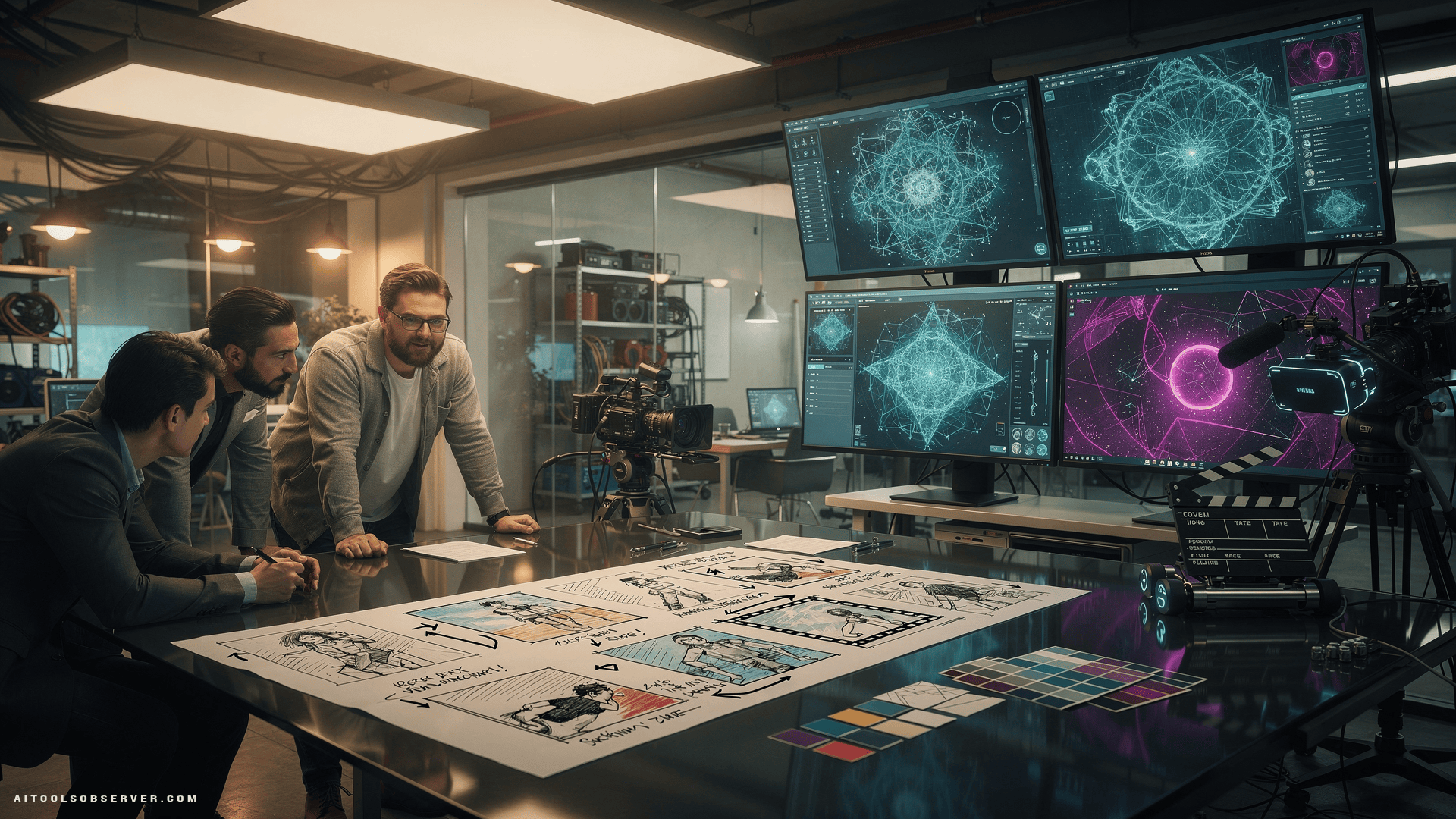
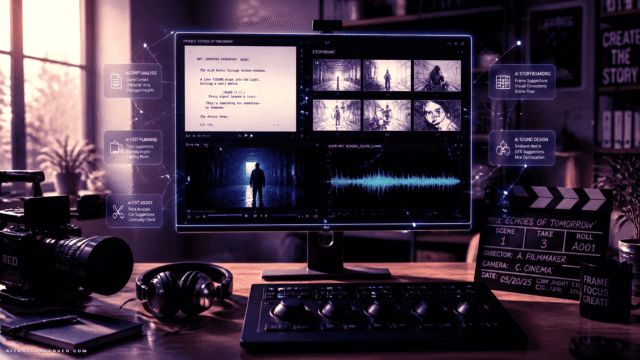
The immediate focus of A24 Labs is the development of an AI-powered storyboarding application. Storyboards are the rough visual drafts that precede full production design — iterative, time-intensive, and traditionally dependent on skilled illustrators working under tight deadlines. Automating or accelerating this stage offers a concrete efficiency gain without displacing on-screen talent.
Beyond storyboards, Google’s official blog post on the partnership deliberately leaves scope open, describing “specific goals, technical outputs and creative milestones” that “will evolve over time.” This is not vagueness for its own sake — it reflects the genuine uncertainty of early-stage creative technology research.
The Leadership Signal
A24 Labs is led by Scott Belsky, who departed Adobe’s executive team in January 2025 to take the role. His background is significant. Belsky spent years at Adobe overseeing creative software products used by millions of designers and filmmakers. He understands both the technical architecture of creative tools and the professional culture that resists or adopts them.
His framing of the project is deliberate and politically aware. Speaking to The Wall Street Journal, Belsky argued that audience resistance to AI in filmmaking stems from the perception that generative AI is primarily a cost-cutting mechanism — a way to produce content faster and cheaper at the expense of craft. His counter-position is that A24’s AI tools will “preserve creative control and support risk-taking,” and will not resemble the “prompted generation type of AI that people feel uncomfortable with.”
Whether that distinction holds in practice remains to be seen. But the framing itself is strategically important: it attempts to decouple AI-assisted production from the race-to-the-bottom narrative that has dominated industry discourse since the 2023 SAG-AFTRA strikes.
Why Google Chose A24

This is DeepMind’s first direct investment in a Hollywood studio. The choice of A24 over a major studio is not incidental.
A24 carries cultural credibility that no amount of marketing spend can manufacture. Its catalog — Moonlight, Lady Bird, Everything Everywhere All at Once, Midsommar — represents a consistent track record of critical and commercial success built on unconventional storytelling and genuine creative risk. More recently, Backrooms became the largest original horror debut in box-office history, grossing over $270 million. The studio’s upcoming Elden Ring adaptation, directed by Alex Garland, commands a $175 million budget — its largest production to date.
For Google, associating DeepMind’s research with A24 rather than a legacy studio sends a clear message: this is AI in service of creative ambition, not industrial efficiency. It also provides a controlled, high-quality environment in which to develop and test tools before any broader rollout.
Google had previously partnered with director Darren Aronofsky, a vocal advocate for generative AI in filmmaking. The A24 deal represents a structural escalation — moving from individual creative relationships to institutional investment.
The Broader Industry Tension
The deal lands in a genuinely contested landscape.
Hollywood’s relationship with AI is fractured along predictable lines. Actors and directors have largely opposed generative AI integration, citing threats to creative authorship, job displacement, and the commodification of artistic labor. Studios, meanwhile, have pursued AI partnerships with varying degrees of transparency — Disney’s reported overtures to OpenAI being one prominent example of an arrangement that generated significant internal and public friction.
A24’s positioning is more nuanced than most. The studio built its reputation on championing independent voices, first-time directors, and stories that larger studios routinely passed on. That identity is now in tension with a $75 million technology deal from one of the world’s largest corporations.
The studio is valued at up to $3.5 billion and operates as a business with investor obligations. The Google DeepMind partnership is a rational strategic move. But the audience that has made A24 a cultural institution — one that turns out for arthouse films the way others turn out for franchise blockbusters — is unlikely to receive the news without scrutiny.
What This Means for the AI Tool Ecosystem
For those tracking the AI tool ecosystem, this deal carries several implications worth noting.
Vertical integration is accelerating. Google now has a direct line from DeepMind research into professional film production workflows, with YouTube and Veo as downstream distribution and generation layers. The stack is becoming more coherent.
Storyboarding is the entry point, not the endpoint. AI-assisted storyboarding is a relatively low-friction application — it augments pre-production without touching on-screen performance or final output. Expect the scope of A24 Labs’ work to expand into color grading assistance, sound design tooling, and distribution analytics over time.
Credibility partnerships matter. The choice of A24 signals that AI tool developers increasingly understand that adoption in creative industries depends on cultural legitimacy, not just technical capability. Tools that emerge from this collaboration will carry a provenance that generic enterprise AI products cannot replicate.
The data boundary is a precedent. The explicit exclusion of A24’s catalog from model training sets a structural precedent for future studio-AI partnerships. It may become a baseline expectation rather than a negotiated exception.
A Defining Moment, Not a Settled Question
The Google DeepMind–A24 partnership is significant precisely because it is unresolved. The tools are early-stage. The creative milestones are undefined. The cultural reception is uncertain.
What is clear is that the boundary between AI research and professional filmmaking has shifted. A24 Labs is now a live experiment in whether AI tools can genuinely serve creative ambition rather than simply reduce production costs — and the industry will be watching closely to see which side of that argument the evidence ultimately supports.
For AI tool observers, the more important question is not whether this deal succeeds on its own terms, but what it normalizes. When a studio of A24’s standing accepts $75 million to build AI production tools, the conversation in every other production house changes. The question is no longer whether AI enters the filmmaking workflow — it is how, and on whose terms.







Comments (0) No comments yet
Want to join this discussion? Login or Register.
No comments yet. Be the first to share your thoughts!