



Why AI Makes the Visibility Problem Worse
AI tools are genuinely useful, which is exactly why adoption outpaces security review. An employee can sign up for an AI writing assistant, a data analysis platform, or an AI-powered productivity tool in minutes — no IT ticket required, no security review triggered.
The consequences are not always obvious at the point of adoption. Sensitive documents get uploaded to external platforms. Customer data flows through services that have never been assessed. Developers integrate AI APIs into internal applications without formal approval. Vendors enable AI-powered features in existing software without announcing the change.
AI agents add another layer of complexity. Unlike a passive application, an agent can plan and execute multi-step actions autonomously. An unmonitored agent operating with broad permissions is a fundamentally different kind of risk than a forgotten spreadsheet tool.
The Core Challenge: Discovering What Is Actually There
Visibility starts with asset discovery, and asset discovery requires deliberate, repeated effort. A one-time audit is not sufficient. Networks change constantly, and the gap between what an asset inventory says and what is actually running on the network tends to widen over time.
Practical discovery approaches include:
- Regular network scans to identify connected devices and services, including those that were not present during the last scan
- Traffic analysis to surface unusual communication patterns or connections to unknown external services
- Endpoint management tools to catalog software installed on managed devices
- Cloud monitoring to identify unauthorized applications and services operating outside established procurement and review processes
- AI-specific monitoring — in some cases, sanctioned AI tools can be used to monitor the behavior of other agents operating in the environment
Any discrepancy between the asset inventory and what is actually present on the network deserves investigation. The instinct to assume something is harmless because it looks familiar is worth resisting.
Defense in Depth: No Single Tool Is Sufficient
There is no product that solves the shadow AI and unmanaged device problem in one step. The challenge has existed for decades — shadow IT, rogue wireless access points, unauthorized cloud applications — and AI tools are the latest addition to a long-standing category of risk.
A layered approach distributes the detection and containment burden across multiple controls:
- Network segmentation limits the blast radius if an unmanaged or compromised device gains a foothold
- Data loss prevention (DLP) tools can flag or block sensitive data being transmitted to unauthorized external services
- Endpoint protection identifies suspicious behavior on managed systems, even when the source of that behavior is an unauthorized application
- Monitoring and alerting provides early warning when traffic patterns or system behavior deviate from established baselines
No single layer catches everything. Together, they reduce the probability that an unknown asset becomes a serious incident before it is detected.
The Human Factor Cannot Be Automated Away
Most employees who connect an unmanaged device or sign up for an external AI service are not trying to create a security problem. They are trying to do their jobs more efficiently. Organizations that push hard for productivity and speed should expect this behavior — it is a predictable response to the incentives in place.
This is why security awareness training remains one of the most consequential controls available. Employees who understand what tools are approved, why certain data handling practices matter, and when to involve security teams before adopting a new tool are meaningfully less likely to create invisible risk.
Specific areas worth covering in training:
- What constitutes sensitive data and why it should not be uploaded to external AI platforms without review
- How to request approval for new tools through established channels
- What AI agents are, what permissions they may request, and why those permissions matter
- How to recognize and report unfamiliar devices or services on the network
People who understand the risk make better decisions. That is not a guarantee, but it is a significant improvement over assuming the technology will catch everything.
Maintaining Visibility Over Time
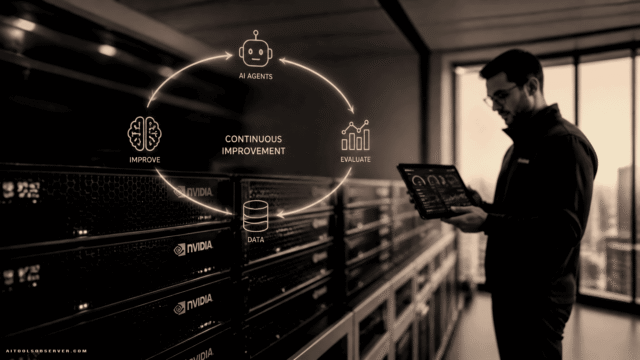
The number of connected devices, cloud services, and AI-powered tools in any organization will continue to grow. Assuming the current asset inventory is complete and accurate is a position that audits tend to disprove.
Sustained visibility requires continuous effort across several dimensions:
- Regular assessments that go beyond automated scanning and include manual review of cloud environments, vendor-managed services, and AI tool usage
- Updated asset inventories reviewed on a defined cadence and reconciled against network scan results
- Employee feedback channels that make it easy to report new tools or devices without fear of reprisal
- Vendor review processes that include questions about AI-powered features, data handling, and agent capabilities
The question security teams should be asking is not whether unknown devices and AI tools exist in their environment. They almost certainly do. The more useful question is whether those assets will be discovered through a deliberate security process — or through an incident investigation after something has already gone wrong.
Reducing that window is the practical goal. Continuous discovery, layered controls, and informed employees are the mechanisms that make it achievable.

















Comments (0) No comments yet
Want to join this discussion? Login or Register.
No comments yet. Be the first to share your thoughts!