


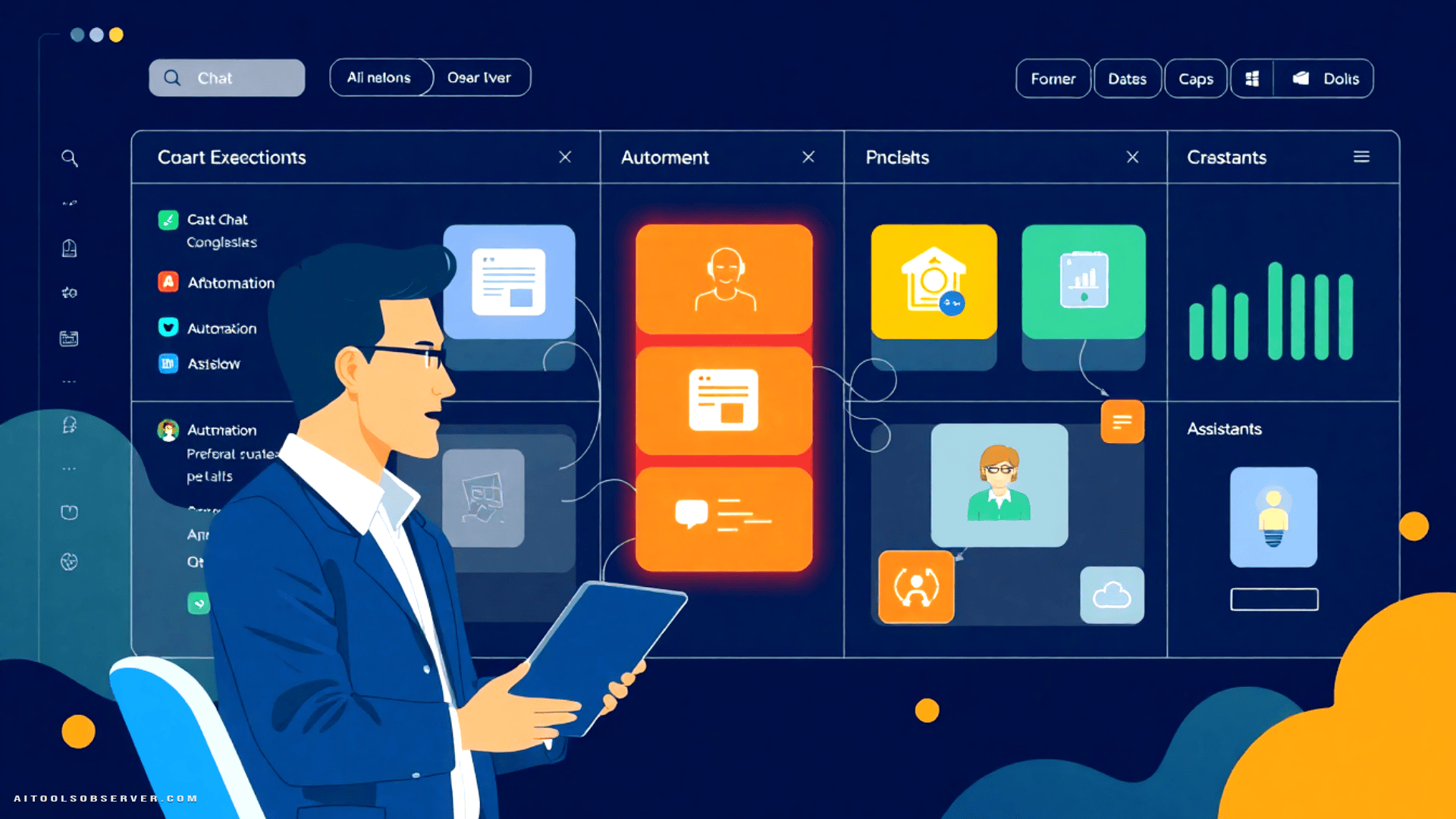
The Core Insight: Combination Over Capability
The single most consistent pattern across these leaders is the deliberate pairing of tools rather than the search for one perfect model.
Joy Allen-Altimare, president of Vella Bioscience, articulates this with precision: ChatGPT accelerates output; Claude strengthens the thinking. She uses ChatGPT to structure ideas and draft at speed, then hands the work to Claude to synthesize, challenge assumptions, and pressure-test conclusions — particularly in investment strategy and growth planning. The advantage, she notes, is moving faster without sacrificing rigor.
This is not a workaround. It is a design principle.
Claude: The Backbone of Structured, Production-Grade Thinking

Claude appears more frequently than any other model in these stacks, and almost always for the same reason: predictable, structured output under complex conditions.
Mike Nuzzo, SVP and head of data solutions at Hearst Magazines, names this directly. The edge Claude provides is its ability to think for extended periods and return structured, predictable output — which is precisely what productionalized, multi-agent environments require. A model that is brilliant most of the time and unpredictable the rest becomes a liability when you are orchestrating automated pipelines. Nuzzo’s under-the-radar move: connecting Claude to internal data via MCP, so anyone in the organization can query that data and receive an answer in seconds.
Omar Tawakol, CEO of Rembrand, uses Claude differently — as a strategic sparring partner. He debates ideas with it, tests positions, and finds it genuinely surprising. That combination of rigor and intellectual engagement is a recurring theme.
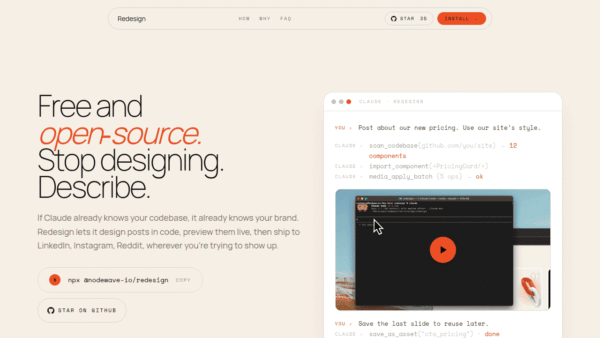
Drew Panayiotou, chief marketing and innovation officer at Keurig Dr Pepper, reaches for Claude Design when he wants to prototype digital experiences — landing pages, consumer journeys, brand concepts — before handing them to his team as design stimuli. It is a builder’s tool in the hands of a builder.
ChatGPT: Speed, Depth, and the Untapped Commute

ChatGPT earns its place in these stacks through versatility and conversational depth, particularly for learning and exploration.
Mike Bidgoli, chief product and technology officer at Tubi, has restructured his entire day around this insight. Commute time, once passive, is now active compute time. He uses ChatGPT and Claude to go deeper into papers, articles, and product announcements while in transit — asking agents to look up additional information or explain unfamiliar concepts. When he is in build mode, he continues iterating through Claude Code on mobile, maintaining momentum even away from his desk. The accumulated productivity across these micro-sessions, he notes, is significant.
Tawakol takes a different angle: he reads books with ChatGPT, exploring what is not written to deepen his understanding of what is. It is a subtle but powerful use case — using the model not to summarize, but to extend.
Specialized Tools: Where the Real Edge Lives

The most interesting signals in these stacks are not the frontier models. They are the specialized tools solving specific, high-friction problems.
Monk: Accounts Receivable, Solved

James Cadwallader, co-founder and CEO of Profound, is direct about Monk. It handles AI-powered accounts receivable, and it does it excellently. Less glamorous than frontier model conversations, he acknowledges — but getting paid on time is foundational to running a business, and Monk has eliminated the manual overhead that used to accompany it. This is the kind of ROI that rarely makes headlines but compounds quietly every month.
Duckbill: Life Logistics as a Productivity Multiplier

Jenny Lewis, VP and head of marketing and e-commerce at Rivian, has used Duckbill since its founding to manage what she calls “life logistics” — scheduling medical appointments, planning birthday parties, booking vacations. As an executive and mother of two, the leverage this creates is not trivial. Time reclaimed from administrative friction is time redirected to work and family. Duckbill is not an enterprise tool, but its impact on executive capacity is entirely enterprise-relevant.
Timeshifter: Cognitive Performance as Infrastructure

Amy Reinhard, president of advertising at Netflix, uses Timeshifter to manage jet lag across frequent international travel. The framing matters: this is not a wellness app. It is a performance tool. Staying rested and cognitively sharp across time zones is a competitive input, and treating it as such reflects the same systems thinking these leaders apply to their professional stacks.
Wispr Flow: Voice as a Drafting Interface

Natalie Silverstein, chief innovation officer at Collectively, pairs Wispr Flow with Claude in a workflow that removes one of the most persistent bottlenecks in knowledge work: the gap between thinking and writing. She voice-dictates at full speed — messy, stream-of-consciousness — into Wispr, which transcribes and feeds the output into Claude for cleanup and structuring. What previously required an evening draft now takes fifteen minutes between meetings. The artifact is ready for others to react to in minutes, not hours.
Enterprise-Scale AI: Internal Layers and Agentic Systems

Several leaders have moved beyond individual tool use into building internal AI infrastructure — systems that encode organizational knowledge and scale it across teams.
Krysha Nair, VP of product marketing at StackAdapt, describes an internal AI layer grounded in the company’s messaging hierarchy, customer insights, and sales narratives. Teams use it to generate pitch decks, campaign messaging, training materials, and internal communications — all starting from the same foundation. The compounding effect is consistency: instead of every team interpreting the brand story differently, the entire organization starts aligned. That consistency, she notes, shows up in how they sell, market, and grow.
Sayantan Bose, VP of marketing analytics at Bose Corp., has built in-house Snowflake Intelligence trained on first-party data, enabling rapid performance overviews and deep dives without routing sensitive data through external models. ChatGPT and Gemini handle open-ended problems; the internal system handles proprietary ones.
Tylynn Pettrey, SVP of AI and analytics at Chalice AI, builds on AWS Bedrock for its flexible access to foundational models — a pragmatic infrastructure choice that avoids vendor lock-in while maintaining access to the best available capabilities at any given moment.
Agentic Systems With Learning Loops: The Next Frontier

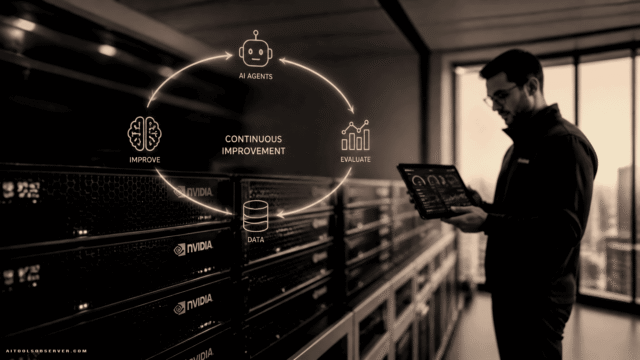
Melinda Han Williams, chief data scientist at Dstillery, points to what she sees as the most significant emerging edge: Agentic systems that learn. Agentic systems with a feedback loop and a growing knowledge base have, in her words, intriguingly uncapped potential. The value compounds as the system accumulates domain-specific knowledge — particularly suited to letting an advertiser learn from their own brand data over time. This is not a product recommendation. It is a structural observation about where durable advantage is being built.
Advanced Workflows: Data Triangulation and Model Sequencing

Chris Neff, global chief AI officer at Anomaly, runs a multi-step data workflow that illustrates how sophisticated these stacks can become. He uses Perplexity Computer for data triangulation, pairs it with Claude for cleaning, and runs the exchange back and forth — sometimes with a codebase in the loop to triangulate API calls across larger datasets. The cleaned, organized output becomes a knowledge base that steers coded applications. An LLM is present throughout, but bespoke data drives the experience.
Tiffany Rolfe, global chair and chief creative officer at R/GA, approaches model selection from a creative angle. As models converge and begin to sound alike, she deliberately uses older, less predictable models for an inspiration pass, then applies more advanced models in a production pass to refine and scale. Creativity, she argues, requires a degree of unpredictability — and that means choosing models not just for capability, but for character.
How to Read These Stacks
Across all of these workflows, a few structural principles emerge clearly.
Specialization beats generalization. The leaders getting the most from AI are not asking one model to do everything. They are matching tools to tasks — Claude for structured reasoning, ChatGPT for speed and exploration, specialized tools for specific high-friction problems.
Internal data is the real moat. Whether it is Snowflake Intelligence, an MCP-connected Claude instance, or an internal messaging layer, the leaders building durable advantage are grounding AI in proprietary data. The model is the engine; the data is the fuel.
Compounding is the goal. The most sophisticated stacks are not optimized for a single output. They are designed to get better over time — through learning loops, accumulated knowledge bases, and organizational consistency that compounds across every interaction.
The tools in these stacks will change. The principle behind them — deliberate combination, domain grounding, and systemic thinking — will not.
Conclusion
The gap between AI users and AI builders is widening. These leaders are not waiting for a single tool to solve everything. They are assembling systems, and the distance between their workflows and a single-chatbot setup grows larger every quarter.
The question worth asking is not which tool to use. It is how your tools work together — and whether the system you are building gets smarter over time.






Comments (0) No comments yet
Want to join this discussion? Login or Register.
No comments yet. Be the first to share your thoughts!