


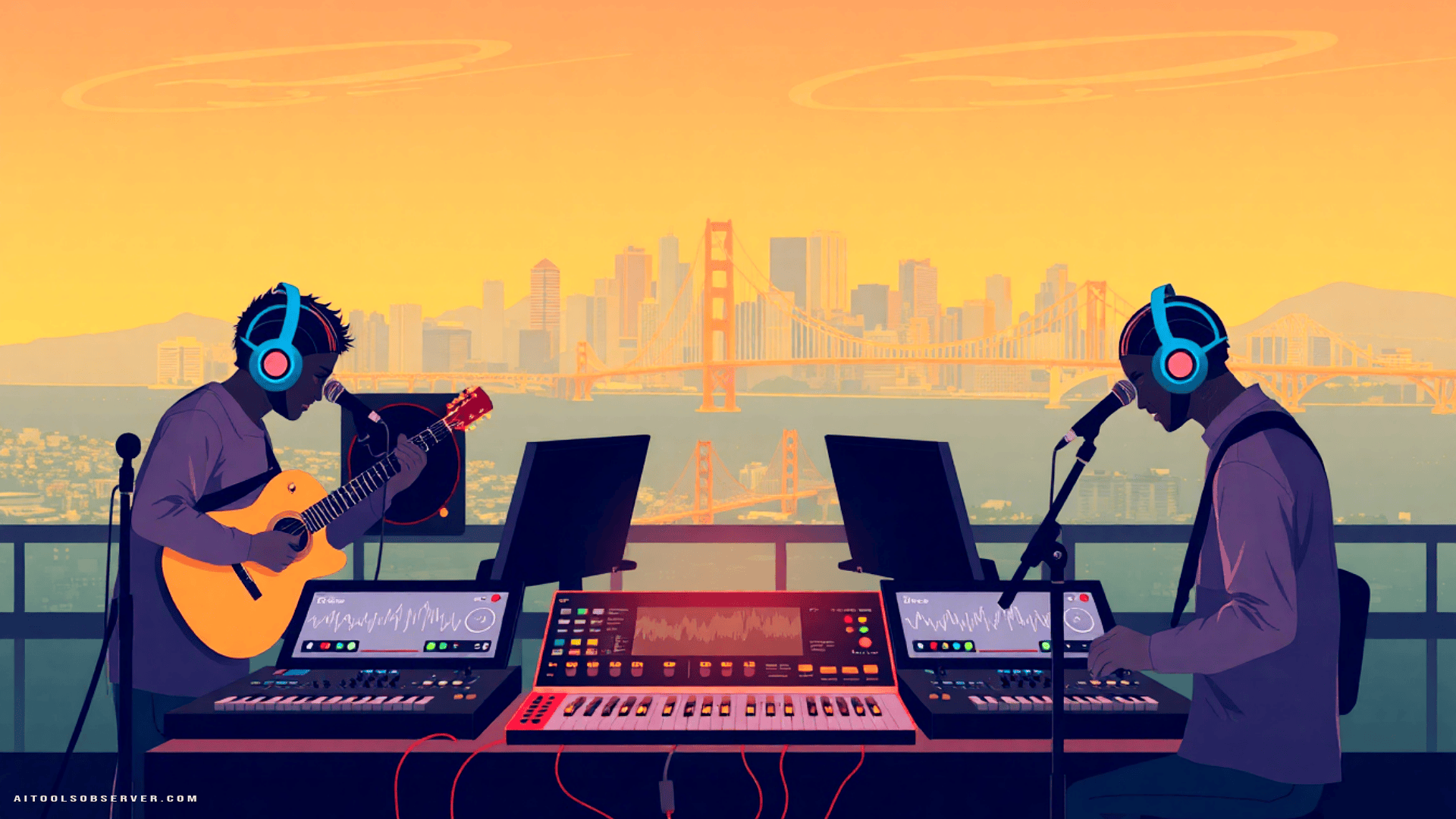
The Bay Area Is Ground Zero for This Collision

The Bay Area hosts over 3,300 AI startups, including nearly 130 focused specifically on media and entertainment. That concentration matters because it puts the technology and the people most affected by it in the same zip codes.
Suno, originally based in Massachusetts, recently opened a San Francisco office to recruit talent and expand its footprint. Kits AI, founded in 2021, already serves over 7 million users — artists, producers, songwriters, and content creators — with AI voice cloning and mastering tools. Udio, once a direct music generator, pivoted to licensed remixing after facing intense copyright lawsuits from major record labels.
These aren’t fringe experiments. These are scaled platforms reshaping how music gets made, distributed, and monetized.
What These Tools Actually Do

Understanding the trend requires understanding the tools.
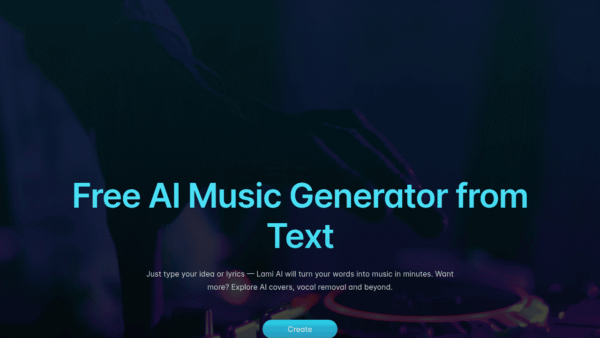
Suno generates complete songs from text prompts — lyrics, melody, instrumentation, and vocals included. It’s designed for speed and accessibility, not technical music knowledge.
Udio initially operated similarly but has since shifted toward licensed remixing, a strategic move that signals how copyright pressure is already forcing product pivots in this space.
Kits AI takes a different angle. It focuses on voice cloning, AI mastering, and vocal transformation — tools that let users bend and replicate vocal identities with minimal friction.
Together, these platforms represent three distinct vectors of disruption: composition, distribution, and voice. Each one touches a different part of how musicians earn a living.
The Copyright Crisis Is Already Here

This isn’t a future problem. The lawsuits are already filed.
In March, independent musicians sued Google over copyright violations tied to its AI music products — Producer AI and Lyria 3. The claim: Google’s tools were trained on millions of copyrighted works, stripped of copyright management information, and redistributed across platforms like YouTube without compensation or consent.
Udio faced similar pressure from major record labels before pivoting its model entirely.
Then there’s the case of Murphy Campbell, an Appalachian folk singer-songwriter whose AI-generated vocal clones were uploaded to Spotify without her consent. Someone scraped her YouTube performances, ran them through AI voice-cloning tools, and distributed the results under her name. When a third party filed Content ID claims against her legitimate YouTube videos, Campbell found herself fighting for ownership of her own music.
That’s not a hypothetical risk. That’s the current reality for independent artists.
How Streaming Platforms Are Responding

The major streaming platforms are taking different approaches — and the gap between them matters.
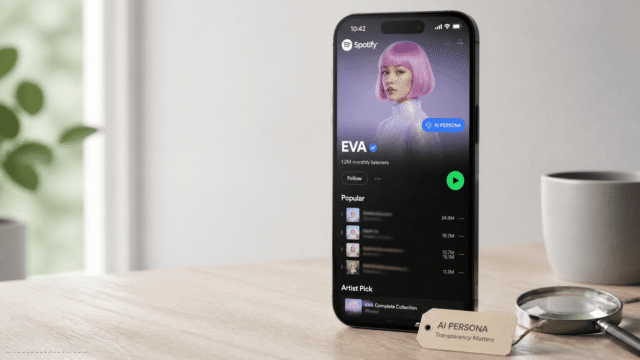
Spotify recently announced that artists can voluntarily disclose AI involvement in song credits and metadata. The key word is voluntarily. Spotify is not mandating AI labels, which means listeners have no reliable way to know what they’re hearing.
Apple Music takes a harder line, requiring AI involvement to be disclosed in metadata at delivery. That’s a meaningful distinction for artists and consumers who care about transparency.
Neither platform has solved the underlying problem. But the divergence in policy is itself a trend worth watching — it suggests the industry hasn’t reached consensus on how to handle AI-generated content at scale.
What Bay Area Musicians Are Actually Saying

The on-the-ground reaction from working musicians is nuanced — not uniformly hostile, but deeply skeptical.
Chris Ansuini, owner of Seeds of Music Academy in Pleasanton, acknowledges the economic tension directly. Being a musician in the Bay Area is already financially brutal. When AI tools threaten to automate parts of the work, it compounds existing frustration with the tech industry’s impact on cost of living and creative livelihoods.
“If some of these businesses are doing work to take away work for musicians, that definitely doesn’t feel good,” Ansuini said. “But it also seems par for the course.”
Pablo Puente, a musician from El Cerrito who worked with the East Bay Center for the Performing Arts, frames the issue around authenticity. He argues that AI-generated music lacks the storytelling and lived experience that give music meaning. “You’re not creating, you’re having something generated,” he said.
Nicole Cooper, a vocal instructor in San Jose, puts it more bluntly: AI music will always sound false to a trained ear. “It doesn’t have the same emotional content because it is a copy of emotion.”
The Velvet Sundown Problem

One data point crystallized the debate: the Velvet Sundown.
This AI band — specializing in ’70s-style rock — released multiple albums rapidly last year. The reaction split along predictable lines. Some listeners found it enjoyable. Musicians found it alarming — not just because of the quality, but because of what it represents at scale.
SFSU music student Luc Chasse called it “the music equivalent of poison.” His concern isn’t just aesthetic. It’s structural: if AI can flood streaming platforms with content that sounds passable, it devalues the entire ecosystem that human musicians depend on.
Ricardo Silvestri, a guitarist in San Jose, had a different reaction. He listened to the Velvet Sundown and didn’t hate it. “Some of it’s pretty good. It sounds very psychedelic.” His ambivalence is telling — it reflects how AI music is already passing casual listener scrutiny.
The Tools Built to Fight Back

Not every AI music tool is generating content. Some are designed to detect it.
SoundPatrol analyzes vocal identities and music semantics to spot copyright infringement in AI-generated audio. It’s an early example of a counter-trend: as AI music generation scales, so does the market for AI music detection.
Francis Wong, saxophonist, composer, and SFSU professor, argues that monitoring is essential — especially given the volume of potential plays involved. “That’s what’s crazy about this AI thing, is that it could be millions and millions of plays,” he said. A use fee structure, he argues, is the only fair resolution.
This detection-versus-generation dynamic is one of the more interesting market signals in the space. It suggests that AI music tools will spawn an entire adjacent category of compliance and rights-management tools.
The Legitimate Use Case Isn’t Going Away
It would be dishonest to frame this as purely destructive. Some musicians are using AI tools intentionally and transparently.
Patrick Lew Hayashi, a San Francisco musician, openly acknowledges using AI-assisted tools for backing tracks in his internet music projects. He draws a clear line between that work and his band projects — a distinction that reflects how some artists are integrating AI as a production layer rather than a replacement for creativity.
Ansuini sees a potential upside too. AI could help artists produce more work in less time, creating new demand rather than simply displacing existing supply.
The problem isn’t the tool. It’s the absence of clear rules around consent, attribution, and compensation.
What This Means for the AI Tools Ecosystem

The AI music space is moving fast, and the market structure is still forming. A few patterns are already clear.
Copyright pressure is reshaping product strategy. Udio’s pivot to licensed remixing is the clearest example. Platforms that ignore rights management won’t survive the legal environment that’s forming around them.
Disclosure is becoming a competitive differentiator. Apple Music’s mandatory metadata requirement versus Spotify’s voluntary approach will matter to artists choosing where to distribute. Platforms that build trust with creators will win long-term.
Detection tools are a growth category. As AI-generated content floods streaming platforms, the demand for tools like SoundPatrol will increase. This is an underreported opportunity in the AI tools market.
The independent musician is the most exposed. Major labels have legal teams and leverage. Independent artists like Murphy Campbell don’t. Tools and platforms that protect independent creators will find a motivated, underserved audience.
The Bigger Picture

The Bay Area music scene is a microcosm of a global shift. AI music generators are not going away — the technology is too capable and too accessible. But the current moment is defined by a gap between what the tools can do and what the rules allow.
That gap is where the real story lives. It’s where lawsuits are filed, where platforms are forced to take positions, and where musicians are deciding whether to adapt, resist, or both.
For anyone tracking the AI tools ecosystem, the music industry is one of the clearest early signals of what happens when generative AI meets a creative economy with established rights, real livelihoods, and deeply held values about what it means to make something.
The question isn’t whether AI music tools will reshape the industry. They already are. The question is who gets to set the terms — and whether independent creators will have a seat at that table.
Go to a show. Support a musician. The answer to that question might depend on it.










Comments (0) No comments yet
Want to join this discussion? Login or Register.
No comments yet. Be the first to share your thoughts!