



What changed at Penn
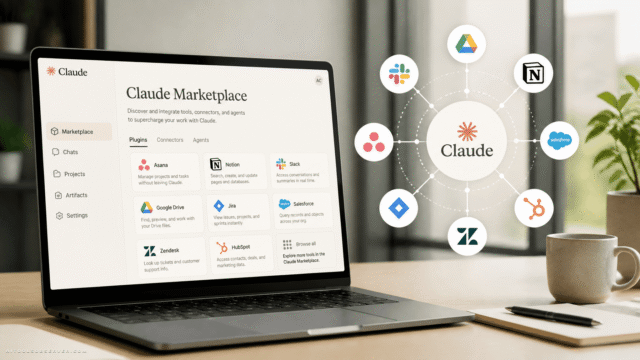
Wharton announced that undergraduate students will gain access to Claude Enterprise accounts. The school had already provided access to MBA students, and undergraduates are now being added to that rollout.
The access is not immediate in a free-for-all sense. Users must complete training on rules, risks, and privacy measures related to agentic coding tools before activating their accounts.
At the same time, Penn has been piloting PennChat, a university AI portal launched in July as part of a broader effort to provide tools, resources, and training for students and faculty. The platform includes certain Claude and ChatGPT models and is positioned as a secure, institutionally managed access point.
Why this matters beyond one campus
This is less about one model and more about the operating model behind it. Many universities have already moved from debating whether students will use AI to figuring out how they can use it under conditions the institution can defend.
Penn’s approach reflects three practical realities:
- students want access to strong general-purpose models
- universities need privacy and deployment controls
- faculty need clearer rules than “use your judgment”
That combination is where many higher education AI programs are now heading. Enterprise access and secure portals are becoming governance tools as much as productivity tools.
Claude Enterprise for students is a signal
Giving Wharton undergraduates Claude Enterprise access suggests Penn sees advanced AI use as part of normal academic and professional preparation, not only a research or graduate-school privilege.
That matters because enterprise-tier access changes the conversation. It implies a more structured environment, stronger institutional oversight, and a clearer expectation that students will use AI for substantive work rather than casual experimentation alone.
It also places responsibility on the school. Once access is formalized, training, acceptable use boundaries, and course-level policies become harder to leave vague.
PennChat is the more interesting infrastructure layer
The bigger strategic move may be PennChat itself. Instead of pushing users toward a single vendor experience, Penn appears to be building a controlled multi-model interface inside its own network environment.
Based on the available description, PennChat is:
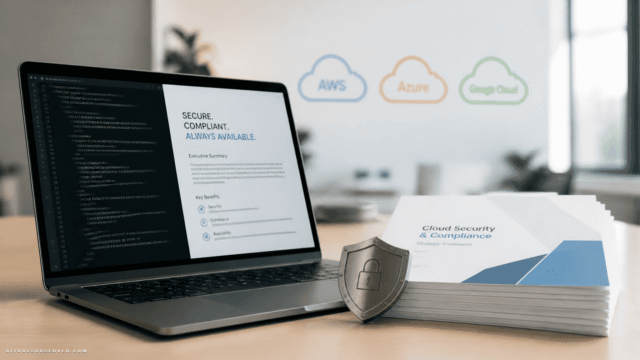
- hosted within Penn’s secure network environment on Amazon Web Services
- designed so companies cannot use Penn data to train AI models
- built on the open-source tool LibreChat
- connected to Anthropic models through Amazon Bedrock
- connected to OpenAI models through Microsoft Foundry
That architecture matters. It gives the university more control over data handling, model access, and user management than a patchwork of direct consumer logins would.
For institutions, that is often the difference between “AI is available” and “AI is deployable.”
14 models, tiered by credit use
PennChat users can choose from 14 models, organized by credit consumption. The categories include premium, balanced, economical, and a legacy group for older large language models.
This is a practical design choice. It acknowledges a simple operational truth: not every task needs the most expensive or most capable model.
For users, a setup like this can encourage better habits:
- reserve premium models for harder reasoning or higher-stakes tasks
- use balanced options for everyday drafting and analysis
- choose economical models for lightweight queries or repeated workflows
That kind of tiering can help institutions control cost without banning capability. It also teaches students and faculty a useful real-world lesson: model selection is part of responsible AI use.
Security and access controls are doing real work here
PennChat requires users to be on PennNet, AirPennNet, or the university’s GlobalProtect VPN. This may sound like a technical footnote, but it is central to the story.
Restricted network access does several things at once:
- limits exposure of institutional systems
- keeps usage within a managed environment
- makes policy enforcement more realistic
- supports auditing and administration
In other words, Penn is not only expanding AI access. It is deciding where that access should live and under what conditions it should be used.
Training before activation is the right pressure point
Penn’s requirement that users complete training before activating Claude Enterprise accounts may be the most important detail in the rollout.
AI adoption in education often gets framed as a tooling question. In practice, the harder problem is behavior: what users do with the tools, what data they paste in, how much they trust outputs, and whether they understand where the risks begin.
A required course on rules, risks, and privacy measures for agentic coding tools addresses that directly. It also recognizes that advanced AI use is no longer limited to text generation. Once coding agents enter the picture, issues around security, data handling, and over-reliance become more concrete.
The governance gap is still visible
Penn offers general AI guidance, but course policy still leaves individual instructors responsible for setting their own classroom rules. That decentralized model is common, but it has limits.
From a student perspective, instructor-by-instructor rules can create confusion. A tool encouraged in one class may be restricted in another, even when the underlying tasks look similar.
The Faculty Senate committee recommendation for broader, centralized guidelines points to the next stage of university AI governance. Access and infrastructure can scale relatively quickly. Policy consistency usually takes longer.
That tension is worth watching. Institutions want faculty autonomy, but they also need baseline standards for acceptable and unacceptable AI use.
What this means for AI tool watchers
For anyone tracking the AI tools market, Penn’s rollout highlights a few wider trends.
Multi-model access is becoming the default serious setup
Organizations increasingly want a portal that lets users switch between models rather than commit to one provider interface. This supports cost control, flexibility, and vendor optionality.
Enterprise AI adoption is now an administrative question
The competitive edge is not only model performance. It is also deployment controls, privacy assurances, authentication, and training workflows.
Open-source interfaces can be strategic
Using a tool such as LibreChat as a front end suggests institutions are looking for modular setups. They want to shape the user experience while connecting to major model providers behind the scenes.
Practical implications for other universities and teams
Penn’s model offers a useful template for any institution or large organization trying to move beyond ad hoc AI usage.
Key lessons include:
- pair access expansion with mandatory training
- route usage through a managed internal portal where possible
- support multiple models instead of forcing one-size-fits-all adoption
- separate model choice by cost and task complexity
- define baseline policy centrally, even if instructors or departments keep some flexibility
This approach is slower than simply approving public chatbot use. But it is more likely to hold up when privacy, compliance, and teaching standards start to matter.
The takeaway
Penn’s update is not just another campus AI access announcement. It is a case study in how institutions are trying to make AI usable at scale without surrendering control.
For students, the practical gain is broader access to capable tools. For universities, the real challenge is building the guardrails around that access. Penn’s rollout suggests the institutions moving most carefully may also be the ones building the most durable AI infrastructure.










Comments (0) No comments yet
Want to join this discussion? Login or Register.
No comments yet. Be the first to share your thoughts!