



The Backlash Nobody Saw Coming (Except Everyone Should Have)

Eric Schmidt got booed. Pichai got a walkout. Commencement speakers at elite universities are discovering that AI is the new third rail — touch it and brace for impact.
This isn’t just campus politics. It’s a signal. When the most technically literate graduates in the country respond to AI mentions with protest signs, something more than hype fatigue is happening. These students have watched AI reshape their field while still in school. That’s not abstract disruption. That’s personal.
The Class of 2024 enrolled in 2021, a full year before ChatGPT existed as a public product. They graduated into a world where it’s everywhere. Four years, one paradigm shift, zero warning.
Three Camps, One Graduating Class
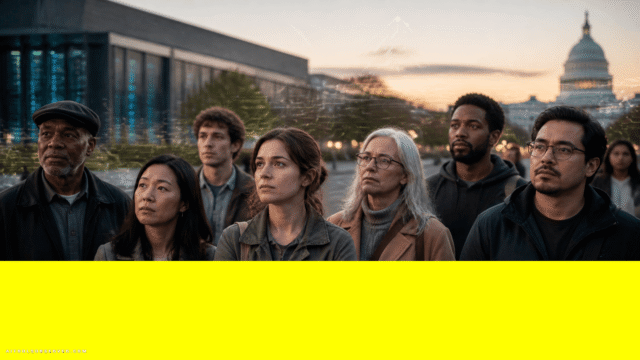
Talk to enough Stanford grads and a pattern emerges. Not consensus — pattern.
The Optimists
Ifdita Hasan, a computer science and AI major, sees the technology the way most engineers are trained to: as a tool. A powerful one. “AI gives us the opportunity to learn more about the universe,” she said, drawing a comparison to early internet skepticism. Her point is fair — every transformative technology generates fear before it generates fluency.
She’s also heading into a master’s program, which is a reasonable hedge when the job market is uncertain.
The Anxious
Atash Heil, an Earth Systems major, had a different graduation-day experience. He visited an AI art exhibit and found it unsettling. “I want art to be made by humans. That’s what makes it art, right?” His concern isn’t just philosophical — it’s about pace. AI has moved fast enough to feel destabilizing even to people who understand it.
Heil also raised the ethics question directly: “It has to be done ethically, and it’s not being done ethically these days.” That’s not a fringe view. It’s increasingly the mainstream one.
The Pragmatic

Lucy Zimmerman, a CS major and former teaching assistant, occupies the most interesting position. She’s worried — specifically about cognitive offloading, the creeping habit of outsourcing thinking to AI. She noticed the gap between AI-assisted homework and unassisted exam performance. She’s seen classes reintroduce proctoring and oral exams to compensate.
And yet: she’s starting a software engineering role at a San Francisco startup. “I’m right in the thick of it,” she said. Concern and participation, held simultaneously. That’s the honest position.
The Job Market Question Nobody Wants to Answer Directly
Here’s the uncomfortable data sitting beneath the ceremony.
The Federal Reserve Bank of New York found recent college graduates are struggling to find work. A Stanford study from November identified a substantial drop in early-career employment in fields most exposed to AI — including software development. Rumors circulated on social media that even Stanford CS students were having trouble landing roles.
Stanford declined to share placement statistics with the BBC.
That silence is its own kind of answer, or at least its own kind of question.
To be clear: most graduates interviewed either had jobs lined up or were continuing their education. But “most” is doing a lot of work in that sentence. And the students who are fine today are entering industries that are actively automating entry-level cognitive work — the exact work that used to be how you learned on the job.
What $400,000 Buys You in an AI Economy
A four-year Stanford degree, fully loaded with expenses, runs close to $400,000. For decades, that investment came with a near-guaranteed return: proximity to Big Tech, a network that opened doors, and a reputation that preceded you into every room.
That calculus isn’t broken. But it’s being stress-tested.
Harry Kaplan, a Management Science and Engineering graduate, put it plainly: “Stanford is the centre of ingenuity in the entire country and in the world.” He’s proud of the legacy. But when asked about AI’s impact on his future? “It’s too early to tell.”
He said this while holding an inflatable palm tree. Which is either deeply relatable or the most Silicon Valley thing imaginable.
The Real Tension Isn’t Optimism vs. Fear
It’s speed vs. ethics. Capability vs. accountability.
These graduates aren’t anti-technology. They’re at Stanford. They are technology, in many ways. What they’re pushing back on is the gap between how fast AI is being deployed and how carefully it’s being governed. The walkout during Pichai’s speech wasn’t just about AI — it was about Google’s contracts, surveillance tools, and geopolitical entanglements. The sign reading “ICE spies with Google AI” wasn’t vague.
The students who built their education around this technology are now asking who it actually serves. That’s not a bug in their thinking. That’s the right question.
The Takeaway
Stanford’s Class of 2024 is entering the workforce with more AI literacy than any generation before them — and more ambivalence than the industry expected.
They’re not Luddites. They’re not true believers. They’re people who watched a technology reshape their education in real time and are now being asked to build careers inside the system that deployed it without asking.
The optimists will ship products. The anxious will ask hard questions. The pragmatic ones — the Lucy Zimmermans who are worried and showing up anyway — might be the most valuable people in the room.
Observe the sentiment. It’s telling you something the earnings calls aren’t.








Comments (0) No comments yet
Want to join this discussion? Login or Register.
No comments yet. Be the first to share your thoughts!