



The real story: compute is strategy now
For a while, AI news felt dominated by model releases and chatbot features. Useful, yes. But underneath all that product polish sits a very expensive reality: compute wins time, and time wins market position.
This deal appears to deepen Nvidia and Meta’s alignment around three things:
- Chips
- Infrastructure deployment
- AI agents
That matters because these are not separate lanes anymore. The company building the agent also needs the systems to train it, serve it, and improve it fast enough to stay relevant.
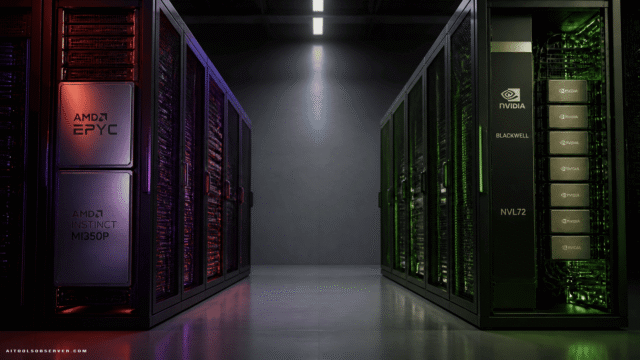
Nvidia has already become the default name in AI compute.
Why Nvidia is doing more than selling GPUs
Nvidia has already become the default name in AI compute. Investing directly in a company like Meta suggests it wants more than purchase orders. It wants deeper positioning inside the companies defining large-scale AI usage.
That creates a different kind of advantage.
Instead of acting only as a vendor, Nvidia increasingly looks like an infrastructure ally. If the biggest AI builders are deciding long-term architecture, deployment patterns, and agent workflows, being close to those decisions matters a lot.
In plain English: selling shovels is good. Helping design the mine is better.
Why Meta is raising so much capital
Meta’s fundraising plan points to the same reality from the other side. Building AI at global consumer scale is expensive in a way that makes normal product roadmaps look quaint.
This money is positioned to support AI infrastructure, which usually means some mix of:
- Data center buildout
- Compute capacity
- Chip deployment
- Networking and system integration
- Ongoing support for model training and inference
For Meta, this is about more than keeping pace. It’s about making sure AI products, including agents, can actually be delivered to billions of users without the underlying infrastructure becoming the bottleneck.
That sounds obvious, but in AI right now, the bottleneck is often the whole story.
The partnership angle matters more than the headline number
The dollar figure gets attention. Fair enough. But the more interesting detail is how the partnership is expanding around deployment and agents.
The context suggests Meta will expand Vera Rubin and Vera CPU deployment, while both companies deepen work around Muse, Meta’s AI agent. That matters because it ties infrastructure directly to product direction.
This is what the next phase of AI competition looks like:
- Hardware choices shape model economics
- Model economics shape product availability
- Product availability shapes adoption
- Adoption justifies even more infrastructure spending
It’s a loop. A very expensive loop.
AI agents are becoming an infrastructure story
Agents are often discussed like a software category. That’s only half true.
If AI agents are meant to understand goals, reason, use tools, and complete tasks, they require serious backend support. Not just smart models, but reliable inference, orchestration, memory layers, tool use, and enough compute headroom to make the experience feel useful instead of sluggish.
So when Nvidia and Meta deepen ties around an agent initiative, it’s not a side project. It suggests agents are becoming a first-class reason to invest in infrastructure.
That should change how readers evaluate AI announcements. If a company talks loudly about agents but quietly about compute, ask questions.
What this means for the wider AI market
This kind of deal tends to widen the gap between the largest players and everyone else.
Big tech companies can combine:
- Capital markets access
- Dedicated infrastructure planning
- Preferred hardware relationships
- Massive distribution
Smaller AI companies may still build excellent products, but the competitive terrain is changing. They are less likely to win by brute-force infrastructure spending and more likely to win through specialization, workflow focus, or clever use of existing model platforms.
That does not mean the market is closed. It means the rules are sharper.
What founders and AI buyers should pay attention to
If you’re a founder, this is a reminder not to confuse model access with infrastructure advantage. They are related, but not the same.
Questions worth asking now:
- Is your product dependent on someone else’s compute roadmap?
- Are your margins exposed to inference costs?
- Are you building an agent experience that actually has the infrastructure behind it?
- If large platforms bundle agents into their ecosystems, where do you stay differentiated?
If you’re an AI buyer, the lesson is slightly different. Flashy features matter less than operational realism.
Look for vendors that can answer basic but important questions:
- How reliable is the product under load?
- What happens as usage scales?
- Is the company dependent on unstable infrastructure access?
- Does the product feel fast because it’s well-built, or just lightly used?
Why this deal matters beyond Meta and Nvidia
This move reinforces a broader shift in AI: infrastructure is no longer backstage. It is the plot.
The companies shaping the next AI cycle are not only launching models and assistants. They are locking in supply, aligning partnerships, and financing the physical and technical systems required to keep AI products alive at enormous scale.
That makes news like this worth watching even if you never plan to buy a GPU or raise billions. These decisions ripple outward into pricing, product quality, platform power, and how much room smaller tools get to compete.
The useful takeaway
When you evaluate AI companies now, don’t stop at the demo. Check the plumbing.
Meta raising huge capital for AI infrastructure, with Nvidia investing and deepening the partnership, suggests the next winners will not just be the ones with clever AI. They’ll be the ones with enough compute, cash, and control to make that AI dependable in the real world.











Comments (0) No comments yet
Want to join this discussion? Login or Register.
No comments yet. Be the first to share your thoughts!