



What CuspAI Actually Does
CuspAI uses AI to simulate how novel materials perform before they ever reach a physical lab. The idea is to dramatically narrow the search space — instead of testing thousands of compounds manually, the platform identifies the most promising candidates first.
Kleiner Perkins partner Josh Coyne put it plainly: “CuspAI built a search engine that changes that.” The targets include cheaper carbon capture, next-generation semiconductors, and cleaner water — all areas where material limitations are the core constraint, not engineering or software.
The AI Materials Foundry
The newly launched AI Materials Foundry is the operational centerpiece of this announcement. It’s structured as a network combining data, laboratory access, compute infrastructure, and scientific expertise — all running on CuspAI’s AI platform.
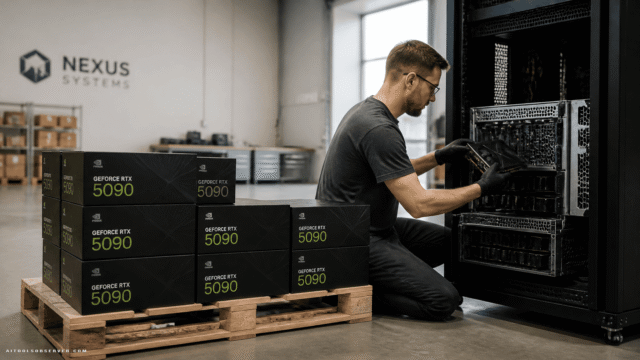
Nvidia is providing accelerated computing infrastructure as part of the 45-organization coalition. Meta’s Fundamental AI Research team is also joining the initiative, which signals this isn’t just a compute play — it has serious research credibility behind it.
CuspAI CEO Chad Edwards described the goal as powering “the next generation of materials discovery” across semiconductors, energy, and advanced manufacturing.
Why Physical AI Is Gaining Momentum
CuspAI is part of a broader shift toward applying AI to physical-world problems rather than purely digital ones. Bezos’ own separate venture, Prometheus — founded in 2025 and valued at $41 billion — is focused on AI for invention and physical engineering. The overlap in thesis is not accidental.
The semiconductor angle is particularly relevant right now. The chip industry is under pressure to find new materials that can push performance beyond current silicon limitations. AI-accelerated discovery could compress timelines that traditionally take decades.
Expansion Plans
CuspAI is moving fast on the operational side. The startup is opening a new office in Singapore and expanding teams across the U.K., Netherlands, Germany, Japan, and the U.S. That geographic spread suggests the company is positioning itself to serve global semiconductor and manufacturing ecosystems, not just Western markets.
What This Means for the AI Tools Ecosystem
For founders and operators tracking the AI landscape, CuspAI represents a category worth watching: scientific discovery AI. These tools don’t generate content or automate workflows — they compress the timeline between hypothesis and validated physical result.
The Nvidia partnership matters here beyond branding. Accelerated computing infrastructure is the actual bottleneck for running large-scale materials simulations. Having Nvidia embedded in the foundry model gives CuspAI a structural advantage that’s hard to replicate quickly.
If physical AI continues to attract this level of capital and partnership, expect more tools targeting materials science, drug discovery, and advanced manufacturing to emerge in the next 12–18 months. The pattern is becoming clear: AI is moving from the screen to the lab bench.

















Comments (0) No comments yet
Want to join this discussion? Login or Register.
No comments yet. Be the first to share your thoughts!