


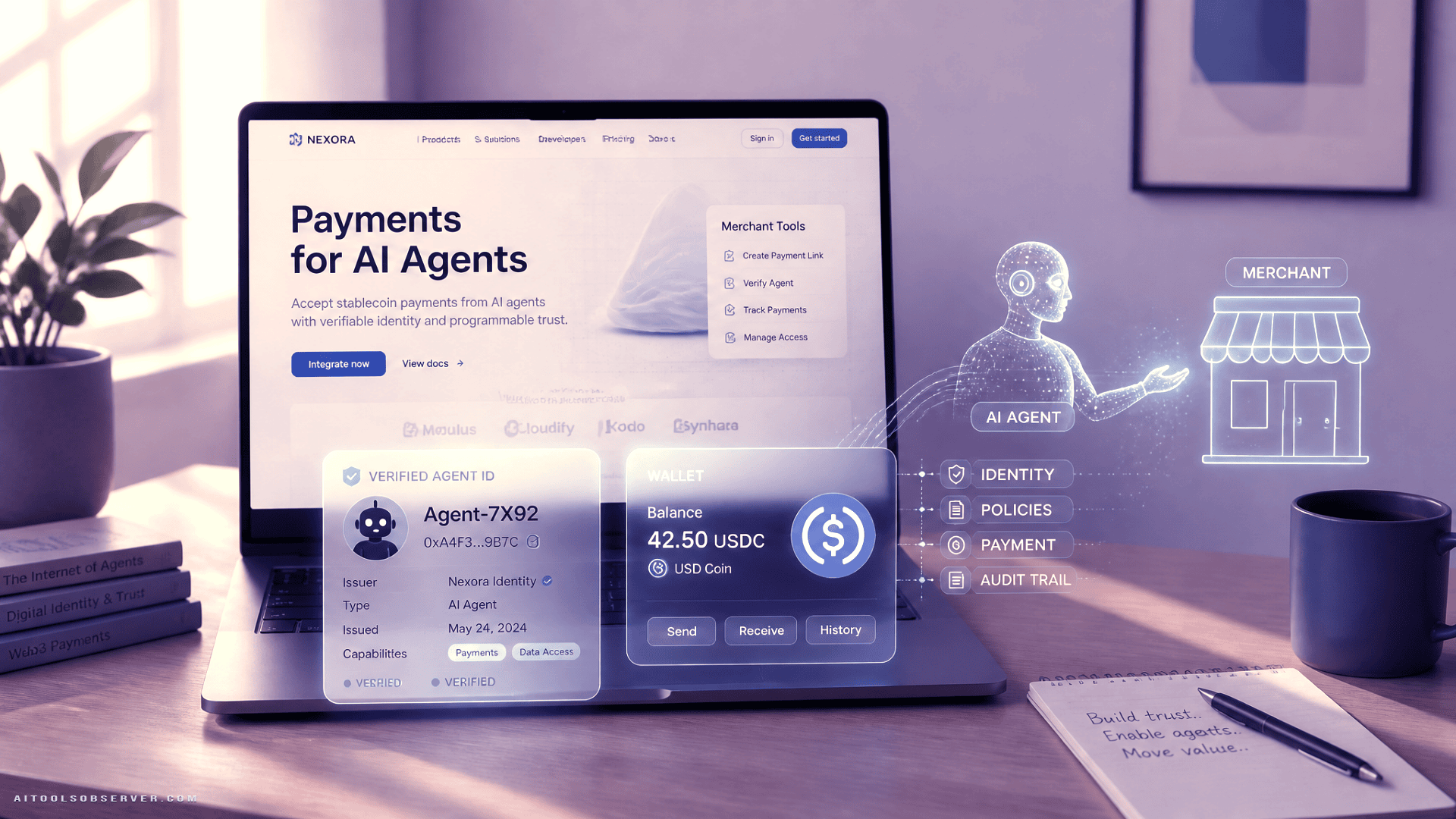
57% of Web Traffic Is Already Bots
According to Cloudflare’s Chief Strategy Officer Stephanie Cohen, bots now account for around 57% of all web traffic. That number reframes the entire conversation about how the internet is built and monetized.
For decades, the web was designed around HTML pages optimized for human eyes. If the majority of traffic is now machine-generated, that design assumption breaks down. Bots don’t need navigation menus, hero images, or subscription bundles — they need structured data, fast responses, and a way to pay.
Cloudflare is positioning itself as the infrastructure layer for that new reality.
A Permanent Identity for Your AI Agent
The cloudflare.id service gives any user a permanent web address that functions as a bot-readable identity. When your AI agent visits a merchant site, that merchant’s systems can verify the agent is acting on your behalf.
Users can also choose to remain pseudonymous — so identity verification doesn’t have to mean full disclosure.
A Stablecoin Wallet With Spending Controls
The wallet side works like this:
- You fund a virtual wallet via bank transfer, which converts to dollar-pegged stablecoins
- You grant your agent permission to access the wallet
- Optional guardrails let you set spending limits and whitelist specific merchants
The safeguards matter. One of the obvious risks of agent-driven commerce is an AI going off-script and making purchases you didn’t intend. Cloudflare’s optional controls are a direct answer to that concern.
Merchant-Side AI Tools
Cloudflare has also built tools for merchants to communicate with incoming customer agents — handling product queries, availability checks, and purchase flows without requiring a human on either end of the transaction.
Why Stablecoins Make Sense Here
Traditional payment rails weren’t built for micro-transactions at machine speed. Stablecoins are.
Cohen’s argument is that the current subscription model — pay once, get a bundle — creates friction even for humans. Bots, by contrast, can handle hundreds of individual micro-transactions without friction. That opens up a new model: selling data, content, and services piecemeal, often for pennies, to millions of AI agents simultaneously.
For publishers, data platforms, and API providers, this is worth paying attention to. The economics of information distribution could look very different in a bot-first commerce environment.
The Broader Ecosystem Taking Shape
Cloudflare isn’t building this alone. The X402 protocol — an open-source standard for AI commerce — was developed by a consortium that includes Cloudflare, Coinbase, and Stripe. Visa and Mastercard are also reportedly retooling their payment infrastructure to accommodate bot-driven transactions.
Cloudflare also isn’t the only player launching AI wallets. Crypto-native payments firm Moonpay recently unveiled PayBox, a decentralized AI wallet aimed at non-technical users of Claude and OpenAI products.
The infrastructure for agentic commerce is being built from multiple directions at once, alongside broader moves in AI shopping infrastructure.
Who This Is For Right Now
Cohen is realistic about the adoption curve. In the near term, the primary users of agent-driven commerce will be developers and AI companies purchasing data programmatically. Mainstream consumer adoption is a second wave — one that depends on easier-to-use shopping agents, clearer regulations, and better fraud controls from merchants and payment processors.
That timeline matters for anyone evaluating these tools today. If you’re a developer, an AI-native startup, or a merchant thinking about how to handle bot traffic, this is immediately relevant. If you’re a general consumer, the infrastructure is being laid now, but the experience layer isn’t quite there yet.
The Practical Takeaway
Cloudflare’s launch is a signal, not just a product. The internet’s business model is being renegotiated around the assumption that a large and growing share of transactions will be initiated by AI agents, not humans.
For founders and product teams, the question worth asking now is: Is your product or service accessible to an AI agent? If your entire purchase flow depends on a human clicking through a UI, you may be building for a shrinking share of future traffic.
The identity and payment layers are starting to fall into place. The merchants and platforms that adapt early will have a structural advantage when the second wave of agentic commerce — the consumer wave — actually arrives.















Comments (0) No comments yet
Want to join this discussion? Login or Register.
No comments yet. Be the first to share your thoughts!