



Why this launch stands out
Cloudflare OS is positioned as an open-source vibe coding platform for people who are not traditional developers. The notable part is not the “non-coder” angle alone. It is the way Cloudflare appears to have built guardrails directly into the platform around sandboxing, permissions, and AI usage costs.
That matters for teams already dealing with a familiar internal pattern:
- employees can now generate apps faster than IT can review them
- AI agents can write code that works, but not always code that is safe
- model usage costs can climb quickly without clear controls
- internal tools often connect to sensitive data before proper access rules exist
Cloudflare’s answer is to make the default environment much more locked down.
The core idea: let people build, but limit what the app can do
Based on the available description, Cloudflare OS uses a security model built around fine-grained app instances. Instead of treating one app as one big trusted unit, the platform can separate usage into smaller isolated environments.
The example given is a document editor where each document runs as its own separate instance in its own sandbox. That design changes the blast radius. If something goes wrong, the issue is more contained than in a broad, shared app environment.
This is a practical shift. A lot of AI app risk does not come from the UI. It comes from what the generated app can access, send, call, or modify behind the scenes.
What Cloudflare is doing differently on security
The launch puts heavy emphasis on sandboxing and permission controls.
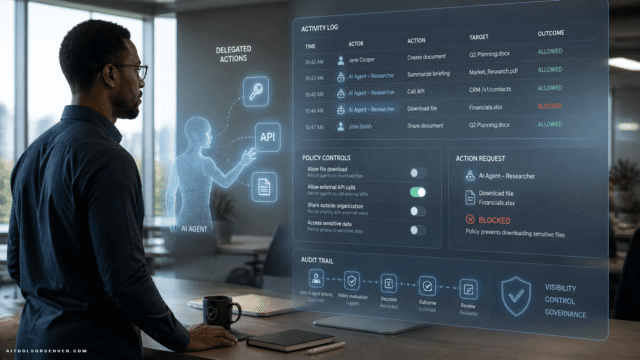
According to the description, AI agents start with no permissions. They must request access to resources through the platform. Server code also runs with outbound networking disabled by default, while client code runs inside a browser sandbox.
In plain English, that means the generated app is not supposed to freely reach the internet or internal resources unless someone explicitly allows it.
That is a strong default for enterprise use. It does not mean the system is perfect, but it does mean Cloudflare is treating AI-generated software like an untrusted actor first, not a trusted employee shortcut.
Why that matters for secure AI app development teams
Security teams usually worry about three things with AI-generated internal tools:
- Data leakage
- Overbroad access permissions
- Unexpected external calls
Cloudflare OS appears designed around those exact concerns. If apps and agents begin with no access and require explicit capabilities, teams get a more reviewable path to adoption.
For organizations exploring internal AI app builders, that may be more important than having the most polished prompt-to-app experience.
The isolate model is a big part of the pitch
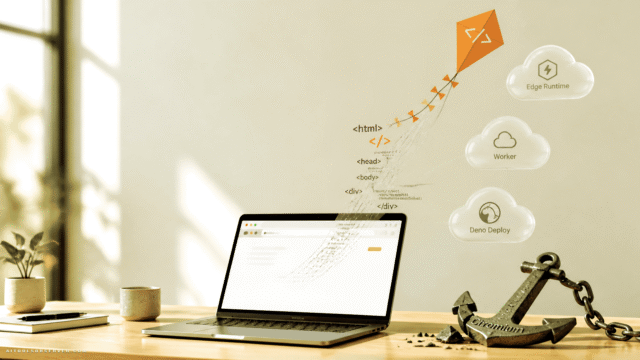
Cloudflare’s implementation is based on isolates rather than standard containers. Specifically, the platform uses V8 JavaScript execution engine instances that start quickly and use relatively little memory.
The performance angle matters because security controls often create friction. If every isolated environment were too slow or too expensive to spin up, teams would bypass the model. Faster, lighter isolation makes the guardrail approach easier to apply in practice.
Cloudflare’s message here is simple: stronger sandboxing does not have to mean clunky app execution.
It also tries to solve the cost problem
A lot of AI launches focus on productivity and skip the billing reality. Cloudflare OS does not.
The platform is described as model-flexible, which means organizations can choose different AI models depending on the task. That matters because many internal workflows do not need the most expensive model every time.
Cloudflare also appears to have built in:
- spending visibility for AI inference
- budget controls
- rate limits
- more deterministic workflow steps to reduce unnecessary model calls
This is a smart angle. In many companies, AI overspending happens quietly through repeated low-value tasks, not just through one big project. If a tool can help teams avoid using expensive inference where deterministic logic will do, that is operationally useful.
A useful lesson from Cloudflare’s own rollout
One of the more interesting details in the launch context is what Cloudflare learned internally: giving non-engineers the same AI coding tools that engineers use can produce too much code and not enough value.
That is an important signal for buyers.
Many organizations assume broader AI app access automatically creates efficiency. In reality, it can create a flood of tools, automations, and half-finished apps that solve unclear problems. Cloudflare seems to have run into exactly that.
The takeaway is not “non-coders should not build.” It is that non-coder AI app creation needs structure:
- clear use cases
- review standards
- limited permissions
- cost controls
- opinionated workflows
Without that, vibe coding becomes app sprawl.
Cloudflare is pairing platform access with governance
Another notable piece is the company’s emphasis on internal standards and review. The broader context mentions an engineering codex and AI-assisted code review to help enforce consistency and catch deviations.
That suggests Cloudflare is not treating secure AI app development as a single-product problem. It is approaching it as a system:
- isolated runtime environments
- explicit permissioning
- budget controls
- workflow constraints
- policy and code review layers
For enterprise teams, that is the more realistic model. Secure AI app development usually fails when companies only add one control and assume the rest will sort itself out.
Who this looks best suited for
Cloudflare OS appears most relevant for teams that want to expand internal AI app building without opening a security free-for-all.
That likely includes:
- enterprises enabling non-technical teams to build internal tools
- IT and security teams that need stronger defaults
- organizations worried about uncontrolled AI inference costs
- teams already using Cloudflare infrastructure and Workers
It may be less compelling for solo hobbyists who just want the cheapest or simplest app builder with no platform constraints. The value here is not pure freedom. It is controlled freedom.
The open-source angle comes with a practical caveat
The open-source release is meaningful, but it is not the same as saying the full experience is free to run in every scenario.
Based on the description, deploying the backend requires a paid Cloudflare Workers plan. That does not cancel out the open-source value, but it does change the buying and testing conversation.
For technical teams, this means the real question is not just “Is it open source?” It is also:
- what parts can we inspect and modify?
- what parts depend on paid infrastructure?
- how easily can we evaluate it before committing?
That deployment friction matters, especially for teams comparing open-source AI platforms on transparency and cost.
What to watch next
The bigger story is not just this launch. It is whether more AI coding platforms move toward the same default posture:
- deny access first
- isolate aggressively
- make permissions explicit
- control model spending
- guide non-coders with safer workflow patterns
If that becomes standard, enterprise adoption of AI-generated apps gets easier to justify.
If it does not, many companies will keep hitting the same wall: lots of internal AI enthusiasm, followed by security reviews, cost surprises, and tool lockdowns.
The practical takeaway
Cloudflare OS is worth watching because it treats vibe coding as a governance problem, not just a usability problem.
If your team wants non-coders to build AI apps, the real differentiator is not how fast a prototype appears. It is whether the platform gives security, admin, and finance teams enough control to let that building happen at all.









Comments (0) No comments yet
Want to join this discussion? Login or Register.
No comments yet. Be the first to share your thoughts!