



What changed
Nvidia has publicly highlighted optimizations for top open models, including DeepSeek’s V4 Flash and Alibaba’s Qwen 3.8, alongside models from Google and Nvidia itself.
At the same time, the company has warned in regulatory filings that potential White House restrictions on AI developed in China could hurt business. Based on the available context, the concern is not only about selling chips. It is also about Nvidia’s ability to support third-party applications and models built on open-source foundation models originating in China.
That makes this more than a product update. It is a policy story wrapped inside an infrastructure story.
Why Nvidia is doing this
Nvidia’s logic is practical. Developers usually build around the tools, frameworks, and hardware stacks that run their preferred models best.
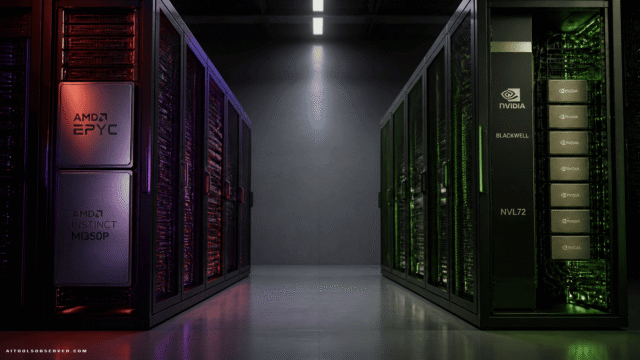
If DeepSeek, Qwen, and similar open-weight models are gaining traction, Nvidia has a strong incentive to make sure those models perform well on Nvidia systems. If it does not, competing stacks from Chinese chipmakers or cloud ecosystems have an opening.
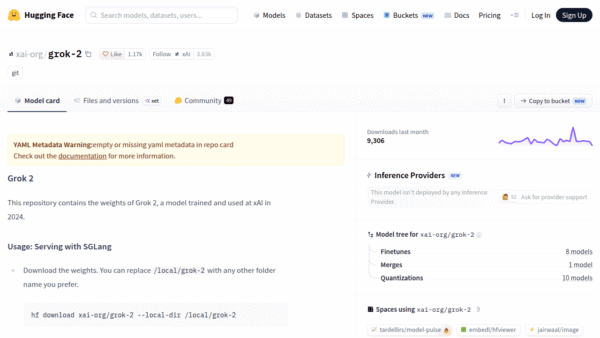
This is especially important with open-weight models because they are:
- Downloadable
- Modifiable
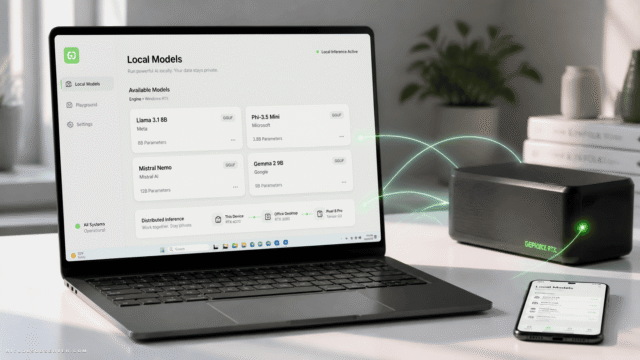
- Self-hostable
- Easier to integrate into private or regional deployments
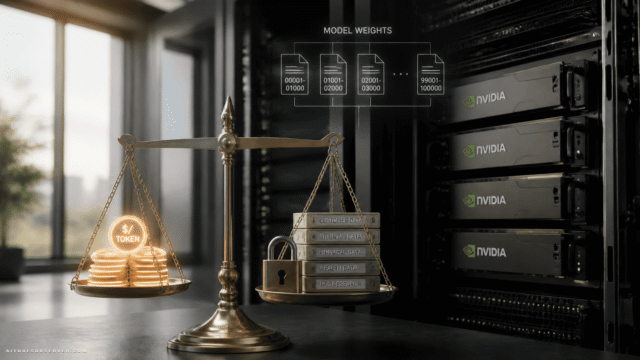
That changes the buying decision. Many teams are no longer choosing only between closed API providers. They are also choosing which infrastructure stack they want underneath their own deployments.
Why open-weight models are now the real pressure point
This story is not just about China versus the U.S. It is about the growing importance of open models in enterprise and developer workflows.
Closed systems still dominate many mainstream use cases, especially when teams want turnkey APIs and managed services. But open-weight models are attractive when companies want more control over:
- Hosting
- Fine-tuning
- Cost management
- Compliance
- Data privacy
- regional deployment
Chinese models have become harder to ignore because they appear to be improving quickly while also fitting the open, self-hosted pattern many developers want.
That is why lawmakers are paying closer attention. Once an open model spreads, it can become part of local software stacks, internal tooling, and downstream products far beyond its original source country.
The bigger U.S.-China AI race behind it
This is where the stakes rise.
The U.S. has already used export controls and semiconductor restrictions as part of its AI strategy. The current debate appears to be moving further up the stack—from hardware access to the software and model ecosystem itself.
If restrictions expand to support services around Chinese-origin open models, companies like Nvidia could face a difficult tradeoff:
- Follow policy pressure from Washington
- Risk losing influence with developers who are already building around these models
That is the real competitive issue. In AI, market power does not only come from owning the chip. It also comes from being the default stack developers trust.
This broader U.S.-China AI race is increasingly about ecosystems, not just components.
Why developers matter more than the headlines suggest
One of the most important details in this story is easy to miss: model optimization shapes ecosystem loyalty.
If a developer can run a popular model faster, cheaper, or more reliably on one stack, that stack becomes stickier. Over time, that affects:
- Which GPUs teams buy
- Which software frameworks they standardize on
- Which cloud environments they prefer
- Which models become embedded in products
So Nvidia’s support for DeepSeek and Qwen is not just about compatibility. It is about keeping Nvidia at the center of AI development no matter which model family wins adoption.
That is a smart defensive move in a market where model leadership is shifting quickly.
What this means for AI tool buyers
If you are evaluating AI tools, infrastructure, or self-hosted model options, this news points to a few practical realities.
1. Model origin is becoming a procurement issue
Teams can no longer look only at quality, speed, and price. They may also need to consider future policy risk.
A model that works well today could become harder to support tomorrow if new restrictions affect hosting, optimization, distribution, or enterprise use.
2. Open-weight support is now a serious vendor differentiator
Infrastructure vendors that support a wide range of open models have an advantage, especially for companies that want flexibility.
If your roadmap includes self-hosted AI, private deployment, or custom fine-tuning, broad model support matters more than flashy benchmark claims.
3. The stack matters as much as the model
A strong model is not enough on its own. Buyers should also look at:
- Hardware optimization
- Inference efficiency
- deployment tooling
- clustering support
- ecosystem maturity
This is where Nvidia is trying to stay indispensable.
Why Chinese models are getting so much attention
Part of the concern in Washington appears to be about global default behavior.
If capable, lower-cost, open Chinese models become the standard choice across emerging markets and developer communities, that could shape not only software adoption but also broader platform alignment. Infrastructure, developer tools, training workflows, and enterprise integrations tend to follow where model usage goes.
That helps explain why this debate is expanding beyond chips. The fight is increasingly about who sets the practical default for building AI applications.
What to watch next
The next phase is likely to hinge on policy language, not just product announcements.
Watch for signs around:
- Restrictions on support for Chinese-origin open models
- Broader rules affecting self-hosted foundation models
- Changes in how U.S. companies talk about open-weight AI
- More optimization efforts from rival chip and cloud vendors
Also watch whether enterprises start formalizing model-risk reviews based on geopolitical exposure, not just technical fit.
The takeaway
Nvidia’s move tells you where demand is going: developers want access to strong open models, regardless of where they come from. Washington’s response tells you where regulation may be going: closer scrutiny of the model layer, not just the chip layer.
For buyers, the smart move is simple. Do not evaluate AI tools and model stacks on performance alone. Check how portable they are, how dependent they are on specific vendors, and how exposed they may be to policy shifts. In this market, the best technical option is not always the safest long-term choice.











Comments (0) No comments yet
Want to join this discussion? Login or Register.
No comments yet. Be the first to share your thoughts!