



What Is Seeq Intelligence?

Seeq Intelligence is a decision intelligence platform built specifically for industrial and process manufacturing environments. It functions as an AI-driven layer on top of existing operational infrastructure — historians, SCADA systems, CMMS, ERP platforms, and document repositories — rather than replacing them.
The core proposition is straightforward: capture subject matter expert (SME) knowledge, codify it, and scale it consistently across the enterprise. For organizations where critical operational insight lives inside the heads of a handful of experienced engineers, that is a meaningful value proposition.
Agent Q: Domain-Aware AI Analyst

Agent Q is the flagship component of Seeq Intelligence. It functions as a natural language interface to operational data, capable of assembling historical events, prior analyses, past actions, and unstructured documentation into coherent, traceable investigations.
What distinguishes Agent Q from generic AI assistants is its domain awareness. It is not simply querying a database — it is contextualizing operational history, surfacing hidden patterns, and producing prioritized recommended actions. For engineers who currently spend hours correlating data across disconnected tools, this represents a substantive reduction in analytical overhead.
The emphasis on traceability is particularly relevant in regulated industrial environments. Decisions that can be audited and explained carry significantly more operational and compliance value than black-box outputs.
Build Your Own Agent

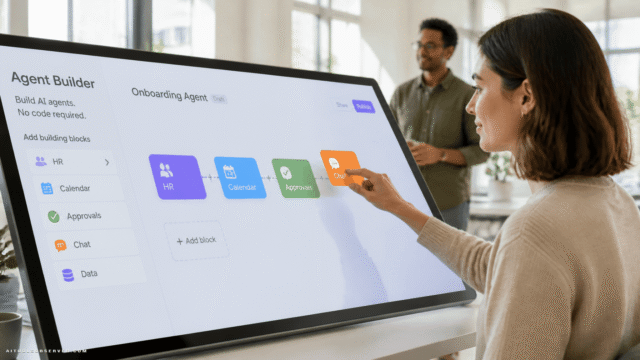
This capability allows Seeq users to construct custom AI agents that execute multistep workflows — either on demand or triggered by schedules and operational events. The outputs are repeatable: automated reports, summaries, and system actions.
The practical implication is significant. A reliability engineer can configure an agent to monitor a specific asset class, retrieve relevant data windows, run a predefined analysis, and distribute a summary report — without manual intervention at each step. Repeatability and consistency are the primary gains here.
Agent Extensibility

Agent Extensibility enables secure connections between Seeq AI agents and external customer systems. This means agents can pull fresh context — recent data windows, open work orders, maintenance records — and initiate workflows across those systems directly from within the Seeq interface.
This closed-loop automation capability is where Seeq Intelligence moves beyond analytics into genuine operational integration. Reducing context switching between platforms is a concrete productivity benefit, particularly for engineers managing multiple systems simultaneously.
Document Access and Synthesis

Industrial environments accumulate substantial volumes of unstructured documentation: procedures, maintenance manuals, incident reports, past analyses. Seeq Intelligence can search, read, contextualize, and interpret these documents, integrating their content into Q&A responses and operational summaries.
This addresses a persistent problem in industrial settings — institutional knowledge locked in PDFs and shared drives that engineers rarely have time to systematically consult. Bringing that knowledge into the analytical workflow is a practical and underappreciated capability.
What Seeq Intelligence Replaces — and What It Does Not

Seeq Intelligence is explicitly not designed to displace existing operational systems. Historians, SCADA platforms, CMMS, and ERP systems remain in place. What it targets are the fragmented, manual processes layered on top of those systems: searching across disconnected trending tools, assembling analyses in Excel, coordinating findings via email, and manually compiling reports.
This positioning is strategically sound. Industrial organizations are deeply invested in their core operational infrastructure, and tools that require wholesale system replacement face significant adoption resistance. Seeq Intelligence integrates rather than displaces, which lowers the barrier to deployment considerably.
The platform is designed to amplify human expertise, not substitute it. SME knowledge is captured and scaled — not automated away. For organizations concerned about AI eroding specialized engineering roles, this framing is likely to reduce internal friction during adoption.
Who Should Consider Seeq Intelligence?
Seeq Intelligence is best suited for process manufacturing and industrial operations environments where:
- Large volumes of OT data are generated but underutilized for decision-making
- Critical operational knowledge is concentrated in a small number of experienced engineers
- Analytical workflows are currently manual, fragmented, and time-consuming
- There is existing investment in historian and SCADA infrastructure that needs to deliver more value
It is less relevant for organizations without established OT data infrastructure, or for teams without the engineering capacity to configure and maintain custom agents effectively.
Strengths
Domain specificity. Seeq Intelligence is built for industrial environments, not adapted from a general-purpose AI platform. That specificity shows in the design of Agent Q and the emphasis on OT data integration.
Agentic architecture. The combination of custom agent creation, extensibility, and document synthesis reflects a mature understanding of how industrial workflows actually operate — across multiple systems, data types, and time horizons.
Expertise preservation. The focus on capturing and scaling SME knowledge addresses a genuine and growing risk in industrial organizations facing workforce transitions.
Traceability. Auditable, explainable outputs are not a minor feature in regulated manufacturing environments — they are a prerequisite for operational adoption.
Limitations to Consider
Configuration complexity. Building custom agents and configuring extensibility connections requires engineering effort. Organizations without dedicated technical resources may find the initial setup demanding.
Dependency on data quality. Seeq Intelligence is only as effective as the underlying OT data it connects to. Poorly structured historian data or inconsistent tagging will constrain analytical output quality.
Premium positioning. Agent Q is described as a premium capability, suggesting a tiered pricing model. Organizations evaluating total cost of ownership should clarify which capabilities are included at which tier before committing.
Alternatives Worth Comparing
Organizations evaluating Seeq Intelligence should also examine platforms such as Aspen Technology’s AI suite, Cognite Data Fusion, and AVEVA’s industrial AI offerings. Each takes a different approach to OT data integration and decision intelligence, with varying strengths in specific verticals such as oil and gas, chemicals, or discrete manufacturing.
The right choice depends heavily on existing infrastructure, the complexity of operational workflows, and the degree of customization required.
Final Assessment

Seeq Intelligence represents a technically coherent and industrially grounded approach to agentic AI. It does not overpromise transformation — it targets a specific, well-defined problem: the gap between abundant OT data and confident operational decisions.
For industrial engineers and operations teams who have long worked around the limitations of disconnected tools and fragmented analytical processes, Seeq Intelligence offers a structured, scalable path forward. The agentic architecture is genuinely capable, the domain focus is appropriate, and the emphasis on amplifying rather than replacing human expertise reflects a realistic understanding of how AI adoption succeeds in industrial environments.
The platform earns serious consideration from any organization ready to move beyond reactive data analysis and toward systematic, AI-assisted operational intelligence.









Comments (0) No comments yet
Want to join this discussion? Login or Register.
No comments yet. Be the first to share your thoughts!