


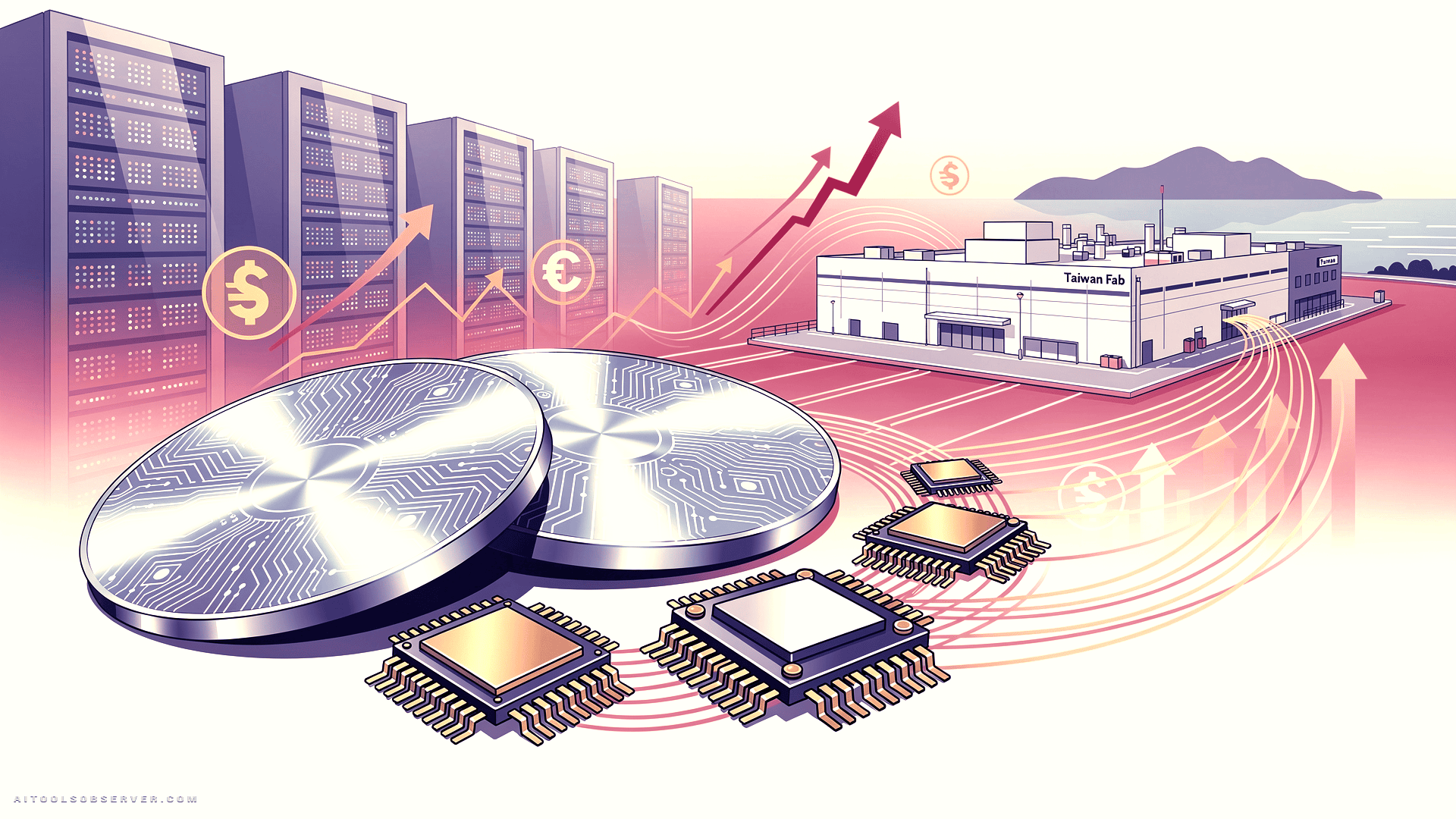
The Quiet Giant at the Center of Everything

TSMC doesn’t sell chips to consumers. It manufactures them for companies like Nvidia, AMD, and Apple. That makes it the invisible backbone of the entire AI ecosystem.
When Nvidia designs a next-gen GPU for AI training, TSMC builds it. When Apple ships a new M-series chip, TSMC fabricates it. If TSMC sneezes, the whole tech industry reaches for a tissue.
So when TSMC’s CFO Wendell Huang tells the BBC that inflation has caused costs to increase — and that the company’s CEO openly said he’d “like” to raise prices — that’s not a footnote. That’s a signal.
What “Reflecting Our Value” Actually Means
Huang was careful with his words. No sudden “fourfold, fivefold” price jumps, he promised. Instead, the company will “reflect its value” — pointing to its technology leadership and manufacturing excellence as justification for whatever comes next.
Translation: prices will rise. Just gradually, and with a polished rationale attached.
This is how pricing power works at the top of a near-monopoly. TSMC controls the manufacturing of the world’s most advanced chips. There’s no credible alternative at scale. That’s not a complaint — it’s just the market structure, and it shapes everything downstream.
The Geopolitics Layer Nobody Can Ignore

Here’s where it gets complicated. TSMC is expanding into the US (a $165bn commitment to Arizona), Germany, and Japan. Huang insists this is customer-driven, not government-driven. “It’s not the request of government,” he said flatly.
Maybe. But the timing — amid escalating US-China trade tensions and Washington’s aggressive push to onshore semiconductor production — makes that claim feel a little optimistic.
Meanwhile, Chinese President Xi Jinping has warned that mishandling Taiwan could push US-China relations into “extremely dangerous” territory. Taiwan produces the majority of the world’s most advanced chips. That’s not a supply chain risk — that’s a civilization-level dependency.
The Arizona Timeline Problem
Huang was blunt about one thing: moving the full manufacturing ecosystem to the US would take “five to ten years, or even longer.” That directly undercuts the urgency of US industrial policy, which has been throwing billions at exactly this problem.
The implication is uncomfortable. Even with $165bn committed to Arizona, the most cutting-edge chip production stays in Taiwan — for the foreseeable future. Geopolitical risk doesn’t get diversified away just because a fab breaks ground in the desert.
Is the AI Boom a Bubble? TSMC Doesn’t Think So.
Stock markets have been jittery. Tech shares in Asia sold off sharply following similar moves in the US, with investors questioning whether the massive AI infrastructure spending wave is sustainable.
Huang’s answer was direct: not a bubble. His reasoning is worth noting — TSMC talks directly to the hyperscalers (think Microsoft, Google, Amazon, Meta) who are buying the chips. These companies, he argues, are financially strong enough to keep investing. “Our conviction in this AI megatrend is very strong,” he said.
That’s not blind optimism. It’s a company with a front-row seat to the order books of the world’s biggest tech spenders. When TSMC says demand is real, it’s worth listening.
What This Means for AI Tool Costs
Connect the dots and a clear picture emerges.
- TSMC faces rising costs and has pricing power to pass them on
- Advanced chip manufacturing stays concentrated in Taiwan, keeping geopolitical risk elevated
- US expansion is real but slow — years away from meaningful supply diversification
- Hyperscaler demand remains strong, sustaining the AI infrastructure buildout
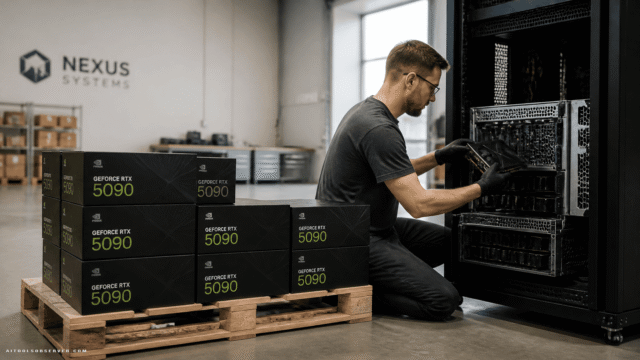
For AI tool builders and buyers, this translates into one uncomfortable reality: the cost of AI compute is unlikely to get dramatically cheaper in the near term. Gradual chip price increases flow into GPU costs, which flow into cloud compute pricing, which eventually flow into the per-seat or per-API-call pricing of the tools you use every day.
The race to the bottom on AI pricing has a ceiling — and it’s made of silicon, fabricated in Hsinchu.
The Takeaway
TSMC’s rare interview wasn’t a press release. It was a calibration signal for the entire AI industry. Costs are rising. Expansion is real but slow. The AI boom isn’t over — but it isn’t free, either.
For anyone choosing AI tools right now, the infrastructure cost layer is becoming a real differentiator. Tools built on efficient, well-optimized models will have a structural advantage as compute costs creep upward. Bloated, GPU-hungry products will feel that pressure first.
Observe the chip supply chain. It tells you more about where AI pricing is headed than any product launch ever will.









Comments (0) No comments yet
Want to join this discussion? Login or Register.
No comments yet. Be the first to share your thoughts!